



Culinary Entrepreneurship with Stratis Morfogen.
Culinary entrepreneurship with Stratis Morfogen – how he continued his family legacy and built a restaurant empire of his own.
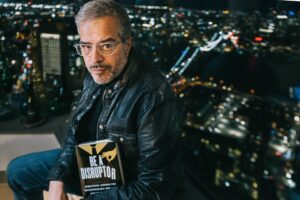
Stratis is a highly successful culinary entrepreneur. He grew up in and around the different restaurant businesses that his Greek immigrant family started as far back as 1910. He shares his personal story and experiences as a highly successful serial restaurant owner.
Stratis Morfogen is an entrepreneur, restaurateur, and author. Stratis has been one of the most innovative names in New York City’s hospitality scene for decades. From bringing the famed Fulton Fish Market online in 1997 – for which he was nominated “Entrepreneur of the Year” in 1999 by Deloite & Touche – to reimagining the automat movement with Brooklyn Dumpling Shop to opening a 25,000 square foot venue in Times Square during the pandemic, Stratis continues to disrupt the status quo.
Today, Stratis continues to flourish as a restaurateur and partner/owner of several establishments in New York City including Club Rouge, Gotham City Diner, Hilltop Diner, Philippe Chow, and Brooklyn Dumpling Shop. Stratis is the author of “Damn Good Dumplings: 60 Innovative Favorites for Every Occasion”, and the soon to be released (you can pre-order now!) “Be a Disruptor: Streetwise Lessons for Entrepreneurs―from the Mob to Mandates.”
Stratis lives in New York City.
- First restaurant opened by his family: Pappas, on 14th Street in 1910 and was in operation until 1975.
- Why did you decide to continue the legacy by staying in the restaurant business?
- What’s one important and valuable thing you learned from your father and other family members about starting and running a restaurant business?
- Please share your process, at a high level, for developing a new restaurant concept. How do you test and validate it?
- What are some of the keys to launching and operating a successful and profitable restaurant?
- What do you believe will be some of the lasting impacts of the pandemic on the restaurant industry?
- Is outside seating here to stay in NYC?
- In your book, “Be a Disruptor” you share your insights and experiences with finding business opportunities and starting new ventures in times of adversity and succeeding against all odds. When someone asks you “is this a good time to start a restaurant,” what advice do you offer?
- Let’s chat about one of your latest ventures, the Brooklyn Dumpling Shop:
- Please introduce the Brooklyn Dumpling Shop and how it works.
- What inspired you to develop this concept? Why the automat model (Horn & Hardart in Philadelphia in 1910, then 1912 in NYC, inspired by European waiter-less restaurants)?
- What are the potential benefits for the customer? Why do customers like the automat design?
- How important is the view of the kitchen for the customer?
- What are the potential benefits for the operator?
- Why did you decide to offer franchises?
Episode Host: Henry Lopez is a serial entrepreneur, small business coach, and the host of this episode of The How of Business podcast show – dedicated to helping you start, run and grow your small business.
Resources:
Books mentioned in this episode:
[We receive commissions for purchases made through these links (more info)].

- Be a Disruptor: Streetwise Lessons for Entrepreneurs―from the Mob to Mandates by Stratis Morfogen
- Damn Good Dumplings: 60 Innovative Favorites for Every Occasion by Stratis Morfogen
Other Podcast Episodes:
You can find other episodes of The How of Business podcast, the best small business podcast, on our Archives page.
Transcript:
00:05
Henry, welcome to the how of business with your host, Henry Lopez, the podcast that helps you start, run and grow your small business. And now here is your host. Welcome to this episode of the how of business. This is Henry Lopez, and my guest today is Stratis Morfogen. Stratis, welcome to the show. Thank you for having me. I’m looking forward to this conversation. Excited to have Stratis with us. Stratis is a highly successful culinary entrepreneurs, as I am referring to him. He grew up in and around different restaurant businesses that his Greek immigrant family started as far back as 1910
00:43
in New York City, and he is with me today to share his personal story, just some highlights, though, because we could talk for hours about his experiences, and then we’ll dive into some of his experiences and advice on being a restaurant tour to receive more information about the Howard business, including links To the show notes page for this episode and how you can continue to support my show and receive receive rather exclusive content and discounts through a Patreon membership, just visit the how a business com. So Stratis morphogen is an entrepreneur a restaurant tour and an author. Stratis has been one of the most innovative names in New York City’s hospitality scene for decades, from bringing the famed Fulton Fish Market online in 1997 for which he was nominated Entrepreneur of the Year of the year in 1999 by Deloitte and Touche, To reimagining the Auto Map movement with Brooklyn dumpling shop to opening a 25,000 square foot venture in Times Square during the pandemic. Stratis continues to disrupt the status quo today, Stratis continues to flourish as a restaurant tour and partner owner of several establishments in New York City, including club rouge, Gotham City diner, hilltop diner, Philippe Chow and the aforementioned Brooklyn dumpling shop. And Stratis is also an author, as I mentioned, he has released a book previously called damn good dumplings, 60 innovative favorites for every occasion. And at the end of June of this year, his new book will be released, and it’s entitled to be a disruptor, street wise lessons from entrepreneurs, from the mob to mandates. So he covers it all from a very unique perspective. Stratis lives in New York City. Stratis, welcome to the show. Well, that was, I think you nailed it. That’s pretty much my memoir in my life, summarize that we got going to go on for hours and hours. I was looking for you to make a mistake, and you nailed it. I appreciate that. Of course, I did have you review it ahead of time, but yeah. I mean, I could have written a bio two pages long because of the experience that you have. But I would love to start briefly with your influence. You are grandson of immigrants, or son of your dad was an immigrant as well, right? Yeah, my, well, my grandfather and his brothers came at the early, like 1900 I mean, well, 1890 but they had jobs, but they first opened their restaurant in 1910 correctly, like you said, was Pappas restaurant on West 14th Street. My dad and his brothers started to come right after World War Two.
03:29
And they, they, they basically got here from 1945 to 1950
03:36
and then my two uncles, his partners, went to Korea. And after all that was said and done, by 1955 56 they launched their restaurant, Chelsea Chop House. And basically there, my dad built a 14 restaurant
03:51
business, all in the tri all in the metro, New York area. So yeah, when I was born in 67 my work day started probably in the early 70s, around six, seven years old, I would go to the Fulton Fish Market with my dad. I would work as a bus boy on weekends, and like everybody would laugh at this, but the truth is, from six years old to 18, I never had a weekend off. Wow, I work. I worked in the restaurants all the way up till my prom. And my prom, my prom, my dad gave me the weekend off,
04:22
so, you know, so, yeah, we were restaurant, you know, through and through, right down to the right, down to our core and and it’s all I know, you know, it’s something that I really I there’s a part in my book be a disrupter, where I talk about, as a kid, I didn’t realize I was a disrupter. I just thought I was stubborn and hard headed, and the new termination for that is disruption. And basically where my parent, my parents would say, hey, you know, my mother would say, we’re taking the kids here, going to Disney World. I would find out my dad had the truck that week and going to the Fulton market. And I didn’t want to go to Disney World. I wanted to go to.
05:00
Fulton Fish Market. Because to me, that was my Disney World.
05:04
Is it? Is it partly Stratis? I heard you in another interview share you know your your struggles with ADHD and not being a traditionally great student, at least not the way schools were set up then or now. For that matter, did you? Did you love it so much because you did so well in that environment, yeah, I thrived in that environment. I thrived, you know, it’s a story that I’ll repeat, but you know, when I was around 910, years old, my the guidance counselor, Principal, teachers, they brought in my mom and dad, and their concern was that I was a special needs student, and my father being an old immigrant, sitting there like with a grimace on his face, almost like Tony Soprano esque. Listening to a teacher about this son fidgeting, I really related to that part of The Sopranos because my father started listening to this and he says, Are you guys done? Are you done? How I don’t pay attention, how I don’t finish my work, how I’m looking out the window, how you know, fidgeting, how I’m really not participating, like, like, they thought I was just like, you know, I couldn’t adapt, or I couldn’t I couldn’t engage. Truth was, I had no interest in what they were teaching. And my father said that exactly. He says, Are you teaching things these kids are interested in? And they were like, Excuse me, they got offended. And he goes, how about we do this? Because you think my son is special needs, and I think my son is, you know, pretty, pretty, pretty at a very high level. So we have a big disagreement in that, but let’s do this this Friday night at the Chelsea Chop House in Belarus queens. We have a 200 seat restaurant. I want you all to come with your significant others, he said in a very heavy Greek accent, and I want to buy dinner for all of you. And I want you to see this 910, year old kid walking around the dining room teaching the busses how to bus the servers, how to serve the managers, how to manage. And basically, there are people asking Him for what He recommends tonight, and he runs the whole floor, and he’s, he’s a busboy because he’s 10 years old. But if I can make him a manager, I would, because he has the knowledge of all those positions all wrapped in a 10 year old brain. And you’re going to tell me he’s special needs. Well, why don’t you? If you guys are really concerned about my son, I’m inviting you for a complimentary dinner, and I want you to see him in full action, as he’s running a 200 seat restaurant at 10 years old, and you tell me if he’s special needs, and then after that, if you agree, we could sit down and discuss the best plan for my son. But let’s see what you think when you come to my restaurant Friday night and watch him in action. And that night happened. They all did show up, did they really? And at the end of the night, they all started giving me hugs like, you know, wow, we were wrong. You know, your your dad was right. And this, this has gone with me for years, like even my kids, when they went to like, private schools like Marymount and Hewitt, you know, all three of my daughters, they would bring me in and say, you know these kids that we may have to leave them back. They’re not adapting well. I said, well, because there’s they live in a multi language household, so at four years old, you don’t have the education to tell me that these kids you know, need special attention. And the truth is, 20 years and 17 years later, all my kids, you know, graduating college and and high school and junior high now, all 4.0
08:27
but, but early on, when they were four and five years old, all I would hear is that, you know, they’re not ready to move to the next grade. Interesting. I’ve been dealing with that all my life, because, you know what the ADHD is something they don’t know how to handle. But I will tell all the aspiring business people out there that follow you, is that ADHD is an asset when it comes to business, you can multi level, at a very high task, at a very high level, and and it’s been an asset for me all the way through my business career, because ADHD is basically like, Listen, if I’m not interested, you’re going to lose me, because I have a very short time span. And then if I do enjoy it, and I enjoy multiple things at the same time and building my business, I can do it at a very high level. And that’s what educators don’t understand about ADHD.
09:19
To go off on that just for a moment. Stratis, though, how do you keep it in check so that it doesn’t have you chasing the next shiny object? Yeah, so it doesn’t do that for me. For me, it basically, it’s like, it’s like a book, right? If you give me a book I have no interest in, I’m going to shut it down right after the introduction. I just can’t I can’t focus on it. But if you give me a business book or something that I’m really interested in, or a great documentary or a great biography, which are my favorite films, I could actually watch it three times. So it’s become a superpower for you. There you did not go to college.
10:00
Correct? I did not. I’ve been I’ve been outspoken since 10th grade, because, you know, to me, universities do not teach entrepreneurship. We’re the only society on the planet where we allow children to go into students to go $150,000
10:19
into debt, but we don’t have $25,000
10:22
for them to start a small business. And the debt I’m talking about is student loans and student and all this is just wrong. Everything about it is wrong. What universities? And I don’t care if it’s from, you know, Wharton School of Business, to Hofstra University or to community college. What they do is they teach you to be like a VP in the status quo. They teach you to be a VP for someone else’s dreams. Yeah, at the most. I mean, an employee, certainly, but somebody who plays a role in somebody else’s wealth generation and somebody else’s dream. Yeah. And that to me because I’m a dreamer, and to me that that that was a pivotal part of me deciding that I’m just going to go into my dad’s business. He’s an he’s an amazing mentor. He’s been an amazing mentor since I’m, you know, since I was, you know, with short pants. And bottom line is, is that I’m going to continue that approach until, until he takes me where he can’t take me any further, which was around 19 years old, and from there, I went on my own for the first time. Did you recommend and encourage your daughters to go to university?
11:29
Well, I you know what? I believe that they have to make their own decisions. I’m very proud of my daughter, Natalie. She just graduated University of Miami 4.0 and the interesting part is Is she went for marketing and business and and, and literally, the last about three months ago, right before graduation, which was about three weeks ago, I said, What do you want to do? You know, I expected her, because she did an internship in PR at a real estate firm and in Miami. And I thought that’s where she wanted to go, because the other side of her family is in real estate, and I’m, you know, and I’m just, you know, a small business owner, and the other side of the family is a massive real estate company. And I just, I thought she was just going to go that route, and then she said to me, no, the last two years during covid, I inspired her with all my ranting and raving about the injustices of what our industry is facing against so called socialist leaders like Cuomo and de Blasio, which, you know, which is basically New York City. And I didn’t jump up and down.
12:38
I didn’t jump up and down for myself. I jumped up and down for the voiceless, because my businesses were actually doing pretty well. Except for the lockdown, my businesses actually did really well, and I signed some really big leases due to the opportunity of everybody running away from a burning building. And she said, No, I want to work with you, dad. We’re opening Pappas Taverna, which is our which is our birthright, and it opens at the end of June in Greenwich Village, Manhattan. And I want to, I want to be a part of that. It’s exciting. I gotta tell it was very emotional for me, because I never expected it. And and I, and don’t get me wrong, I think theory is great, right? I think theory is nothing. It’s nothing. It’s never going to hurt you to learn something, but unfortunately, 70 or 80% of the things you’re going to learn you’re never going to apply in the real world. And that’s my that’s my beef with with universities style of teachings, right? And if you’re going to be an entrepreneur, it’s almost like that four years would have been better spent actually doing and learning and making some mistakes and adjusting, and that’s and that’s a great point that you brought up, because what I did tell my daughter when she was thinking about postgraduate studies, I said, Hell no, I actually put my foot down. What I want you to do is I want you to pick the company of your dreams. It might be Apple, Amazon, whatever it is, Tesla, whatever it is, whatever you want to get involved in, and I want you to work two years as an intern
14:06
and with our family connections. I could, I could make that opportunity happen for her. And she decided that, you know what, I’m going to come work with you, but that, but in general, for other students that are in school, I definitely don’t recommend post grad and master’s degrees. I don’t, I don’t recommend it at all, because, like you said, it’s a very strong point. You can get a lot more by being an intern for those two years at the company of your dreams or the industry of your desire. That is what you should be doing. Once you do if you do decide to go to university, the you should do that as your Postgraduate Studies, and you’ll get a lot more done learning street knowledge and practical knowledge. Yeah, great advice there. So I want to come back to the point of in the family business, certainly you got some early affirmation, especially from your father, that you were doing it. Well, that has to been a big part of it. But.
15:00
But what I have found historically, with a lot of people who grow up in a business household, is that often all we see as kids is the bad side of it, the headaches, the problems, and so sometimes kids have business owners about nothing to do with that, but for you and now for your daughter again, is something different there. So tell me a little bit more about that. Why do you think you remained so attracted to the restaurant industry? Well, the funny thing is, my dad tried to convince me to go somewhere else, really, because of the hours, because of the effort, because of the work. Yeah, because remember, we work when everybody’s off, right? And divorce rate is very high in the restaurant industry.
15:39
You know? You know, we work. We work crazy hours where, you know, my mom never went out for Mother’s Day or Valentine’s Day or New Year’s Eve, because my dad had to work in, you know, from nine to 14 restaurants. So, you know. So my dad would always give a funny example, and it turned out to be ironic, as he would say, Go, Go stop the restaurant Stratis. Go get yourself a job at Lehman Brothers or Bear Stearns, because a lot of more fogans work at Bear Stearns and Lehman Brothers. So he’s been telling me that since I’m about 13, and when 2008 happened, I gave him a call, and I said, Dad, you know what? You’ve always given me really good advice. But man, did you miss out on this one? I said, Lehman Brothers and Bear Stearns just filed bankruptcy. It’s like, what
16:23
So Paul more so all the more folks that, all the poor more fogans That worked at Bear, Stearns, their emails just changed from from bear bare.com to JP Morgan,
16:36
who would have thought, right, especially in the early 1900s that that would ever happen? Yeah, and I was doing great at that time. So, so it worked out where, you know, I stayed true to my gut feeling, and I knew that those I never, you know, the smartphone was the greatest invention for me. Being ADHD, it’s almost impossible for me to work in an office. I work, I work off my iPad and my phone, mostly my phone now, and it keeps you know, my kids will get upset with me that I’m on the phone so much, but I tell them that this is the reason why I’m away from an office, because if I didn’t have this phone, I’d be locked in an office somewhere, and that doesn’t appeal to me at all. Work for you. Yeah, no. Going back to your dad and as a restaurant tour, what are one or two things that you learned from him about being a successful restaurant owner, that everything had to be done from from top to bottom to top. So my you know, when I was six to nine years old, I’d be mopping floors and cleaning bathrooms, and I would go and grab the menu which was in the front of the restaurant. I’d say, Dad, look what this menu says. It says under the management of the more fogan family on the menu, does that include me cleaning toilets? This is this is just ridiculous. And this is where a lot of kids lose interest in the business. Yeah, because you know, to understand the business, you have to learn it from the bottom up. And here’s my dad making me clean toilets, mop floors, peel shrimp until my my fingers are burning up, peel garlic, you know, doing all the things, making salad dressings. I was doing this from like, six to 10 years old, and then after I’m done, I’d work the floor as a bus boy. And even as a bus boy, I would, I would disrupt everything. I wouldn’t let the server serve. I would even tell the bartenders how to pour a drink, how to garnish a drink, and on and on and on. I was just really a disruptive from a very early age. Again, people called it stubborn and hard headed, but, you know, to me, I look at it now, and I would, you know, I would teach people like waiters that were, you know, triple my age, you know, 20, 3040, years old, and I was nine years old. And they would say, Hey, shut your mouth, kid. You know what? I’ve been awaited before you were born. And my answer would take, I would go get that menu again. I’d say, you see what it says. And let me tell you, you’ve been doing it wrong since, since I was born, and that’s the bad part of having experienced servers at my dad’s restaurant. You guys all have bad habits, and I’m going to teach you the right way to do it. And if you don’t like it, don’t let the door hit you on your ass on the way out. And you know what? I had my father’s back, my father had my back, and basically I could speak to them that way, and everybody towed the line. Even though I was nine years old, I was telling people three and four times my age how to do their job properly. So from the bottom up, which, if I’m understanding, means you you start with doing all of the tasks, all of the dirty work. So for someone who’s looking to start a restaurant, and they’ve this is their first venture? Is it about going somewhere and working first and learning the basics? Or what do you recommend there 100% like, even with my daughter, it came to be that my daughter’s like, listen, I saw this great vegan concept in Miami, and I love to do that one day, and I want you to help me get it done. I said, Yeah. After three years I passed.
20:00
App is, I see you’re going to, you’re going to work this restaurant from the bottom up. Yeah, that’s going to be her masters and her PhD, and then she can do a new concept. Yeah? Because to me, restaurant is not a glamorous business. People think it’s glamorous because they walk into a restaurant, and it can be a busy restaurant, and you might see a celebrity, and you might read about a celebrity, and you might read about this, or someone was at your restaurant. And you know what? That’s not. What the restaurant industry is about. If you don’t know the mechanics of it, if you don’t know how the back works, if you don’t realize that if you have a dishwasher that’s not functioning properly, the whole restaurant shuts down, you know? So you got to know how to go back there, and if you got to wash dishes in your brand new suit, well, too bad. You might just ruin your suit in your new shoes. But you know what? Without that, without that dishwasher functioning, the whole place falls apart. And as you get into bigger restaurants, like we have, with 800 seats, let me tell you, if they’re off by a half hour, it can stall the operation. So what do you enjoy about it? I enjoy everything about it. You know, when I used to say to my dad, why do I got to clean toilets? And he says, You like this business? And I say, Yeah, I love this business. And he’d go, Well, one day, if you’re going to be a boss, you’re going to have to teach someone how to do it. And if you do go to education and college and universities, they’re not going to teach you how to mop a floor. The only way you’re going to teach someone how to mop a floor is that you’ve done it yourself. And I grew up with that mentality, but you applied that work ethic and that knowledge status to other businesses. Maybe that didn’t have all of these components. Why? What is it at the end of the day that satisfies you about the restaurant business, because it’s all I knew, you know, it’s all I knew, it’s all I was exposed to. And I’m sure if my, you know, I don’t know my dad was working in an office. I don’t know that would be a fit for me. I find it very hard to function inside an office. So the fact that there’s all this, these different components going on, the unpredictability of it, all of the different factors that, of course, appeals to who you are as a person, right? Yeah. But what do you think it’ll appeal to your daughter? About it? What do you think attracted her to it, besides working with you, I’m not, I’m not convinced when she realizes that she’s going to have to do inventory and understand the basement and understand the actual motor of an operation. I’m not sure she’s going to like it. I’m not sure, because she didn’t grow up like I did, working every single job out there. You know, she was, you know, she had five hours a night at homework at with Hewitt school that she was in. You know, she got a great first class education, and she never, you know, I couldn’t, you know, with me, I would go home and do my work for 30 minutes, or if I did it at all, and my mom would drop me off at the restaurant, which we know from Garden City. My dad had probably seven restaurants within 30 minutes.
22:55
And so, you know, it was two different upbringings. So I don’t know if she’s going to love it, but I’m going to teach her the real ugliness of it, because, you know, you’re not going to go open your own restaurant. Think you’re just going to go there and have a meal and walk out, right? That’s not what we’re about. But what could appeal to her, certainly, which is appealing to a lot of people, is the creative component of developing a new concept. I’m curious as to how you’ve created so many different concepts, like, you could argue they’re interrelated, but so many different restaurants. What is your process for when you come up with a new idea? How do you develop it? I started from a consumer first, like when I with the Brooklyn shop house, which I think is going to be one of my, you know, greatest disruptions is that, remember, when you go to a Chop House, right? If someone doesn’t eat beef, they’re not going to have a good time. You know, I go to the great Peter Luger’s palm and the old homestead steak houses in New York, and they’re all great. But outside of the steak, the sides are the same cream of spinach, baked potato, shrimp cocktail, you know, a piece of fish with parsley on it, a lobster and a towel. Maybe you’ll get some lobster with crab meat under a broiler. It’s all pretty much generically, been the same for 150 years. And don’t get me wrong, I love those restaurants, but those restaurants for something that I needed, that I understood needed a new a new disruption. And what I meant by that is, so when I asked my Chinese chef, I just sold Felipe Chow in New York, and when I asked my Chinese chef, I’m coming up with this concept called Chop House. And when you when you think of a Chop House, what do you think of? And he’s like, Oh, chop, pork chop. You know, chop, beef chop. You know, very strong Chinese accent, chop suey chopsticks. I’m like, you know, there’s a lot of great chop restaurants in Chinatown. They just hacked, they hacked the duck, they hacked the pork. They break it up in eight pieces. They hacked the lobster. And you, and you as they they call it the chopper because the choppers are very respected.
25:00
Position in the kitchen. I said, That’s what you think of. And he goes, Yeah, what else is there? I’m like, what if you ask any Westerner, we think of lamb chop, pork chop and a steak? And he’s like, no, no, no, no, no way. Because, you know, Chef skinny mai speaks like five words of English. And he’s like, no, no. He knows. He knows the word no, yeah. He’s like, Oh, that’s not a Chop House. And I’m like, well, we got something here, because I could imagine that if, like, for my wife, for example, that doesn’t eat beef, would go to one of my favorite Peter lugers, or the palm or old homestead, and there was a salt and pepper Ginger, Garlic lobster, or if there was a Beijing chicken, or if there was a Peking duck, or if there was sea bass with black bean and garlic with, like, you know, an Asian fusion,
25:47
you know, broth.
25:50
Wow, that can be really cool. So to make a very long story short, I created the concept of LSD, salt and pepper, ginger, garlic, lobster, dry age Porterhouse, 35 days steak, authentic with just some sea salt, Infrared Oven. Nothing to do with Chinese, nothing to do with the Asian culture. And then marry that with authentic seven pound Peking duck. And there you have it, lobster, steak and duck. LSD, and I was like, when you come up with that concept, do you have enough confidence that this will work, or how do you validate it before spending millions of dollars on a location, I gotta tell you. So after we created the LSD concept with Brooklyn shop house, and then when we got down to the dumplings, we did the bacon cheeseburger instead of soup. We did French onion soup dumplings. We did lobster bisque soup dumplings, like when you go to a Chop House, you usually have a soup and usually have, like a burger. Well, I made them all into dumplings. And then what I said to my my partners and my investors, I said, Listen, two things are going to happen here. Either this is going to be a Gangbuster success, or we’re going to confuse the hell out of every everyone, and this is going to close down in 90 days. There’s no There’s no middle ground here. It’s either going to be gangbusters or it’s going to be a complete failure. So you almost look like a Broadway opening. It’s like, we’ll just see what happens. But confidence in that concept, as long as it’s not the producers, I’m not afraid,
27:19
because I, you know, going forward in my life, like, like Philippe Chow, I experienced something like the producers with some crooked partners that I had and and low this was going to be, like you said, this is going to be a Broadway opening, and either we’re going to have a really long run or we’re going to close up quickly. And basically that was it. But that’s what happens when you want to when you want to disrupt an industry, when you want to change the game. You know, the first one through the wall sometimes gets a bloody nose. You know, these are metaphors that I live by. But you know what? It takes guts to do it, and it takes the, it takes the,
27:59
you know, you can’t have fear and failure, because if you have fear and failure, you’re never going to change the game. You’re never going to do something special where one day people are going to write about it as this was the first. This was the first, because the Chop House, like, like I said, it started in the 1850s with the Irish immigrants in Brooklyn. That menu really hasn’t changed for 150 years, amazing. And here we are changing the whole game of a Chop House. And thank God it opened to Gangbuster success. I mean, we doubled our projections.
28:35
And then, you know, fast forward, we just opened 25,000 feet in Times Square
28:41
again. That was a covid deal. I signed that deal in May 2020, 25,000, feet in Times Square, where there was no one in the square, you know, talk about, you know, anxiety. Lot of people, a lot of people would never touch that deal. That’s why, when the landlord came to me, you know, Mr. Friedland, from Friedland property is one of the most respected families in real estate. He said, you know, would you take it? You know, meanwhile, my family is jumping up and down. Hell no. Everybody’s running from a burning building, and you’re going to jump in. We’re like, hiding out, and basically we were told to stay in our homes and, you know, basically wear hazmat suits and and, you know, and the world is coming to an end, and you’re going over to a times square where there’s literally nobody in the square at three o’clock in the afternoon on a Friday, and you’re going to put your signature down on 25,000 feet, because Buffalo Wild Wings. That’s what it was they handed in the keys in March 2020, you know that was just the killer for them. And I, in turn, inherit a $15 million build out, and 25,000 square feet that restaurant cost 15 million to build out, and they left everything as is, wow. So that’s what got my attention, first, like wow. And the second was, you know, Times Square restaurants are not made for little guys like me.
30:00
But covid And it’s also an interesting dynamic of who goes there, right? It’s very touristy. It’s, it’s, you know, it’s like there’s an Applebee’s there for goodness sakes, you know? I mean, it’s that kind of clientele sometimes, yeah. I mean, we’re the only mom and pop shop over 8000 square feet, rare. Every one of these restaurants in Times Square is a major public company as a national brand, and we’re the only mom and pop there, and we got the biggest store there, where you have 25,000 feet but that wouldn’t have happened if it wasn’t for covid. Yeah, you’ve always been a contrarian and a disruptor, and you see opportunities where others see fear or hunker down, and that’s been part of your success, right? It is, I’m not afraid of failure. And whoever said that, you know what? Let’s just you know, I believe failure is the only route to success, you know. You know, growing up in your 20s, I this is what I say to students, because I teach about four universities a few times a year, and I teach entrepreneurship, and I always get this thing like, Hey, I’m 22 years old. I don’t know what I want to do, and my parents just spent a quarter million dollars on my education. And basically, you know what’s wrong with me? And my answer would be really simple. I said, Whoever said that you need to know what you need to do at 20 years older in your 20s, and retire in your 60s. Well, that was written by a guy named Felix, something in like 1902 when the average life expectancy was 62 years old, and that’s when that was written. So throw that in the garbage. And here’s the new mantra. The new mantra is,
31:38
screw it up in your 20s. Take high risk in your 20s, fail in your 20s. Do what you got to do in your 20s, to really push the envelope, fix it in your 30s, start making money in your 40s, and retire in your 80s. And that’s more attuned to what’s going on in today’s world where the average life expectancy is about 85 Yeah, I love that. Love that. This
32:04
is Henry Lopez, with a brief break from this episode to share a special offer from our new show sponsor, roll by ADP. It’s no secret to starting a business cause of stress, and can sometimes feel like it’s you against the world, so you need the right partner by your side, like roll by ADP, a chat based mobile payroll app built with small business owners in mind. Roll simplifies the payroll process, making running payroll as easy as sending a text really and lets you pay employees, including contractors, freelancers, even yourself directly from your mobile device. On top of that, roll helps you stay in compliance, giving you one fewer thing to stress over. Since roll is an app, you can say goodbye to stacks of paper everywhere, and it always has your back, offering 24/7, live chat support and step by step guidance. And roll is backed by the payroll experts at ADP, giving you industry leading security expertise and reliability. Welcome to a better way of doing business. Visit get roll.com/how
33:10
a business today, and get your first three months free.
33:16
Okay, I want to make sure we chat about the Brooklyn dumpling shop. I had an opportunity I was in Manhattan a couple of weeks ago as I shared with you and had a chance to stop by the location there. I think that’s the first location down in almost Lower East Side, right? Yeah, the East Village. East Village, yeah. Had a chance. But by the chance, Don and Peter, a couple of your main guys were there watching operations. Great experience. A couple of things here, but so I’m gathering the whole dumpling thing. Obviously came about from the Chop House where you were experimenting with that food concept. It lends itself to this, but introduce it, if you will. And and the bringing back of the automat, for those who may not understand this concept, yes. So now Brooklyn Chop House open to big, big numbers. Where in the past, when I owned Philip Chow, which was a very notable restaurant from 2005 to 2014
34:09
which year by year, we’d always hit the highest grossing restaurant in America, but was dethroned by Brooklyn Chop House, which sometimes is the best revenge against crooked partners. But putting that
34:22
aside the dumplings, we were serving one order of dumplings per seven people at my other Chinese restaurant, but at Brooklyn Chop House, we were serving six orders of dumplings per seven people. Wow, because of the fun names like, you know, Philly cheesesteak pastrami, the Reuben bacon cheeseburger, Shio mai French Onion Soup Dumpling, the Impossible Burger dumpling, on and on and on and on. And the dumplings, like, you know, a party of 10 would sit down and they’d order 15 orders of dumplings and LSD, and that’s what happened there. We became like a massive dumpling house. But it wasn’t like a Chinatown dumpling shop, even though I had 17.
35:00
And Chinese chefs, it was more of a sandwich dumpling. And with that, in 2019
35:05
like January, I had said to my partners, I’m writing a new business plan, and it’s going to be the house of the one and a half two ounce sandwich. And they’re like, What?
35:16
Everybody goes big like Katz’s Deli. Everybody goes big on sandwiches. You want to do a one and a half ounce sandwich? What does that mean? I said, Guys, come on, it’s a dumpling. And at the end of the day, the reason why I want to call it a one and a half ounce sandwich is because I grew up at hilltop diner where my dad’s pastrami sandwiches were 18 inches high. I had no interest in biting that sandwich. It was bigger than my head, right? You know? So I would just go for a quick cheeseburger, you know, something that I could you know, that it wasn’t intimidating. What’s great about a sandwich dumpling is that it appeal to everyone. It’s going to appeal to the drinkers at night. It’s great drunk food. It’s going to appeal to the families. You know, I’ve always introduced new foods to my kids through a dumpling, because you give them a plate of spinach, but they’re not going to eat it. But if you put the spinach and wrap it in a dumpling and pan fry it and maybe put a little like, you know, a little sauce on top, all of a sudden they’re eating it, you know. And the same thing with fish. When you make it into a dumpling, it’s so easy for the kids to accept it, because it’s a little bite. It’s easy to consume. It’s easy to heat up. It holds. Well, there’s a lot of dynamics going on there, with a lot of dynamics, and it’s like a new version of a pig in a blanket. Why do kids love pig in a blanket? Because it’s something not intimidating. And I got to tell you, that to me, is why the doubling, the doubling industry, and the sandwich industry, especially with all the problems like a subway is having, I thought it would be great to reimagine both both sectors of hospitality. Let’s kind of fuse them both together. So make a very long story short. Again, I came up with the concept of Brooklyn dumpling shop, 32 flavors of dumplings served 24 hours a day. We would even go as far as peanut butter and jelly. We would go as far as like, you know, dessert dumplings, you know, hot fudge sundae dumplings, and on and on and on and on. Tex Mex, the buffalo chicken dumpling, I mean, on and on and on and so as I finished the menu, I said, Okay, every time I walked into a Starbucks and McDonald’s or Chipotle, I kind of, I kind of like,
37:28
I doesn’t feel good, because, to me, I see five cashiers. Why do we have five cashiers in fast food? I don’t understand it. We just got rid of the toll booth clerks. You know, it’s like, you know, it’s actually a great analogy. Is like, imagine me or you driving down the expressway tonight, me being in New York, I’m on the lie and right before I approached the Midtown Tunnel, Toll Booth was to appear, and I had to now put the brakes on. I had to stop. I have to wait online,
37:59
and then I have to get to the kid, the toll booth clerk, give that person 20 bucks, get my $10 back, and then proceed to the Midtown Tunnel, wasting about an hour, a half hour of my time. Instead, the last four years, we’ve we’ve changed our buying habits. You know, that’s the best way to put it. Yeah, I whiz right through. I don’t slow down, I don’t stop, and it’s scanning my scanning my license plate, if I don’t have an easy pass. Now when you get a little taste of that, and even the ones that jumped up and down and said, Oh, these poor toll booth clerks are going to lose their jobs. Well, ask those same people today if they would care about the toll booth clerks and their jobs. They wouldn’t, because all they know is that they don’t have to slow down, and they can get to their destination a lot faster. And their credit card or is on file with their easy pass, or their license plate is being scanned for a bill in the mail.
38:57
You think anyone would care now about those toll booth parks, right? So the reason why I give you that analogy Henry is the same way. We don’t need toll booth clerks. We don’t need cashiers. So then, then I started researching on what, what could what’s the substitute for cashiers, and I started reading about self ordering kiosks, and I got to tell you, they look like iPads. And at that point, I’m seeing that my children, who are the best gauger. You gage things with your children, like the way Sam Walton used to sit in the aisles of Walmart listen to, you know, shoppers.
39:32
I listened to my children, even though they’re 14 and 15. They were telling me that they don’t even use their iPad anymore. And I’m like, okay, so I don’t think the self ordering kiosk has much of a life, right? I think it’s going to be gone too. So how do we get this ordering process through their phone? And then I started researching about horn and hearted and horned hearted. I remember my dad took me there when I was about 10,
39:56
and I was so amazed by putting coins in a.
40:00
Machine, and the food would pop out. And I said to myself, wow, you know. And then I started reading about horn and hearted it exploded right after the Spanish flu. Remember, we’re before covid. Now, this is 19. Yep. I didn’t even know what Spanish flu meant, and I never heard the word covid at this time.
40:17
So I realized that, wow, wow. After a Spanish flu, this thing blew up. They went to like, 80 locations. So in the 20s, the 30s, it went through the Depression, 20s, 30s, 40s, 50s, 60s. Was glamorized in Hollywood. And then it all came to an end in the 70s. And why did the automat go out in the 70s? Well, technology failed the automat. And what I mean by that is there were no dollar bill receivers. There were no credit card processors. You had to wait online two times, one to get change and one to make your transaction right. When a big time in the 70s inflation had started to skyrocket. Well, not compared to these days, but at that time, it was pretty big. The Jimmy Carter years were at four. Years were pretty substantial,
41:05
you know, inflation, and with that said, you needed about $2 to have a dinner and $1 for lunch, not 25 cents and 75 cents. So now you needed to bring, like, $10 in quarters or go, get change, go, wait online again and then put your order in. And meanwhile, all the fast food restaurants were exploding in the 70s, from McDonald’s, KFC Pizza Hut, you know, you name it, even down to the delivery services of Domino’s. And so now people could go there with a credit card order be in and out in three to six minutes, yeah, instead of waiting online a half an hour, yeah? So here you combine that now that technology being able to order on the phone, pay on the phone, not have to interact with the cashier. I can do it myself, get the food myself from my little cubby. Yeah, a little cubby also can keep it warm, right? So what I did at that point, I said, okay, the automat now is out of business by 1990 the last one closed. But in the 70s, McDonald, I mean, Burger King, bought the last 18 units. And I said, Wow, what it well, what an amazing game changer. The automat is now, instead of coins, if we can convert, if we can create the guest experience where the consumer can order off their phone and make the whole transaction with the at the palm of their hand, control the whole order process through their phone by putting the order in order ahead, receive a QR code. You know, five o’clock you’re going to come pick it up. You’re you arrive at the store. You don’t even care about the two self ordering kiosks that we have there, because most of the Tiktok generation don’t even use the kiosks. We have it there for the older people, you
42:44
know, yeah, the 35 and overcrowd,
42:48
you know, enjoys using a kiosk. The 13th to 30 year olds, they don’t want to put their fingers on a kiosk, even though we sanitize it every time someone uses it, they don’t want to even touch it. They want to even look for a QR code that’s in a frame and take a picture of it, or they want to order off their phone before they arrive at the store. And now we’ve got where the industry norm says, if you’re four to six minutes, you have a successful QSR. That’s quick service restaurant for people that are not in the industry. And we’re at we’re at 10 seconds. Now if you order ahead, wow, you know, if you order ahead, you say five o’clock, that package will be waiting for you, and it will be in a heated or refrigerated locker, and then you’ll just come in with the QR code you received on your text message, and you’ll basically just, you know, want and take the you know, take your phone and wave it against the scanner, and the locker door opens. You take your food and you go, and you haven’t spoken to anyone, yeah, and remember, when you don’t speak to anyone, it brings my payroll down, exactly. And that, because you when I was there, you had, I think, two people in the kitchen and one gal up front, cleaning tables and answering questions. Because there’s some of that, you know, initially there was a lot like me, okay, how does this work? But once you get over that, then you educate people, yep, yep. So that, yeah, we have three people. Can serve up to 1000 people in 10 hours. He is, in my opinion, and I’m sure, obviously, is that I can see the kitchen, and that’s a variant here of the AutoMARK. So, so, so that’s a great question, Henry, again, a great I’m glad you picked that out, because people have tried to bring the Auto Map back, like, like itsa and a couple of other companies, and they have failed. And what I mean by that is that what they did was you’d walk into an automat and it would be wall to wall lockers, yeah, like a, like, a big vending machine or something correct, like, you’re having a relationship with, like a tin box, yeah? And never mind pre covid, post, during covid, and now post, hopefully post covid, people want to see what’s going on behind there. And I believe that those restaurants failed. One is, I don’t think it was the right food to go in an automat. You don’t want to be fancy sandwich dumplings, as far as I think you can go. You know, when you start doing plates of like beef goulash and Like.
45:00
Chicken Parmesan. I’m not sure that’s going to work. It might work in a cafeteria setting, but it’s not going to work in a restaurant environment, in a free standing building somewhere. It’s just not. People are not going to want to get a chicken parmesan out of a locker, but something like a sandwich dumpling, or like a snack food, or something on the run, like, mostly, mostly quick service, like a burger, pizza. You know, people, the big cannabis group wants me to do it for their cannabis company. It’s a great, it’s a great way of distribution, and it shouldn’t just stop with food. It wouldn’t be great to go to, you know, go online to the gap.com order a pair of jeans and not go into the store. That’s what 711 made its money on, is that you didn’t have to go to a supermarket to get a big goal. You could just walk in and it’s pretty much 10 Steps and it’s there. Wouldn’t it be cool if the gap would send me a QR code and I would appear at that local gap near my near my home, and all of a sudden there was an automatic there, flush, like an ATM machine. Wouldn’t it be cool that I could just scan my phone, take my pair of jeans and, like, my flip flops, and not go into the store. And that’s why I think the automat is going to be really big and really here to stay across all industries. So with that, getting back to the core of the question was I fell in love with the automat when I was a kid, and I really fell in love with it again, when I teamed up with Panasonic, and Panasonic said, Hey, we see your vision, and we’re investing in a whole department, because we believe this is the future, and I was basically their first customer and and we basically came up with my version of it,
46:36
and they also sell their version of it, But their version is not like mine. We partnered together, and we said that this will not be available to the to the general public technology. Stratis, why did you decide to franchise? This is the first franchise concept for you. Yes, but not to my partner, Robert. I see he’s a franchisee for ihops, Papa John’s and Popeyes, and he owns a lot of, a lot of
47:05
lot of QSR franchises in Brooklyn, but for me, yes, it’s my first and let me tell you why this concept is so good. You have to share it with the world. I’m taking a page like out of like Ray Kroc when he went to the McDonald’s brothers, and he says, Hey, McDonald’s is so great. You have to share it with the world. And I really feel like that with the automat and with the you know, it’s funny, anytime I open a new concept, people want to know about the food. People weren’t even asking me about the food. Now, as this thing started to blow up, they wanted to know about the technology. They wanted to know about the guest experience. And I’m like, Hey, by the way, nobody sells a pastrami dumpling. They’re like, okay, cool. But let me ask you, do they really control it through their it was like, it really wasn’t important. I was like, this is this is great. Because, wow, if the technology is taking such a forefront, I know I got something really great here, right? And I could also have a good product. It tastes good and it’s good, yeah? Because people will come once, and if the product’s no good, they’ll take their Instagram photo or their Tiktok, and they’ll never come back. It’ll become a, you know, a trend of novelty, exactly, yeah, yeah. And let me tell you, so I didn’t really choose to go to the franchise market. The franchise market shows that for me. And what I mean by that is, I signed my lease in January 2020, and then covid hit. I expanded. I did another covid deal. I had 400 square feet to do the dumpling shop at 8000 a month rent. I got the next store, which was vacant, for $2,000 and they were asking 8000 and that was, that was the start of my covid opportunities. I just doubled my store to 1000 feet. And basically I did it for $2,000 when covid hit and but for two years I just stood idle. But the technology was done, and it was in the store. The kitchen equipment started to arrive, but I couldn’t get anyone to turn the gas on. There was no one working at Con Edison. There was no one working at the Department of Buildings to sign off. There was no one at the health department. Everything just came to a freeze. And with that, said, some trust started writing about it, because the windows, I took down the window coverings, and everybody saw this beautiful automat through the window. And they’re like, what is that? And then like, franchise times, restaurant news,
49:20
all the big restaurant industry newspapers started writing about this, and it just took a it took a life of its own. It just exploded with press. And I haven’t even opened, I haven’t even sold one dumpling. Crazy. And with that said, Dan Roe, who’s the founder of France smart, he’s the guy behind companies like Halal guys, sweet greens, five guys. Burger qui Doba, early investor in sweet greens,
49:49
who’s, to me, is like a legend in the industry. He’s taken three companies now from one to 500 million to one to a billion dollars, and being partners with Steve K.
50:00
Is one of my idols for the founder of AOL. I was hit by a lot of franchise groups at that time, but Dan rogue got my attention not because I liked the guy, it’s just because he had a great track record of taking stores from one to 1000 really fast.
50:16
So with that said, we signed a contract, and I had sold 50 franchises before I opened store one, and that’s never happened in our industry.
50:25
Amazing, great, incredible success. Well, I’m excited about it. We’re about we’re over 200 stores now in development. Wow, amazing. We’re one year old. Incredible. Well, I’m a fan. I want to ask you before I start to wrap it up, I want to ask you one question I’ve been dying to ask you. I just got back from a trip to Spain, literally Sunday first, first trip abroad since before covid. Spent some time in Madrid and then Sevilla, where there’s a tremendous cafe culture. Eating outside is a big deal. Covid has brought that to New York City. I think it’s here to stay. What do you think? You know what? Here’s my downside on the restaurant industry and the hospitality industry as a whole. We’ve always two things. One is we’ve always been late to the technology game. We’re always been late. In 1997 I was jumping up and down and screaming about, you guys got to get this website thing going, this internet thing is here to stay, and on and on and on. And everybody was like, ah, Nah, just locations and a business card is all you need. I’m not spending $5,000 on a website, and now I’m doing the same thing with the metaverse and nfts. But to answer your question, now you have people right that we had an opportunity at Brooklyn Chop House, we built 100 seats in three different decks outside the space, and it was for no additional rent. And that was one of the good things that comrade Cuomo did for us, one of the good things that he allowed us to build our seating outside.
51:58
And our business exploded with that in the summer of 2020 we did 300% more than we did in the summer of 2019
52:07
just because we had outdoor seating. But my point is, again, this is what pisses me off about the hospitality industry. We get an opportunity like this, and you build a shed, yeah, you know we built, we spent 100 grand on on electric electrical panels. We insulated everything. They’re really strongly built. There’s a lot of sand in there, a lot of cement in there. You we have, we have heaters and fans. We have music, we have lighting. We invested a lot of money in our data. But Stratos, to be fair, people built these as temporary things, though, right? That was, I didn’t hear it as temporary. I heard it as, Hey, you’re the perimeter of your building. You’re allowed to build a dining room. That’s all I heard. I didn’t hear anything about temporary, because the truth is, it was never meant to be temporary. It was meant to be for the foreseeable future, and if I could get three to five years out of it, I’m good, right? But what the wait? What other of my colleagues did? They put up a shed? Yeah, they slapped up wood and plastic,
53:09
and that’s terrible for the community. That’s why I don’t blame these how these communities and these community boards saying, you know, I don’t want this in my neighborhood, right? This thing looks like a shed. It looks like if I walk by and push it, the whole thing will fall down, right? And that’s what bothers me about the hospitality industry, is that we get a golden opportunity, and then we look to do it cheap and again. And let me say that reserve with with reservation people didn’t, you know, they just got shut down for covid. Money was not something that we had in an abundance, but everybody started getting PPP. They could have said, and I really believe that the government should have actually put some money aside of the PPP to help us build these decks. I think we would have had a better long term outcome. If you if they said, Hey, build a deck for 50 grand and we’ll pay for it, I think we would, we would really have alleviated a lot of the issues we have now with the community boards. Yeah, but I think that eating outside now, because that was not a common thing in New York City by and large, compared to other European cities, for example. Compare, I think that’s here to stay in New York. Yeah, yeah, absolutely, yeah. I mean, it’s here to stay. So listen, I’ve been I’m lifelong New York City. I would just choose restaurants in the spring and summer that had outdoor seating. Sure, I like to sit outside, but you’re right. It wasn’t, it wasn’t the common ground like every block had outdoor seating. There was always very Department of Environmental Control. They’re the ones who controlled it. They were very picky at who got outside licenses, I see, and they know that was a big cottage industry. Lawyers just doing ex EPA. Lawyers are doing licenses in the free market
54:53
to get you approved quickly. And it would cost you 510, grand in license fees, but the opportunity was gold.
55:00
For us when we were allowed to build decks, we invested a lot of money in it, because we could and I can’t. It’s not fair to me. Put down others that couldn’t do it, but I know people that could do it and put up a shanty town. Yeah, and that’s what bothered me most. You’re right. I mean, even yours at Brooklyn dumpling shop look great. You have two of them on both of the side called the corners there, and it looks great. All right, the book that we’ve been mentioning again for everybody, that will be released at the end of June, is called be a disrupter, street white, street wise lessons for entrepreneurs, from the mob to madness. Why did you write the book, and who is it for? Briefly, yeah, so it’s, it’s part memoir, and it’s part, you know what I know. The books that I do enjoy reading, even with ADHD, are business books, because I can’t put them down. I’m totally interested in it. I’m totally, you know, consumed by it, and I’ll just read it quickly. What,
55:56
what I was starting to get tired for me is analytics, because every time I read a new business book, it has the same analytics. And to me, no one’s ever done a business book from actual, real life experiences, like, like in my book, we will talk about, you know, a time where I failed, a time where I succeeded, and how I got there, how I got to both of them. Usually, when you read that in a business book, it’s going to come up with like a chart and have analytics. Why you failed was this was a 61% chance of this happening and blah, blah, blah, blah, my book has nothing to do with that. My book comes from real life stories supporting the success and failure of an entrepreneur going through the pre Giuliani days, where mobsters were putting hands in my pocket, or where in the Fulton Fish Market was run by the mob, where garbage was run by the mob, even even meats and fish, you know, and rents and things like that, we had to pay an alcohol tax to the mob, you know. And I named names. My book is naming all the names because I’m not afraid of them. I never was afraid of them. That’s why they never got never got their ways with me, because I was never intimidated by, you know, the heads of the Genovese family or the Gambino families, because I was the I was doing big numbers in the 90s with alcohol from club Rouge to club Sesa to Gotham diner, and all these guys try to put their hands in my pocket, and I show what I did on how to push them away because I wasn’t I never feared for my life or my or or being harmed. And I take that type of confidence into the business world that you know what? Stand your ground. Don’t be intimidated and and no one’s ever written a business book. I’m not saying because it’s my book, but no one’s ever written a business book wrapped up in a memoir, and that’s what it’s about. It’s basically giving you real life lessons that I hope the reader can use, instead of some analytics that seem foreign to like first time entrepreneurs. And it discusses my journey on how I went through from being a first time business owner at 19 up to current day, and at the end of the day, you know what it is I had. I had certain attorneys that were mobbed up as partners in the early 90s,
58:18
and I had MBA Wharton graduates as partners as well. And then I was very heavy into politics these last three years, dealing with all the governors and mayors and challenging them and debating them on Fox and all the other news channels, from NBC to CBS. I was, I was pretty active in debating politicians and all the bad mistakes that they’re making, because they’ve never run a lemonade stand. And how could we have them making small business decisions when they’ve never run anything? And when you put that all together, this is, this is a very unique book, and Simon and Schuster and sky horse are really excited about it, because this is like a first book where you’re reading a business book, and it’s basically with real, true life stories, real stories, like, unedited, like, everything in there is true. And I’m mentioning names, you know, a lot of these guys are still around today, and I don’t care, you know, somebody, actually, somebody, called me recently and said, Hey, am I in your book? And I do any? Did you any? Were you? Were you? Did you have any impact on my life? Yeah, man, I was part of the group that, you know, basically when we went to, when we went to court regarding Philippe Chow, you know, I was there, but, you know, that wasn’t part of me. It was, it was the other Steve. And I said, Well, you’re going to be in the book then,
59:33
you know, I don’t care. This is going to be two stories of my journey. And my journey is pretty interesting because, you know, it’s now that, you know, I’m doing really well in the hospitality industry. This is not, this is a 35 year overnight success, right? And that’s such a huge takeaway right there, but it’s going to be fascinating. I haven’t had chance to read it. You can pre order now. Is on Amazon? I believe, correct? Yeah. I’m.
1:00:00
Design has the pre order. It gets out on the 21st audio book and regular and the buzz around town is really great. My pre orders are really doing well. And again, it’s going to be a unique,
1:00:12
unique view on what it takes to be an entrepreneur. And, you know, and a lot of there’s a lot of stories and a lot of lessons in every chapter, and basically, at the end of the day, you know, don’t, don’t be afraid to fail. Because when you’re afraid to fail, you’ll never succeed, and there’s no path to success but failure.
1:00:32
Don’t be afraid to fail. So, so let me ask you, and that might be it, but what’s one thing you want us to take away from this conversation that we had today? Like I said before, you know, when you’re in your 20s and your 30s, you know it’s okay to think outside the box, be a disruptor, be, you know, shake up the model. You know, like I’ve done, I’ve disrupted everything I’ve done. And with that said, You know what, you’re going to experience failure because you’re doing something that hasn’t been done before, and you’re never going to bat 1000 I always say baseball players bat 30% and they’re in the Hall of Fame. You know, you’re never going to bat 1000
1:01:09
but you know what? It’s almost like venture capital. They’ll, they’ll, they’ll invest in 10 things, and if two become a hit, it pays for 20 failures. And that’s not what I’m trying to say, that in its entirety. But the reality is, you are going to fail when you want to disrupt industries. My new Greek restaurant is coming out in June. Again, I’m bringing back the Pappas name to the more fogan family. I’m disrupting the whole Greek cuisine. I’m doing the first wood burning Greek restaurant. I’m breaking down bottles of wine from from $80 to $4,000 a bottle. You can order it by the glass, because with technology today, I can pour you a Chateau Lafitte that costs $4,000 and don’t get me wrong, you’re going to pay $1,000 for the glass, but no one’s ever done that before, either, right? So we’re having a lot of fun disrupting everything we do. And again, there is a higher failure rate to disrupting. But when you do hit it, it’s worth it’s worth 10 failures. Wonderful. All right, where do you want us to go? What’s the best site you would send us to to learn more about any of these ventures? Well, I’m very active on Instagram, which is at Stratis. Underscore, more. Fogan. And
1:02:22
then, obviously my social media, from Instagram to Facebook, I’m always putting up stuff of what I’m doing. And then for the restaurants, Brooklyn shophouse.com Brooklyn dumpling shop.com
1:02:38
basically describe those individual businesses, and we’re excited. The future is great. I believe covid is behind us, and there are a lot of opportunities that we took advantage of during covid. And that’s what I that’s what I preach in my book. When there is a burning house, don’t run from a burning house. Run into it, and now you have this unique opportunity to bring your daughter into the business and work with her. Yeah, that’s just the cherry on top that was never planned. That’s wonderful, wonderful Stratis. Fascinating conversation. Thanks for sharing all of these insights and stories. We could talk for hours. Thank you for being with me today. Oh, it was a pleasure. I enjoyed it. Very much. Thank you.
1:03:21
This is Henry Lopez, and thanks for joining me on this episode of The how a business. My guest again today was Stratis Morfogen. I release new episodes every Monday morning. You can find the show anywhere you listen to podcasts, including Apple podcasts, Google podcasts, Spotify and my website the how a business. COMM. Thanks for listening. Thank you for listening.