



Growing a Home Services Business.
Owning a home services business, from buying a business to hiring for values and marketing through a growth plateau: Bob Coons of Southwest Home Innovations shares what 30 years as a corporate CPA did and didn’t prepare him for.
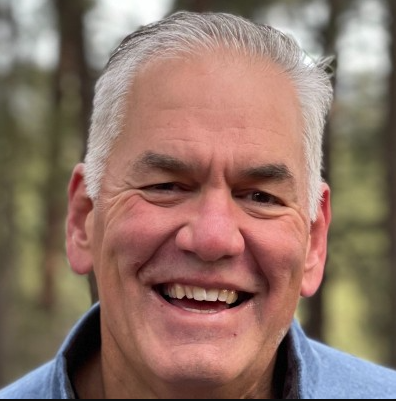 Bob Coons, owner of Southwest Home Innovations, joins Henry Lopez to share what it really takes to own a home services business: buying the right company, hiring for values, and building your marketing before you need it.
Many corporate professionals dream of owning a business, but few know what they’re getting into. Corporate experience brings real advantages, such as financial knowledge, process, and systems. It doesn’t prepare you for wearing every department hat, or for the day the leads stop coming in. As Bob puts it, “being naive is a beautiful thing.”
In this episode of The How of Business, Henry Lopez is joined by Bob Coons, his friend and former Maui Mastermind coaching client, to explore the transition from corporate finance to home services business owner, and the lessons Bob has learned growing a family-run company.
Bob spent about 30 years chasing a corporate career around the country, doing financial reporting for insurance companies. In his mid-50s, his house burned down. That event made him look at his life freshly. There’s “a little bit of what the heck,” he says, after playing by the rules all those years. When he moved to Durango, Colorado, he couldn’t get a gutter company to answer the phone. So he got the Gutter Helmet dealership, and later bought Southwest Gutter. The business wasn’t listed for sale. He simply reached out to the owner, and the deal closed within three weeks.
For Bob, it wasn’t about gutters. “It wasn’t so much about running a gutter company; it was about running my own company.” He grew the business 10 times over in its first six years, turned it into an ice dam mitigation company with Helmet Heat and snow fences, and later diversified into Penntek concrete coatings, now the company’s number one product by revenue.
Not everything worked. A Roof Maxx product line and an expansion into Grand Junction both struggled with marketing. Bob admits ego got in the way, and they went on longer than they should have before he pulled back to refocus on what was working.
On people, Bob hires for values and fires for values. Early on, he kept employees whose expertise he was afraid to lose, even when they didn’t fit. Today his team works through an 11-step certification process for installers, the idea of his director of operations and stepdaughter, Katie Bay. The result is higher retention, better work, and a team that wants to get “just a little bit better every day.”
The hardest lessons came in marketing. Reviews, referrals, and a Google Business Profile carried the company until it hit a plateau. His mastermind peers warned him to get ready for “when the fish aren’t jumping in the boat.” He heard it 100 times. “Did I listen? No, I didn’t listen.”
Bob’s closing advice: there’s no reason to reinvent anything. Get in the room with people who have done it before.
Growing a Home Services Business – Key Takeaways:
Your corporate experience is an advantage.
Process, systems, and financial knowledge give you a head start. Expect gaps in marketing and sales, and get expert help in those areas.
Know when to pull back.
Persistence is good, but ego can keep a product line or a new market going longer than it should. Pull back and refocus on what’s working.
Hire for values, and fire for values.
You can teach the technical side. You can’t really teach someone their values. When the team sees that values are enforced, everyone lives them.
Invest in developing your team.
A measured, rewarded training process like Bob’s 11-step certification builds pride, consistent quality, and retention.
Build your marketing before you need it.
Reviews and referrals will get you started, but they won’t carry you through every plateau. Marketing is never set it and forget it, so know your metrics.
Don’t throw marketing over the fence.
Agencies that don’t understand your business create commodity content. Share your expertise and tell your whole story.
Get on the AI train.
Bob sees AI as an inflection point. You can learn it and be more productive, or get left behind.
Get in the room with people who’ve done it.
Running a business is lonely. Masterminds and peers who have been successful love to share, and they will accelerate your learning.
About Bob Coons:
Bob Coons is the owner of Southwest Home Innovations, a family-owned home improvement company based in Durango, Colorado, serving the Four Corners region. After more than 30 years as a CPA in corporate America, Bob traded the desk for gutters. A decade later, he has built the company into a trusted, truly local source for ice dam and water mitigation, along with Penntek polyurea concrete coatings for garages, driveways, and patios. He runs the business on the EOS framework and three core values: Humble, Make It Better, and Cowboy Up. His stepchildren, Cam Wiegert and Katie Bay, lead production and operations.
Bob also shares his own recap of this conversation on the Southwest Home Innovations blog: Bob Coons Joins The How of Business Podcast.
Episode Host: Henry Lopez is a serial entrepreneur, small business coach, and the host of The How of Business podcast show – dedicated to helping you start, run, grow and exit your small business.
Resources:
Related Podcast Episodes:
You can find other episodes of The How of Business podcast, the best podcast for small business, on our Archives page.
Transcript:
The following is a full transcript of this episode. This transcript was produced by an automated system and may contain some typos.
Episode Transcript
This transcript has been lightly edited for readability.
Welcome, Bob Coons
Henry Lopez [0:12]: Welcome to this episode of The How of Business. This is Henry Lopez, and my special guest and friend today is Bob Coons. Bob, welcome to the show.
Bob Coons [0:21]: Hey, thanks so much for having me, Henry.
Henry Lopez [0:23]: It’s finally time to have you on the show. I’ll explain to the audience who you are and how we know each other. After nearly three decades in corporate finance, Bob Coons bought a gutter and ice dam business in Durango, Colorado, and grew it into what’s now called Southwest Home Innovations. Today he shares what it really takes to own a home services business and work alongside family. So we’re going to explore all of that, and I’m really excited to have him with me today.
You can find all of The How of Business resources, including the show notes page for this episode, and learn more about my one-on-one and group coaching programs, at thehowofbusiness.com. I also invite you to consider joining The How of Business community on Patreon, and please subscribe wherever you might be listening, so you don’t miss any new episodes.
Let me tell you a little bit more about Bob, and then we’ll get into the conversation. Bob Coons, as I said, is the owner of Southwest Home Innovations, a family-owned home improvement company based in Durango, Colorado. After 30-plus years as a CPA in corporate America, Bob traded, as he says, a desk for gutters. A decade later, he’s still building SHI into one of the area’s most trusted, if not the most trusted, truly local sources for ice dam and water mitigation, along with the Penntek concrete coatings business for garages, driveways, and patios. He runs the business on the EOS framework, the Entrepreneurial Operating System, and on the core values he’s had as long as I’ve known him: Humble, Make It Better, and Cowboy Up. SHI is a family-run business, with Bob’s stepchildren Cam Wiegert and Katie Bay already leading production and operations, so we’ll talk about that dynamic. Bob lives in Durango, Colorado. Once again, Bob Coons, welcome to the show.
Bob Coons [2:13]: Thank you.
From Corporate CPA to Business Owner
Henry Lopez [2:14]: I always like to start these conversations here, because a lot of my listeners are in the corporate world, like you and I both were, and are looking to make, or have made, that transition to business ownership. Tell me briefly about your career. You studied accounting at university. Tell me about that.
Bob Coons [2:33]: Yeah, back in the day, it was easy. There were a lot of jobs coming up in the future, and everyone was saying that accounting was the place to be. So I got an accounting degree from the University of Alabama. I then chased a career around the country for about 30 years, working at a lot of insurance companies doing financial reporting. In the end, after doing it for 30 years, even selling gutters sounded like a good alternative.
Henry Lopez [3:03]: Let’s go back to those early days, when you were at university. Did you have any aspirations about being your own boss?
Bob Coons [3:10]: You know, it’s interesting. I really didn’t. I kind of longed for the security of growing within the corporate world, hopefully making a lot of money and supporting my family. By the time I graduated from college, I was already married, so I was a risk-averse person just looking for that security. It wasn’t until my mid-50s that I had a life-changing event: our house burned down. When something like that happens, it causes you to think. Life is short. What are the things you want to do and accomplish? It gave me the opportunity to look at my life freshly and see what I wanted to do and explore. And when something like that happens to you, there’s a little bit of “what the heck.” I’d been playing by the rules all these years.
I did accumulate a lot of experiences that have helped me in running the business. I probably wouldn’t have been successful if I’d tried to do this in my 20s. It was the confidence built in the corporate world, and learning about process, how to put things in patterns, that made it possible to systematize a business. In my last big hurrah in the corporate world, we automated and put together processes to help us do reporting around Obamacare, and that really opened my eyes to the importance of process and being able to report consistently. I was able to draw on that to build the business the way I wanted it to be. We built a business that is very heavy on process, with a lot of automation. We don’t really have any paper involved. All of that came about later in my career. That realization, and enjoying doing that process work, is what opened my eyes to the potential of running my own business. And then the shock of the fire. At that point you’re like, what the heck? So I gave it a shot.
Henry Lopez [5:21]: So obviously, you had this tremendous advantage of having the financial knowledge. That’s usually a huge gap for a lot of business owners. You knew how to do the finance side of things: financial planning, projections, all of that. Huge advantage. And as you just shared, you learned how to develop systems and to value systems. One thing that’s always a challenge, though, and it happened to me, is that in the corporate world you have resources, right? This department and that department. I’m not just talking about money, but other people you can go to: legal, HR, whatever. How was it when you transitioned, and now it’s you wearing all of the department hats? Do you remember what that challenge was for you?
Bob Coons [6:02]: Well, that part of it was very exciting, getting to be involved in things I’d never been involved in. I had largely worked for large companies, with a very focused set of things I was responsible for, so I certainly wasn’t thinking about marketing or sales. I went into it with a very naive view of things. I really had no idea what I was getting myself into. It was kind of like having a kid, right? If you actually knew what it was like, you might think twice about it.
There were certainly gaps other than the financial side, and thank goodness I did have the process. I was running leads and selling. I fancied myself a pretty good salesperson, and I did do well, but I had no idea what I was doing. As time has gone on and the business has matured and gone through different stages, it gets harder and harder to fake it, and you really need more expertise in marketing and finance and some of the other areas you may or may not have been exposed to. But being naive is a beautiful thing.
Henry Lopez [7:10]: It is. I find that to be the case. Even recently, as I start a new business, I know too much sometimes. I can find all of the reasons why it won’t work. Versus when you don’t even know what to ask, you just move forward, right?
Bob Coons [7:27]: Right.
Why a Gutter Business?
Henry Lopez [7:28]: Okay. So why a gutter business and not a CPA firm?
Bob Coons [7:33]: Oh my gosh. No, I would have no interest in a CPA firm. The way I explain it is that it wasn’t so much about running a gutter company; it was about running my own company. It really didn’t matter what it was. It was about finding a niche where I thought I could make an improvement on what I was experiencing as a customer. When I first moved to Durango, I was looking for a gutter company to come to my house, and I couldn’t get any of them to answer the phone. The experience was really difficult. I was actually looking for Gutter Helmet, a product I’d had on my house for nearly 20 years, and I was looking forward to installing it on my home here in Durango, but there was no dealer. So I said, “Hey, I can get the dealership, and then I should put a gutter company with that.” And it just kind of fell into place.
So it was more about me wanting to take on the challenge of running a business. I felt like I could make a difference and make it a better customer experience. There wasn’t a tremendous amount of competition in Durango at that time, so I saw an opportunity to make something better. I had no idea I’d be able to grow the company 10 times over in the first six years or so. If you had told me that, I would have thought you were crazy. But by trying to be different and building a good business with process around it, we’ve been able to be successful.
Buying an Existing Business
Henry Lopez [9:07]: Why did you decide to buy an existing business as opposed to starting from scratch?
Bob Coons [9:12]: What happened was, I inquired about the Gutter Helmet dealership, and for the first six or seven months we formed our own company. We were trying to build momentum around the Gutter Helmet side of it. We had a gutter machine, and we were doing all that, but we were having a hard time breaking into the long-standing market. At the time, the company was called Southwest Gutter, and when somebody wanted gutters in Durango, they said call Southwest Gutter. So we were having a difficult time getting the opportunity to talk about Gutter Helmet.
Then the opportunity presented itself. Actually, I had inquired several years before we ended up buying it. I tried to lowball the owner, and she backed away. Then I came back and said, “Hey, I’m serious this time,” and we were able to buy the business and bring it all together.
What we’ve really done is take those two products, gutters and Gutter Helmet, and add a third product, Helmet Heat, which is really just Gutter Helmet with heat cable integrated into it. It’s a really nice, slick product that works extremely well in Durango, because we’re in ice dam heaven here, unfortunately. We get a fair amount of snow, which everybody loves, and then it warms up during the day, refreezes at the roofline, rinse and repeat, and you end up with ice dams. So we solved that problem. Then we added a fourth product on the gutter side, a snow fence, which holds the snow up on the roof when we need it. So we transitioned from a gutter company to an ice dam mitigation company, and that has performed very well.
Honestly, the Helmet Heat component fell into our laps. I didn’t even know the product existed when I got involved with Gutter Helmet. As I understand it, it was invented by the Buffalo, New York dealer, where they get a tremendous amount of snow, and it was designed in the ’90s. It just so happened that I got a little lucky: that product came along with Gutter Helmet, and it fit perfectly with what we need in this area. So sometimes you just have to be lucky, too. We’ll take all the luck we can get.
Henry Lopez [11:31]: I’ve definitely found in business, Bob, that a little bit of luck helps. I like to phrase it that you’ve got to get in the way of luck, but we all need a break here and there that contributes to success, whether it’s being in the right place at the right time, meeting the right person, or whatever the case might be.
A Word From Our Sponsor
This is Henry Lopez, briefly pausing this episode to share exciting news about business bookkeeping. Yes, bookkeeping can be exciting, especially when it’s accurate and timely, and you don’t have to do it. I’m excited to announce that I’ve launched The How of Business Bookkeeping, a technology-driven essential bookkeeping service for small business owners like you, and I’m accepting a limited number of clients in our early access program.
Let me ask you this: Do you have accurate and timely financials to measure the performance of your business and help you make critical decisions? If you’re behind on your books, tired of doing it yourself, or frustrated with your current bookkeeper, then I invite you to consider my new bookkeeping service, The How of Business Bookkeeping. The service includes your QuickBooks Online subscription, monthly account and credit card reconciliations, accurate financial reports, a KPI dashboard, and professional bookkeeping support, so you always know where your business stands and can make decisions with confidence. All of our bookkeeping work is performed by U.S.-based, QuickBooks-certified bookkeepers, ensuring your books are handled accurately and professionally. And it’s all brought to you by my company, The How of Business, a name you can trust to help you run and grow your small business.
Right now, I’m waiving the $99 onboarding fee for new clients. To learn more or to schedule a free consultation, just visit thehowofbusiness.com and look for the bookkeeping service link on the homepage or in the menu. Take that first step today, and finally get the timely and accurate bookkeeping you need to help you grow your small business. Visit thehowofbusiness.com to learn more.
Finding a Business to Buy
An interesting point here, because a lot of the people I work with struggle with how to find a business to buy. That business was not listed for sale, or was it?
Bob Coons [13:36]: No, I just reached out to her. The first time I talked to her, she didn’t have as much interest. The second time, her husband was having some health issues, and the timing was just right.
Henry Lopez [13:49]: Yeah.
Bob Coons [13:50]: I contacted her for the first time about this time of year, in fact, and within three weeks the deal was closed. Things can move pretty fast. I would definitely consider that as an option. There certainly seems to be a trend. You’ve got old guys like me these days who might want to sell out, right? There seems to be a transition of folks in my generation who might be looking for a way to exit.
Henry Lopez [14:19]: Definitely. There are lots of boomer businesses for sale, but it’s sometimes hard to find them, and the traditional routes aren’t always the best way. Thanks for sharing that.
Diversifying With Penntek Concrete Coatings
When you and I first met several years ago, I had the privilege of serving as your business coach through the Maui Mastermind program. At that point, if I recall correctly, you had not yet added the Penntek distributorship. Tell us about that, to round out what you do today.
Bob Coons [14:45]: Yeah. In 2023, we had a very significant, very heavy winter here. Since then, we have not. And again, call it foresight or a little bit of luck, but I said to myself, we had a huge winter, we’ve got a great team here, we’ve built up a team, we’ve got everybody trained up. We need to diversify, or consider diversifying. A Gutter Helmet dealer up in Denver had mentioned that they’d added this Penntek pure polyurea product, a concrete coating, and that they enjoyed working with the dealer network and the product. So we checked into it, and it looked like a good product, consistent with the quality we try to offer on the gutter side. A couple of years ago, we went ahead and added Penntek to our portfolio, and it’s been very important. It’s actually become our number one product, revenue-wise, which was fortunate, given that the last three winters have been fairly mild. So we’re building up some pent-up demand for the next big winter we get, which is coming this year.
Henry Lopez [15:54]: It is, absolutely, even if we have to manufacture the snow.
Bob Coons [15:58]: Yes, sir.
Knowing When to Pull Back
Henry Lopez [15:59]: It’s coming. So that’s brilliant. I remember you and I having this conversation. I’m always cautious, either for my own businesses or for businesses I coach, about expanding the product line. But this seemed complementary, and obviously it proved to be. You were able to sell it back into the prior clients you’d done gutter work for. So it seemed like the right blend. But is that something you consider, being careful not to add too many things to the menu, if you will?
Bob Coons [16:28]: Yeah, not everything has worked out. A year and a half ago, we added a product called Roof Maxx, and for many reasons, that just didn’t work for us. We also expanded into Grand Junction, which is a much larger market than where we are. I think both of those were marketing challenges. We were successful in transitioning our culture to Grand Junction. We had a great install team and sales team, and we were there for about a year. We just couldn’t get the marketing started there. So you do have to be careful. This is all learning, right? You’re always learning. I’m an old guy, and I’m still learning every day. But you want to make sure that you’ve got everything ready to roll and that all of the components are firing on all cylinders before you jump into bigger things.
We moved into Roof Maxx because, again, we wanted to diversify into folks looking for less expensive solutions to problems they might have. Let’s say we went through a recession, which I’m convinced is going to happen at some point. We would have that as an alternative to a full roof replacement. But for many reasons, the marketing was challenged on that, and it’s not a very interesting story. We had to make a very difficult decision to say this just isn’t working. It was similar with the Grand Junction office. We had to say this is just not working, and we need to pull back and refocus on the things we’ve been successful at.
Henry Lopez [17:59]: That’s not an easy thing to do, Bob, and I give you so much credit for that. As a business owner, I’ve found it’s sometimes one of the most difficult things to do: to say this is not working, let’s cut it back and retrench on core services. Ego can get in the way, and we say we’re going to keep trying, banging our head against the wall. Sometimes you just have to say, let’s shift, let’s pivot.
Bob Coons [18:21]: Let me tell you, ego definitely got in the way, and it probably went on a lot longer than it should have before we gave up. Part of that is persistence, and if nothing else, I am persistent. I think I took the CPA exam about 10 times. So persistence is a good thing, but is it ego? When should you give up? We tend to always wait a little bit longer than we should.
Hire for Values, Fire for Values
Henry Lopez [18:51]: We’ll talk about marketing in a moment, but on the topic of people, you’ve always told me you hire for values. Can you explain briefly what that means for you, and more importantly, what it looks like?
Bob Coons [19:04]: As part of the EOS methodology, you learn about defining your values. I worked in the corporate world, and we used to have all this stuff up on the wall, right? You walk by it every day and think, yeah, yeah, right, whatever. It can be like that. But through the process, we reward and acknowledge people for following our values and understanding what it means to be a Southwest Home Innovations representative, someone who’s out in the field acting on our behalf. We all live those values. There are times when Bob doesn’t do a great job of living those values, and I certainly remind myself of that, and I’m constantly working at it. None of us is perfect.
When we were trying to build our company, we used to hire people primarily for whether they’d hung gutters before, or done marketing or sales. What we found, and EOS teaches this as well, is that you’ve got to get the right people in the right seats, and they need to have your values. Do they get it? Do they want it? Do they have the capacity to do it, in conjunction with the values? If that’s all a go, you’re in great shape. But if they can’t perform and live within your values, unfortunately, they can’t be part of the team.
So you’re talking about hiring for values. We also fire for values. People understand that, because many on the team have seen us let people go for not living our values. If the whole team sees somebody who isn’t living the values, they start looking around and going, “Well, do I have to live the values?” So everybody has an expectation that we’re all going to live within those guidelines. Honestly, when we made that shift, the quality of the people we’re able to get and retain really improved. We’ve had much higher retention and much better-quality work. And if nothing else, the team we have is truly amazing. Everyone works well together. No one’s pointing fingers. I believe it’s a good place to work. It’s a good place for me, and I believe for the folks on the team.
Henry Lopez [21:30]: That last point is critical too, Bob. It’s a good place for you as the business owner.
Bob Coons [21:35]: Yeah.
Henry Lopez [21:36]: You enjoy working with these people. Not that there aren’t challenges, but that’s so critical, right? I see so many business owners who end up in an environment where they dread showing up, or they don’t like the people.
Bob Coons [21:47]: In contrast, when we bought the company, some employees came with it, and I was so worried about losing the expertise that I was willing to forgo the values. Honestly, I didn’t know what the values were at that time. We hadn’t really defined them. But once the employee gets control, you’ve lost control. And it’s not a controlling thing. It’s about living in unison, having a positive work experience, and all rowing the boat together. We learned. We had a couple of employees who were with us for several years who shouldn’t have been. We should have taken action earlier.
Henry Lopez [22:32]: But you felt like, well, we need them. They’ve got this expertise.
Bob Coons [22:36]: Yes, and because of that, it took that much longer for us to get to the end game of having a team. With the benefit of hindsight, in my next venture, if I have one, that’s certainly a takeaway. We would be much more decisive.
An 11-Step Certification Process
Henry Lopez [22:57]: I think what applies so well here is this: if you were starting a CPA firm, then if I hire you, you’ve got to be a CPA or have certifications or education. Even then, you still hire for values. But here in particular, you can teach them the technical side of things. Is that fair?
Bob Coons: Yes.
Henry Lopez: What you can’t really teach someone is their value system. You can help them develop those, especially younger people, but for the most part, I think they either have them or they don’t. The other thing I’ve seen you invest in, which has resulted in the culture you have now, is the development of your team members. A great example is when you developed what I think you call a certification process for the technicians. They take pride in it, and you’ve created a process for them to continue developing their skills. It’s measured, and they get rewarded for it. Is that the way you see it?
Bob Coons [23:54]: Yeah, it really starts with the customer. We want a really positive experience for our customer. When I drive down the street and look at a system on somebody’s roof, I want to be able to look at it and go, “Yeah, that’s got the Southwest Home Innovations process on it.” You can recognize that we’re doing it consistently, so the customer knows what to expect as well.
This was actually Katie’s idea, my director of operations. We came back from a mastermind group where we’d been talking about reducing cycle time. It was taking too long for us to get new installers trained, and she said, “Why don’t we come up with a certification process?” So we developed an 11-step certification process. It’s designed to take installers 90 to 120 days to get through, and there are incentives for getting through the process. We have simulators in the shop that we take them through, there are labs, and there’s time they spend on the computer. We’re constantly trying to teach them how we want things installed. We have weekly meetings where we talk about how projects went. We have a quality review, and where we see things that are off, we go back and fix them. We talk about it as a team. Again, this isn’t about pointing fingers. It’s about learning and getting just a little bit better every day.
The values part is what allows somebody to sit in a meeting and have a conversation like, “Hey, we noticed on this job that you did this, and we’d like you to consider this next time.” Not everybody can receive that, right? So we’re very fortunate to have a team now where everyone is interested in getting just a little bit better every day. It took a long time for us to get to that point. I’m very blessed to have the team that I do. It’s an endeavor for small businesses, or any size business, and I’d definitely encourage it. I wish I’d had some of that knowledge when I was in the corporate world.
Working Alongside Family
Henry Lopez [26:05]: Excellent. Thanks for sharing that. Speaking of people, you mentioned Katie, so let’s touch on that for a moment. You have both of your children involved in the business. What’s that like?
Bob Coons [26:16]: Right, I do. Did I mention I’ve got a third one? They’re a set of triplets, and she happens to live down in the Dallas area, and we miss her. But Katie and Cam are very, very much involved. They’ll be taking the business from me when I’m golfing or doing something else. Katie’s the director of operations, and she’s part of the Maui Mastermind program. Through everything we learned there, we went through a financial program, and we went through a three-year leadership program that Cam was also involved in. So we’ve invested a fair amount in developing them. They’re young adults who are learning how to lead.
With my financial background, Katie and I went through the financial component together and were able to work through it. I would say she’s in the top 90% of folks running small businesses when it comes to understanding the financial side. As you mentioned earlier, it’s an area a lot of business owners want to outsource, right? They want somebody else to do it. So she’s very knowledgeable in that area. Right now, she’s running operations, so that’s scheduling. She does a lot of the financial work, and she’s also helping me on marketing. Frankly, they’re trying to fire me. Inside EOS, it’s about getting the right people in the right seats, and Bob the CPA is not in the right seat as the marketing guy. So we’re working on that. She’s learned a tremendous amount about a whole breadth of things and will be well prepared to run the business someday.
Cam is on the production side and is doing quite a bit of work there. He’s also gotten involved in sales and has done extremely well with that, so I’m very thankful for that. As a small business, we need a lot of Swiss Army knives, right? Folks who can do a lot of different things. And one of the keys I’ve learned over the years is to engage with some experts. I’m talking major leaguers, when you can. Try not to dabble in things, and get some real help from people who know what they’re doing, because these things are complicated. It’s hard. I used to say I had 20 hats stacked on top of my head trying to figure all this out, and even if I were an expert in all those areas, it would be difficult to juggle all those things.
Lessons Learned About Marketing
Henry Lopez [28:43]: Agreed. You’ve got two great young people there who have learned so much, are learning from you, and are building this business together. That’s fantastic when you can do that. You touched on marketing, so I want to touch on that. I know firsthand the challenges you’ve had, but the question I want to ask is this: What’s one key lesson you’ve learned about marketing in general? When you’re talking to somebody who’s going to start a business now, what do you say to them about marketing?
Bob Coons [29:11]: Well, when you start out, for us it was really pretty simple. We focused on reviews, which were driven by the quality of the work we did; the basics of Google My Business, or Google Business Profile as it’s called today; and some of those real basic things on the web. Beyond that, it was delivering an incredible customer experience that drove referrals and repeat business. Then what happens is, when you grow to a certain level, you can’t rely on those things.
Henry Lopez [29:44]: That’s not enough, right? It’s not enough to fuel the growth.
Bob Coons [29:47]: Right. I would have started the process of understanding other avenues of lead generation sooner. I was willing to ignore those things, because we were good. We were growing at significant rates, and we really didn’t need any more growth at the time. But then you hit a plateau, which is pretty common. Talk to people about the $2 to $3 million plateau in the home services industry. A lot of people have a challenge taking it to the next level, and that comes through alternatives, whether it’s canvassing, home shows, Facebook, or Google Ads, and then, in general, the organic presence you have on the web, making sure you’ve secured that. That’s been some of the tuition I’ve paid in the last year.
Particularly in the home services industry this year, and I’m involved in a whole series of masterminds, a lot of people are challenged by a reduction in lead sources. During COVID, for the first couple of weeks, we thought the world was going to end. Then everyone was at home, and they started calling again. They got bored, and they said, “I’m going to fix up my house.” So we pulled a lot of demand forward. A lot of the people in the masterminds I went to would say, “You guys need to get ready on the marketing side, because when the fish aren’t jumping in the boat, you’re going to want to be ready.” I heard them say it 100 times. Did I listen? No, I didn’t. I didn’t prepare myself. So now that the fish are not jumping in the boat, we’re learning in a much more accelerated way. We haven’t talked about marketing in probably a year and a half, since the last time I talked to you about it, Henry, but I think you’d be shocked at how much we’ve learned.
Henry Lopez [31:48]: Oh, I know I would be. It’s incredible, and you’ve had to do that. So well said, and thanks for sharing that. I think the other thing that’s such a challenge in marketing, for small business owners or anybody, is that, as I always say, it’s a moving target. Facebook might have worked a year ago, and it may not work now. So you’re always having to stay ahead of it or figure out what’s next, right?
Bob Coons [32:11]: Yeah. You’re looking for the set-it-and-forget-it, and in marketing, that just doesn’t exist. You’ve got to constantly be looking at it and tinkering. You’ve got to know all your metrics. You’ve got to be trying different things, and you’ve got to know whether something’s working or not.
Henry Lopez [32:27]: While you say they want to fire you from marketing, the fact is that as the CEO, the owner of the business, as the saying goes, nothing happens until we sell something. So as the owner, you have to at least have your finger on the pulse of this. You’re fortunate to have Katie and a great team there, but this has got to be an area you continue to own and be involved in. Is that fair?
Bob Coons [32:46]: Yes. Like you say, if you don’t have sales and marketing, you don’t have a business. One of the many mistakes we made on marketing was that, again, I was looking for someone I could outsource it to, so we would throw it over the fence to an agency. In my experience, agencies often don’t understand your business completely. So let’s say they’re creating content. They’re going to create commodity content, because they don’t know the details. One of the exercises we’re going through right now is creating a fair amount of content with the expertise we’ve gained, content that demonstrates that expertise appropriately.
We’re at a crossroads right now in marketing. It used to be all about Google, and right now everything is coming into play. We used to be able to ignore Yelp, right? Well, you can’t ignore Yelp anymore. You can’t ignore a lot of sites, some I don’t even know the names of off the top of my head. To dominate on the web these days, it’s a much broader experience, and you have to demonstrate credibility across a much wider swath of sources, and it’s changing so fast. We also have AI slop and all that stuff going on, where people are just throwing stuff out there, and we’re doing some of that too. But we’re trying to provide some real quality content that validates that we’re the experts. Back in the day, I wouldn’t have given the details I give today about how we do what we do, because I’d have been afraid that everyone would know what we’re doing. Now it seems to be important to tell your entire story. Put it all out there so that folks understand that you are an expert.
Becoming the Face of the Brand
Henry Lopez [34:39]: And part of it, here recently, is you being the face of the brand to some extent and putting yourself out there.
Bob Coons [34:45]: Yeah. I’m trying to.
Henry Lopez [34:48]: You’re doing a great job with it. But I know, Bob, that three years ago there’s no way you would have done that, I don’t think.
Bob Coons [34:55]: Well, I’m going to go out in a flame here. I’ve taken a real [inaudible] on myself in the last few years.
Henry Lopez [35:02]: No, it speaks to the point of developing those relationships through transparency, and I think that’s part of what’s creating the challenge in reaching people. They read the BS. They see through it very quickly, don’t they? We all do as consumers, I think.
Bob Coons [35:19]: Well, you have to catch somebody’s attention enough that maybe they’ll want to watch you talking about a gutter the next time, right? So you’ve got to have a little bit of fun with it, and I’m trying my best. I would say we’ve gone from creating zero content to almost daily content now, and putting it out there. Apparently it’s just about making folks aware that you do know what you’re talking about, and doing it with regularity.
What to Tell a Business Owner Who Hasn’t Adopted AI
Henry Lopez [35:48]: You touched on AI, and I want to end with that. The other thing I’ve always admired is that you and I were on ChatGPT like two years ago. You were an early adopter of that technology. I could ask a bunch of questions, but what I want from you is this: there are a lot of people I work with who are hesitant about it, or afraid of it, or don’t understand it. What do you say to the small business owner who hasn’t adopted AI?
Bob Coons [36:13]: Well, I remember talking to a buddy, and I couldn’t even tell you who it was. I said, “Yeah, I’m really hoping I can drift off into the sunset before I have to fool with AI.” And he kind of goes, “I don’t think I’d do that, Bob.” So I started to get into it a little bit.
What I’m seeing, as an older guy who’s come through some of this: it wasn’t too long ago that color TV was a big deal. We went from black-and-white TV to color TV, and then the internet came along, and cell phones came along. The internet has taken 30 years to really reach a point of maturity where it’s foundational to the things we do. It’s becoming very clear to me that AI is going to move at multiples of that. In two to three years, it’s going to be completely embedded in almost everything we do. Now, we may say we don’t like that, and it doesn’t seem like the greatest thing, and we have worries and concerns about it. But what I would say is that there’s going to be good and bad, and it’s kind of like marketing. We’re at an inflection point here where it’s either an opportunity or a failure, and I think it’s very binary. You can get on the train and learn it, and you’ll be exponentially better because of it, that much more productive, or you’re going to get left behind. With the internet, I wasn’t an early adopter in the ’90s, but I didn’t get left behind, and it was okay. But in this instance, I think you’re either going to see it as a real opportunity, or it’s not going to work out very well for you.
Henry Lopez [37:58]: I agree. Well said. And I think part of the reason why is that, like the internet, this is available to your competitor down the street. They’re going to take advantage of it, even if you don’t. So, well said. Thanks for sharing those ideas. We could talk about that for hours.
Southwest Home Innovations’ Ideal Client
Let me start to wrap it up. We’ve talked about what Southwest Home Innovations offers today, but maybe summarize it with this question: Who’s your ideal client for what you offer today through Southwest Home Innovations?
Bob Coons [38:26]: It’s a customer who wants low maintenance. They want something done right the first time. They don’t want to have to do something over and over again. They want to be well communicated with, and they don’t want to be ghosted. That tends to be a higher-end customer. Our solutions are definitely not the cheapest ones out there, but we have a very strong following among the folks who have done business with us. It’s rare that someone says we weren’t worth every penny for the process we took them through.
Bob’s Key Takeaway: Get in the Room With People Who’ve Done It
Henry Lopez [39:00]: What’s one thing you want us to take away from this conversation, whether I’m looking to start a business, maybe in the home services industry, or I’m an existing small business owner?
Bob Coons [39:11]: Here’s the other thing I’ve learned, and it goes right along with this question. There’s no reason to reinvent anything. I sell gutters, right? So those obviously aren’t being reinvented. But the processes around running a business… Right now, with AI, there’s a lot of opportunity to rethink how it’s being done. For instance, within home improvement, there are many organizations. There are masterminds, and tons of books you can read and learn from. But get in a mastermind and get around people who have done this before and have been successful. Get in rooms with like-minded people, and that’s where you’re really going to get the acceleration. Because there’s really no reason to try to figure out how to sell gutters. There are people who have been doing this for 40 or 50 years, and what I’ve found, surprisingly, is that they’re all willing to share it with you. They love to share. They love to talk about it.
As a business owner, it’s a very lonely existence, because you’re trying to deal with things on your own and figure it out. You really can’t even talk to your wife, because she’s already heard it for 30 hours this week. So get with people who are going through the same thing you are, and you’ll be shocked at how much people love to share and talk about this. I would encourage you to find like-minded people. Masterminds are everywhere. I’m in one now about mindset, the Inner Blueprint, and that’s been transformational for me as well.
Where to Learn More
Henry Lopez [40:41]: Well said. I couldn’t agree with you more, Bob. That’s brilliant. Thanks for sharing that. Tell us where you want us to go if we want to learn more about you and Southwest Home Innovations.
Bob Coons [40:50]: Sure. We’re on all the social platforms, but the easiest place to start is Southwest, spelled out, with the letters H and I. So it’s SouthwestHI.com, and Southwest is the only word spelled out.
Henry Lopez [41:04]: Southwest H-I, for Home Innovations. If you’re not somewhere you can make a note of that, just go to the show notes page for this episode and search for Bob Coons. The episode will come up, and I’ll have a link there to their site if you want to learn more. Bob, great conversation, as I knew it would be. Thank you, my friend, for taking the time to be with me and to share all of these insights, knowledge, and experience.
Bob Coons [41:24]: Thanks so much for having me.
Henry Lopez [41:25]: This is Henry Lopez, and thanks for joining us on this episode of The How of Business. My guest today, again, was Bob Coons. I release new episodes every Monday morning. You can find the show anywhere you listen to podcasts, including The How of Business YouTube channel, and at my website, thehowofbusiness.com. Thanks for listening.
Announcer [41:43]: Thank you for listening to The How of Business. For more information about our coaching programs, online courses, show notes pages, links, and other resources, please visit thehowofbusiness.com.