


From Home Kitchen to Seven Figures.
How Addison LaBonte launched Sweet Addison’s – a desert brand specializing in gluten-free and dairy-free cookies and brownies. Addison shares how she built an audience before launching her first product, bootstrapped without giving up equity, and grew her brand to seven figures in its first full year.
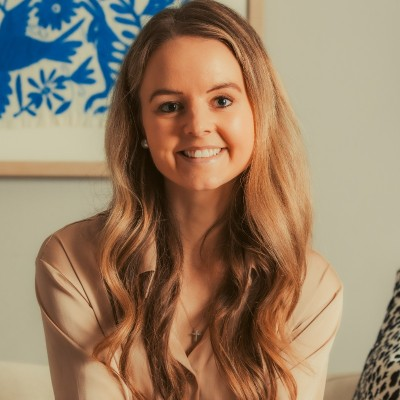
Many entrepreneurs start with the product and hope the customers follow. Addison did it the other way around. She spent years building a following online and becoming a trusted authority. When she finally launched, she already had customers asking for her product. That approach isn’t required, but as she puts it, “If you have it, you’re going to get a jump start, for sure.”
In this episode of The How of Business podcast, Henry Lopez is joined by Addison LaBonte to explore how she launched and grew Sweet Addison’s. They cover audience building, an MVP launch, pricing, landing wholesale accounts, and the mental toll of the startup years.
Addison never expected to become an entrepreneur. She majored in mathematics, worked in finance, and planned to follow her mother into a CFO role. After college she was a Division One soccer player at the University of Maine.
While training for her first marathon she was diagnosed with compartment syndrome. Within three days of going gluten-free she could run normally again. She started the Instagram account Organically Addison to share what she learned, and then her “25 Days of Christmas Cookies” series went mega viral, and people all over the country started asking to buy her cookies.
She spent 2023 getting ready to launch. That September she was unexpectedly laid off, which she calls “the biggest blessing in disguise.” She launched Sweet Addison’s in January 2024 with one product: a chocolate chip cookie that took 27 recipe variations to get right. She took an MVP or iterative approach, listening to that feedback and then adjusting. Her audience asked for brownies, so she launched them in month three, and they quickly outsold the cookies.
Addison bootstrapped the business, still owns 100% of it, and has cash flowed from day one. She didn’t write a business plan. She studied competitors’ price per ounce and worked back from her cost of goods sold. Most of her wholesale accounts have come to her as inbound leads. For founders trying to get on shelves, her advice is to be “relational instead of transactional,” and to remember that “no one is going to be a better salesperson than the founder.”
The hardest part wasn’t physical. It was the mental battle of 18-hour days, and there were months when she didn’t even see the sun. What kept her going was taking the emphasis off herself and putting it on the customers she serves.
Henry offers one of his own litmus tests: What’s the worst-case scenario? If it fails, you’ll recover. “Mostly, it’s our ego that gets bruised that we’re worried about.”
From Home Kitchen to Seven Figures – Key Takeaways:
- Build the audience before you sell.
Addison built trust with her following for years before she ever sold them anything. When she launched, her first customers were already waiting. - Consistency and engagement grow a following.
She posted every day for years and answered her messages. Make your content about what your audience wants to see, not what you want to see. - Launch with one product and let customers tell you what’s next (MVP Approach).
One cookie, one flavor. Listening to her audience led her to launch brownies months early, and they became the bestseller. - You can’t wait for perfect.
Henry’s point: 80% is often good enough. Save your highest standards for what matters most, like product quality, and keep moving on everything else. - Bootstrapping keeps you in control.
Addison funded the business from her savings and cash flow. If she needs capital to grow, she prefers debt to giving up equity. - Founders are the best salespeople.
To get on shelves in grocery stores, contact buyers directly, send samples, and write a handwritten card. Starting regionally with smaller stores is a smart path for a bootstrapped brand. - Creators and influencers can change the game.
Her creator program pays affiliates to make content, which has been “a game changer for Sweet Addison’s.” - Prepare for the mental challenge, and know your worst case.
The first year was a mental battle every day. Ask yourself what would really happen if it failed. Usually you would recover.
About Addison LaBonte
Addison the founder of Sweet Addison’s, a gluten-free, dairy-free cookie and brownie brand based in Dallas, Texas. She launched the company in January 2024, bootstrapped it, and grew it to seven-figure revenue by the end of 2025. Sweet Addison’s ships to all 50 states, sells through wholesale accounts, and offers corporate gifting and a creator program. Before Sweet Addison’s, Addison built Organically Addison, a food and wellness platform with 372,000 Instagram followers, and she earns a full-time income as an influencer. She has a bachelor’s degree in mathematics, worked in finance, and played Division One soccer at the University of Maine. She is a marathoner who is now training for her second ultramarathon. Her experience spans product development, organic and social media marketing, e-commerce, customer acquisition, and scaling a consumer packaged goods business.
Episode Host: Henry Lopez is a serial entrepreneur, small business coach, and the host of The How of Business podcast show – dedicated to helping you start, run, grow and exit your small business.
Sponsor:
This episode of The How of Business podcast is sponsored by Oostas.
Honest, Proven Internet Marketing Services for Small Business.
You work hard every day. So do we. Our team has experience and expertise, and we give each client a personal touch to deliver results.
Resources:
Related Podcast Episodes:
You can find other episodes of The How of Business podcast, the best podcast for small business, on our Archives page.
Transcript:
The following is a full transcript of this episode. This transcript was produced by an automated system and may contain some typos.
This transcript has been lightly edited for readability.
Meet Addison LaBonte
Henry Lopez [0:12]: Welcome to this episode of The How of Business. This is Henry Lopez. My guest today is Addison LaBonte. Addison, welcome to the show.
Addison LaBonte [0:19]: Henry, thank you so much for having me.
Henry Lopez [0:21]: This is going to be a great conversation, Addison. After building a loyal food and wellness following online, Addison turned her passion for gluten-free, dairy-free baking into her business, Sweet Addison’s, which is a cookie and brownie brand that hit seven figures in its first full year. So today she joins us to share how she went from a math degree, very interestingly, to her home kitchen to a fast-growing business, and how she launched it and grew it.
You can find all of The How of Business resources, including the show notes page for this episode, and find out more about my one-on-one and group coaching programs at thehowofbusiness.com. I also invite you to consider supporting this podcast and joining The How of Business community on Patreon, and subscribe wherever you might be listening so you don’t miss any new episodes.
After building a large food and wellness audience, as I mentioned, through her platform Organically Addison, Addison launched Sweet Addison’s in 2024 and grew the company to seven-figure revenue by the end of 2025. Her experience spans product development, social media and organic marketing, e-commerce, customer acquisition, and scaling this consumer packaged goods business from her home kitchen into a growing national brand. Addison lives in the Dallas, Texas area, my old home. And so with all of that, Addison LaBonte, welcome to the show.
Addison LaBonte [1:40]: Thank you so much for having me. I’m excited to be here.
From Math Major to Entrepreneur
Henry Lopez [1:42]: Appreciate it. So I would like to start, in your case… I was reading and learning about your past and your journey. You got a bachelor’s in mathematics, correct?
Addison LaBonte [1:50]: Yes, that’s correct.
Henry Lopez [1:51]: And why did you major in mathematics?
Addison LaBonte [1:55]: Math was always my favorite subject growing up. I love that there was always one right answer, and it’s very black and white, and it was the subject that I was the best at. Honestly, numbers came very easily to me. Both my parents worked in finance, so I think that’s just how my brain is wired. And I knew if I studied something like math or finance, I’d be able to find a job after college and hopefully get compensated pretty well. So it’s pretty funny that I went from being a math major to having a cookie company.
Henry Lopez [2:25]: Right. And did you have entrepreneurial influences? Obviously at home your parents were in finance, so probably not. You thought a career is the way I have to go?
Addison LaBonte [2:35]: Yes, definitely. I never in a million years thought that I’d become an entrepreneur. I didn’t really have many examples of entrepreneurship in my life. I grew up in a really small town in Maine, so someone having a big business just wasn’t really a thing there. And having two parents who went a more traditional corporate America route, I thought for sure that’s exactly what I would do. My mom’s a CFO, so I thought I would get in with a business, work my way up, become a CFO someday, and follow in her footsteps. So this is very off the beaten path for me.
Henry Lopez [3:04]: No doubt, no doubt. And you made the point about black and white, the precision of math, the precision of finance. That could be an advantage, but it also could be a challenge in business, because everything doesn’t always fit perfectly into our calculations, and our pro formas and our financial projections don’t always work out. So how did you make that transition to a mindset in business that requires us to be open to change, where everything often falls in a gray area?
Addison LaBonte [3:31]: I had to become a lot more flexible and adaptable when I started my business, and I knew that going in, but it has really challenged my way of thinking: not thinking only in black and white, but thinking outside the box. And with business, there’s always something that’s coming up. Inevitably, things do go wrong. So I wouldn’t consider myself a go-with-the-flow type of person, but I’ve had to become more of a go-with-the-flow type of person, being an entrepreneur.
Henry Lopez [3:56]: Yeah, I can imagine. Me being a perfectionist, I had to learn to accept, especially when I delegate or as you build a team, that 80% is often good enough. We don’t always have to strive for perfection. There’s a difference in what we apply that high standard to, like the quality of the cookies and the brownies that you make. But there are other things that we don’t have to get perfect, and we can still go forward. We can still launch. Is that fair?
Addison LaBonte [4:22]: Yes, exactly. You can’t wait for everything to be perfect, or nothing would ever get done in business. As a recovering perfectionist myself, I have learned that one the hard way many times over. I used to think everything had to be perfect, but with business, you can’t wait for everything to be perfect, or it would just never happen.
Going Gluten-Free
Henry Lopez [4:41]: It’ll never happen. Yeah. So first of all, you got into gluten-free. Tell me briefly that story. It sounds like a passion that was health related.
Addison LaBonte [4:51]: Yes, correct. I was a Division One college soccer player at the University of Maine, and when I graduated, I really wanted to run a marathon, so I started long-distance training. And as I was running these long distances, my legs would go completely numb while running. I had never really had an injury growing up playing sports, so I was pretty confused and pretty frustrated. I went to see several different doctors, and they diagnosed me with something called compartment syndrome. Essentially, the blood flow was getting cut off to my legs when I was running, and it’s very dangerous. You can be doing permanent nerve damage. And my doctor said, you can quit running altogether, forever, or you can get surgery on both of your legs, and you won’t be able to exercise for 12 months. And there’s like a 50-50 shot that it even works.
Henry Lopez [5:42]: Was this related to your veins and blood flow?
Addison LaBonte [5:46]: Yes, that’s correct. So I said, well, I’m not going to get surgery, and I’m definitely not going to stop working out. So I’m just going to keep running, even if my legs go numb. But I also decided on the side to take a look at my diet and lifestyle, and I became gluten-free kind of on a whim. And within three days of becoming gluten-free, I could run completely normally again, which was…
Henry Lopez [6:12]: So what is it in the gluten? Is it an inflammation issue?
Addison LaBonte [6:17]: Excessive inflammation.
Henry Lopez [6:19]: So reducing that allowed the blood to flow more normally, if I’m simplifying it, obviously.
Addison LaBonte [6:26]: Yes. And then I ran my first marathon eight months after my doctor said I might not ever run again. That has really fueled me and inspired me to push myself to the limit, not only in business but in life. I’m currently training for my second ultramarathon, and it’s such a gift to be healthy enough to run and work out. It’s something that I will never, ever take for granted again.
Building an Audience Online
Henry Lopez [6:54]: That’s wonderful. So that leads you to this passion of understanding how food and diet affect you. But then what leads to you making this stuff at home?
Addison LaBonte [7:03]: Once I became gluten-free, I did a bunch of research about the link between celiac disease and compartment syndrome and long-distance running, and I really couldn’t find any research out there or anybody talking about it. I thought other people needed to know about this, so I started an Instagram account called Organically Addison, and I just started posting all of my gluten-free recipes that I was baking at home, and it really resonated with people. I was also talking about how to train for a marathon if you don’t eat pasta and bagels and pizza and all these carbs, and how to go to dinner if you’re gluten-free, and it was really educational for people. This was 10 years ago now, so gluten-free was not what it is today. And so I built up a following that way. Then when COVID hit, my following grew exponentially because everybody was at home baking, so I started to get a lot more interest in my content.
And then when it comes to starting Sweet Addison’s, what happened was in December of 2022, I did something I called the 25 Days of Christmas Cookies. Every day in December leading up to Christmas that holiday season, I baked a different type of cookie and posted it on Instagram and TikTok, and a few of them went mega viral, like millions and millions of views. So I started getting messages from people all over the country asking if I could send them these cookies, or if I sold them in any stores. And I was still working in finance, and I was not enjoying finance. So I thought, well, I have this big audience online. They’re already demanding this product from me that, in my mind, doesn’t exist, which was a really clean-ingredient but indulgent-tasting dessert. So I spent all of 2023 getting ready to launch, and then in January 2024, I launched Sweet Addison’s.
Henry Lopez [8:54]: Wow. Okay, so a lot there to unpack. That’s incredible. The fact that you started by building a following online and being an authority is very important. I’m coming back to this, as to how critical that is when we’re trying to launch a product. Right now, you’ve got 372,000 followers on your Instagram account. So that was key, because you were then able to share with that audience: hey, I’ve got a solution now. I’m making these cookies at home.
Addison LaBonte [9:22]: Yeah, right.
Henry Lopez [9:23]: So brilliant there. But that was your first foray into social media, I’m assuming, right? You weren’t doing that for work.
Addison LaBonte [9:31]: Correct.
Henry Lopez [9:32]: So if you think back to that, and if you are advising somebody now on how to start getting a presence, a following online, what are one or two key things that you think you did that helped you get that audience?
Addison LaBonte [9:45]: The biggest thing is consistency. I posted every day for years and years, and so people came to expect to see my content on Instagram and TikTok. And then also engaging with your audience. I don’t have a following if I don’t have the audience. So how can I best serve them? What content do they want to see? If someone’s sending me a message, I’ll open it and reply, because again, I don’t have a business if I don’t have customers. So I’ve always really focused on: who am I serving, why am I serving them, and what can I do to go above and beyond so that they’re learning something or they’re entertained by my content. So that’s the biggest thing: posting every day, being consistent, and then making your content not necessarily about what you want to see, but what your audience really wants to see.
Making the Leap
Henry Lopez [10:30]: Brilliant, brilliant. Thanks for sharing that. Okay, so let’s go back to the timeline. 2024 is when you launch Sweet Addison’s. Did you leave your full-time job? Did you do this on the side? How did you start?
Addison LaBonte [10:42]: When I was recipe testing and getting the business up and going, I was still working in finance remotely, and my goal was to quit my job at the end of 2023 and then go all in on this cookie business in early 2024. But I was unexpectedly laid off from my job in September of 2023, which, looking back, was the biggest blessing in disguise. But at the time, it was a little bit scary, and I felt a little uneasy about it because I was not expecting it. And so I thought, well, this is really what I need to go full time with being an entrepreneur. Thankfully, it worked out well in the end, but it was a little scary there for a few weeks.
Henry Lopez [11:23]: I’m sure. Sometimes we need that push, though, right? Somebody else to kind of push us over the edge. Financially, though, I’m assuming that you were in a healthy position. You weren’t in a lot of debt, your credit score was good, you had some savings. Is that all true?
Addison LaBonte [11:40]: Yes. I had saved pretty much everything I earned from my finance job for the past few years before I started Sweet Addison’s, and I actually do earn a full-time income from being an influencer, and I still have that aspect of my business.
Henry Lopez [11:55]: And were you already making some money from that even while you had the job? Okay, got it. So that helped with the transition as well. But it was still a scary thing. What did your parents think when you decided, okay, I’m going to do this business? Your parents and other people in your circle?
Addison LaBonte [12:12]: They probably thought I was insane, but thankfully I have the best parents in the world, and they’re extremely supportive. Again, they were not entrepreneurs, so I don’t think their brains work the same way mine does. But they have always supported me and encouraged me to pursue my dreams. And they kind of said, “We’ll be here if anything goes wrong. But this is all you. It’s time to sink or swim and really do this.” And once they tried the cookies and ended up liking them, they were really excited for me, and now they’re my two biggest fans. They tell everybody about my business, and I send them cookies pretty much every week at this point. They’re the nicest, most supportive people ever, and I would not be here without them.
Henry Lopez [12:54]: That’s wonderful. Are they still up in Maine?
Addison LaBonte [12:56]: Yes, they still live in my hometown in Maine.
A Word From Our Sponsor
Henry Lopez [13:03]: This is Henry Lopez with a brief break from this episode to share a special offer from our show sponsor and trusted service partner, Oostas. Oostas specializes in digital marketing services for small business, including websites, SEO, social media management, and pay-per-click advertising. You know how important it is to promote your business online, but the world of digital marketing can be confusing and expensive. That’s why you need Oostas, a digital marketing company you can trust and who are dedicated to helping small business owners.
I’ve had the pleasure of working with Oostas and their founder, Adam Kirk, for several years now, and they are my trusted service partner for websites and digital marketing. Oostas really understands that every business has distinct digital marketing needs. That’s why they take a results-driven approach to all your digital marketing. They start with a comprehensive analysis of your business, your goals, and your target market, and then they develop a tailored digital marketing strategy that’s designed to take you where you want to go online.
Oostas is offering a special discount for The How of Business podcast listeners. Just let them know you heard about Oostas on The How of Business podcast, and you can schedule a no-obligation consultation with Oostas to see how they can help you with your website and digital marketing needs. To learn more and to take advantage of the special offer, please find a special link to Oostas on the show notes page for this episode at thehowofbusiness.com.
The Entrepreneur Was There All Along
Henry Lopez: …Do you think that was there, but just latent and buried? Or did you think you had to become that person who could handle the risk of entrepreneurship?
Addison LaBonte [14:42]: It’s always been there, and I didn’t realize what it was until I became an entrepreneur. My whole life, I’ve always questioned why things are done the way that they’re done, and I’ve always thought a little bit outside the box. So looking back, even on myself as a child, I can see certain behaviors and certain things I did that boded well for being an entrepreneur, but at the time I had no idea.
For instance, I am the world’s most curious person. I love asking questions. I love to learn. Growing up in elementary school, I would get really great grades, but there was always one thing on the report card that I would consistently score the lowest on every single year, and it was “asks appropriate questions.” And I remember my parents always said, “Are you asking inappropriate things? What does this mean?” And I said, “I just ask questions all the time because my brain is moving a million miles an hour.” So yes, the questions might not be exactly relevant to what the teacher is thinking, but I’m just so curious about how things work.
I also remember in third grade, my teacher did all these multiplication tests, and she had never had a student finish all of them within one school year. I became the first student to do that. And when I finished, she said, “Well, I don’t know what to do with you, because typically this takes the entire school year and kids still don’t even finish.” And I said, “Well, why don’t I grade the other students?” That got me bullied, for sure. But my mind is always questioning why things are done, and can things be done a different way, and can you teach me exactly how this works. So again, I can look back and see that the entrepreneur in me was there all along.
Bootstrapping the Business
Henry Lopez [16:24]: Those are some of the key traits, right? That intellectual curiosity, always looking for different ways to do it. That’s huge. It serves you so well now. Thanks for sharing that. That’s so insightful. Okay, so how did you fund this as a business?
Addison LaBonte [16:40]: I bootstrapped, and I still own 100%. I’ve just cash flowed from day one, which is stressful, especially for a food business. Food is very expensive, the margins are smaller, and it’s a perishable product. But from day one, I wanted this to be my business, and I really wanted to grow it.
Henry Lopez [16:57]: Did you borrow any money from a bank, or nothing?
Addison LaBonte [17:00]: Just my savings.
Henry Lopez [17:01]: Do you foresee that might be necessary at some point to continue the growth, or are you going to be able to grow at the rate that you want by continuing to reinvest?
Addison LaBonte [17:10]: Hopefully I can continue to reinvest. We have gotten some strong interest from a national retailer, so if we were to launch with them, I might need to borrow some money. But my goal is not to go out and raise traditional venture capital. If anything, it would be debt, either from a bank, from my parents, or from friends and family. But I don’t want to give up equity in my business.
Recipe Development and an MVP Launch
Henry Lopez [17:31]: No, that’s the way to do it. I think there’s nothing wrong with leveraging debt the right way without having to give away equity. And at some point, if we want to grow, sometimes that’s what we need. You were fortunate. You were well prepared financially. You had the savings, and you were able to leverage that and bootstrap it. That’s fantastic.
All right, tell me a little bit about the recipes and testing. Your home kitchen was a test kitchen for quite some time as you were developing these recipes, right? But then there’s a process to developing a recipe that has a little more shelf life, that can be shipped, all that kind of stuff. Tell me about that process and how long that took.
Addison LaBonte [18:10]: I spent about three to four months recipe testing. When I launched, I knew that I just wanted to have one flavor, so I went with our chocolate chip cookie, but that took me 27 recipe variations to get right. I had this whole document where I was going through every single recipe, taking very detailed notes: this is what the cookie looks like, this is what it tastes like, this is what I think I’m going to change next time. So that process was, like I said, three to four months. Once I found the recipe that I really loved, I gave it to family and friends, and they loved it too. And then it was about finding vendors and suppliers for all of the ingredients. So that’s how long it took me, which in the grand scheme of things really isn’t long at all.
Henry Lopez [18:56]: No, it’s not that long. How did you get validation, though? Beyond friends and family, who tend to tell us what they think we want to hear, how did you validate it from real input? Is this good or not? Would you pay for it? How do you think you got that validation?
Addison LaBonte [19:12]: I didn’t. When I launched, again, being an influencer myself, I had this online audience that was getting really excited to buy these from me. But I still remember that first week, when I got all these orders from people who had followed me, thinking, I really hope they like these cookies. I knew if my dad liked them, then I think anyone would.
Henry Lopez [19:35]: Okay, because he’s a good critic as far as that goes.
Addison LaBonte [19:37]: Yes, my dad is a foodie. He really enjoys food. He is very brutally honest, and he’s also not gluten-free. So I thought, if he likes these, I think I’m onto something.
Henry Lopez [19:47]: Okay, so you had that, and then you did take an MVP approach, because you said one cookie, one flavor. Let me get this launched. Was that purposeful?
Addison LaBonte [19:55]: Yes, very purposeful. And then I decided that I would let my audience tell me what they wanted in terms of a next product, and I was pretty surprised that early on, people started asking for brownies. My goal had been to launch the brownies during the holiday season. I launched in January 2024, so I was going to wait almost a full year before launching brownies, but it was very evident that people wanted gluten-free brownies. So I launched those in April of 2024, month three at that point. It was early, but the brownies quickly outsold the cookies, which shocked me.
Henry Lopez [20:30]: Yeah, but you were listening to that audience that you had, and that was critical, as opposed to thinking you knew. That’s a perfect example. You did get that feedback from your audience, and to a big extent, they told you where to go next.
Addison LaBonte [20:43]: Yes.
Pricing and Early Traction
Henry Lopez [20:43]: It’s also why you didn’t launch with 10 different products, assuming that people would like them. You launched with one, and then you got that feedback. Now, on the business side of this, one thing is to be passionate about gluten-free and a good-tasting cookie. Another thing is to put some numbers to this to make sure it made financial sense. You being very analytical, what did you do there? Did you do a lot of analysis? What was that process like?
Addison LaBonte [21:07]: I did not write a business plan. I looked at other brands on the market, which was a little bit difficult because I felt like there was a big white space for what I was creating. So I looked at other brands, the size, the price per ounce, and I knew that I wanted to be premium priced, so I just marked it up a little bit from there. But I also worked back from my cost of goods sold. So being a math major actually came in really handy during that time. But there was never anything super formal.
Henry Lopez [21:36]: But you did the analysis on your markup, so you knew what the pricing was, so that you would have enough gross margin there. Did you project, okay, I’ve got to sell X quantity to make this viable? Or were you just thinking, let’s see what happens here and we’ll go from there?
Addison LaBonte [21:51]: I said, let’s see what happens, and pretty quickly we got great traction. It’s funny, because in my day-to-day life, I’m very Type A. I’m very organized and regimented. With the business, it was more, let’s see what happens and let’s pursue this. Life is short. It was definitely not my type of personality to think that way, but I went in thinking business is different, and not everything always makes sense. And thankfully, I listened to a lot of really great podcasts and connected with some really awesome entrepreneurs who validated that yes, with business, it often feels like you’re throwing spaghetti at the wall and seeing what sticks.
Henry Lopez: Yeah, and you did two things tied to that which are brilliant, especially if the business allows it: an MVP approach, an iterative approach, listening to that feedback and then adjusting. Now, of course, you had the luxury, relatively speaking, of having some cushion. But I’m sure there was still a runway. Did you have a time by when you had to… you don’t have to tell me the amount, but when you had to make a certain amount, or you had to maybe do something else?
Addison LaBonte: I did not. We got some really great interest early on, and it started to pick up faster than I could even keep up with. So there was never really a point where I thought, I need to make X amount of money or I’m not doing this anymore. Thankfully, my audience online was super supportive.
Henry Lopez [23:18]: Absolutely.
Addison LaBonte [23:19]: And I was surrounded by really great mentors and entrepreneurs.
Henry Lopez [23:22]: Okay, so let’s go back to that point, because I think it’s so critical. When I coach people who have a product that they’re bringing to market, the biggest thing I ask is: do you have any kind of an audience now? Obviously for you, that’s the way you went about it. But if you were advising somebody now, how critical do you think that is to launching a product? In other words, having some sort of an audience or following?
Addison LaBonte [23:44]: It’s definitely a leg up. I wouldn’t say it’s mandatory, but if you have it, you’re going to get a jump start, for sure. Thankfully, I built up this audience before I ever sold them on anything. So when it came time to sell them on this business, they already trusted me, and I really earned that trust over years. So is it 100% necessary? No. Is it a jump start, and will it kick things into gear a lot faster? Yes.
Getting on Store Shelves
Henry Lopez [24:10]: Well said. All right, where are all of the cookies and brownies made now?
Addison LaBonte [24:15]: We operate out of a commercial kitchen here in Dallas, Texas.
Henry Lopez [24:18]: That’s what I figured. Okay. Now, you alluded to this national retailer. If that happens, will you have to outsource, or will you just hire more people? What will you need to do at that point to sustain those volumes?
Addison LaBonte [24:33]: I’m still deciding how I want to approach that with this national retailer. Thankfully, they’re open to starting regionally and not nationally, so I could go either route. I could go to a co-manufacturer who would make these products for me, or I could outfit my own kitchen and continue to hire employees to help do this by hand.
Henry Lopez [24:53]: What do you think helped you get in on these wholesale accounts?
Addison LaBonte [24:57]: Honestly, most of them have been inbound leads.
Henry Lopez [25:00]: So you’ve attracted that, again, by your presence online, and by selling online as a proof point, and so they’ve come to you.
Addison LaBonte [25:07]: Correct. Yes.
Henry Lopez [25:08]: Okay. And so if you were advising somebody now who’s trying to get on shelves, what would you recommend that they do?
Addison LaBonte [25:14]: I would reach out to the buyer, send them some samples, and write them a handwritten card about why you want to work with them, or something you enjoy about their store. I’m all about relationships and being relational instead of transactional. I know that these grocery store buyers are getting pitched left and right, every single day. So what can you do to stand out? Whether that’s actually going to the store and asking to meet with someone in person, or writing that card or that email, I think a little bit goes a long way there. But you have to advocate for yourself. No one is going to be a better salesperson than the founder, because they’re the ones who are so passionate about it. They’re the ones who know the business inside and out. And I think it goes a really long way when the founder is willing to spend his or her time talking one-on-one with a buyer.
Henry Lopez [26:02]: Agreed. I think you also touched on something with this national retailer, about starting regionally. A lot of times people think, “Oh, I need to be everywhere.” Start regionally. Create a grassroots following if you need to. Start at smaller independent grocery stores or that kind of thing, and that often gets you that exposure. Do you agree with that approach?
Addison LaBonte [26:21]: Yes, I definitely agree with that. Starting small and then growing from there is a great idea, especially for a bootstrapped brand.
Corporate Gifting and the Creator Program
Henry Lopez [26:30]: Okay. Your model now is online, and you have wholesale accounts as well, so you’re on shelves. Those are the two primary distribution channels now?
Addison LaBonte [26:41]: Yes, correct.
Henry Lopez [26:42]: And tell me, what is this Pro plan that I also read about on your website? Can you explain what that is and how it works?
Addison LaBonte [26:48]: Sure. We do a bunch of corporate gifting, and if people want to send gifts regularly to employees, clients, friends, family, whatever it is, we basically have an option on our website where you can subscribe and get member perks if you’re looking to send these regularly.
Henry Lopez [27:05]: And you handle all of the fulfillment of that?
Addison LaBonte [27:08]: Yes, my team and I handle all of that in house.
Henry Lopez [27:11]: I’ve seen similar programs. I think it’s such a great idea, where I want to gift somebody something and they’ll get a batch of cookies every month for six months, or whatever. Is it something similar to that?
Addison LaBonte [27:21]: Yes, that’s correct.
Henry Lopez [27:22]: Got it. The other thing on your website that’s interesting, that I’d like you to explain briefly, is this creator program. What is that?
Addison LaBonte [27:32]: That’s for other content creators and affiliates. If they want to work with us to post about the cookies, make content, and earn an affiliate income, they can apply on our website.
Henry Lopez: Okay, influencers, as that’s referred to these days. Got it. Brilliant. How important has that been, and is that something you also recommend to someone who’s starting out with a product, especially online?
Addison LaBonte: Absolutely. Influencers have changed my business, and I’m so thankful for all of the creators out there who have posted about the cookies, made videos for us, and told their following about us. It has completely changed the game for us. I think pretty much every business out there could benefit from working with content creators, and at least having people create content for you that you can use in advertising and marketing and emails. It has been a game changer for Sweet Addison’s.
The Mental Challenge and the Sacrifices
Henry Lopez [28:29]: Okay, thinking back, you’ve already shared a couple of examples, but when you think back on some early surprises or challenges that you’d like to share, or give some tips on, what comes to mind?
Addison LaBonte [28:42]: I was prepared physically. I told myself from the beginning that this would be a very demanding endeavor. What I was not expecting was how much of a mental challenge it was, especially that whole first year. The first 12 months were a mental battle every day. Just knowing that I’m doing something very different with my life, and at that time, I could have made a lot more money working a regular nine to five. If I went back to finance, it would have been a lot easier. This business was a lot more challenging for me. I was working 18-hour days. I was barely sleeping. I would go to the kitchen early in the morning and come home late at night. There were months on end when I didn’t even see the sun. So the mental battle was something that was very surprising. And as someone who considers myself mentally tough, I was surprised by how much of a challenge that was.
Henry Lopez [29:37]: Yeah, I can imagine. Thanks for sharing that. So why did you keep doing it? What drove you to fight through that?
Addison LaBonte [29:45]: I had a vision, and the vision was for this bigger company where one day I wouldn’t need to be working 18-hour days, and I would have a team that surrounded me. But the biggest thing I did was I took the emphasis off of me and put it onto the customers. There were days when I was so tired I could barely function as a human. But I thought, I’m changing lives, because there are people out there who need to be gluten-free or dairy-free, and they don’t have any other option. And I’m bringing them joy, and I’m helping them create family memories with these cookies. So it’s worth it for me to serve them in that sense. I just took the emphasis off of me. My life is not about me; it’s about service to others. That kept me going day in and day out.
Henry Lopez [30:33]: Yeah, that’s wonderful. Were you in a relationship at the time you started?
Addison LaBonte [30:37]: No, this has been my boyfriend, husband, and best friend since day one.
Henry Lopez [30:41]: Got it. Understood. What I was getting to is the sacrifices that we have to make with who we spend time with and the things that we do. Our hobbies, our friends, our family often have to be somewhat sacrificed, at least in that startup stage, right?
Addison LaBonte [30:56]: Right. I have not spent Thanksgiving with my family in three years. The last three years, I have been focused on the business. Black Friday and Cyber Monday are two of our biggest days of the entire year, so to me, Thanksgiving is just another Thursday, and I’m gearing up for a big sales weekend, which is super exciting. But there are always going to be sacrifices in life, right? You can only spend your time doing one thing at a time, whether that’s business or family or friends. But my ultimate goal with starting this is to have that freedom someday. So I know that I will be able to spend more time with my family someday.
Henry Lopez [31:30]: Though, at least after that initial six months, I suspect one of the places you draw the line is making sure you still take care of yourself physically. Did that help, or do you think you sacrificed that as well?
Addison LaBonte [31:43]: First of all, I don’t believe in balance, so I definitely did not have balance.
Henry Lopez [31:47]: You don’t believe in balance because your personality is all in on one thing or another?
Addison LaBonte [31:51]: Yes, I’m a very all-or-nothing person, so I definitely sacrificed my personal health for this business that first year. I think I was just running on so much adrenaline, and I was constantly in fight-or-flight mode. You’re on that hamster wheel, and it’s easier to keep going than to step off. And I know if I had stepped off, I probably would have crashed and burned and not wanted to go back. So I just kept going.
Henry Lopez [32:14]: You just kept going. You channeled all of that. It’s your personality. It’s why you were an athlete. It’s why you’ve excelled. So you said, this is the way I do things. Now, are you striking a better balance of taking care of yourself?
Addison LaBonte [32:26]: Definitely. I have more bandwidth in my life now to do things that bring me joy. I’m back into running again. I spend a lot more time with family and friends, and on volunteer work and other things that I’m really passionate about. Again, I don’t really believe in work-life balance. I believe in fulfillment and alignment, and I feel like right now I have a very fulfilling life. I get to do things that I really enjoy, and I get to work on parts of the business that I really love. So this has been my favorite era of the business so far.
Henry Lopez [32:59]: If you had it to do all over again, would you?
Addison LaBonte [33:02]: Yes, 100%. I would definitely do it. This business has pushed me and challenged me and grown me, and it’s introduced me to some of my best friends and some amazing people. And I don’t want to look back on my life one day and think that I played it safe, or that I was too scared to actually live. So even though it has been very challenging at times, no regrets.
Henry Lopez [33:24]: Yeah, you’ve already achieved success with what you’ve learned and how you’ve challenged yourself. Nobody can take that away from you now, right? Those experiences, and what you’ve learned going through this process.
Addison LaBonte [33:35]: Right. I’m a better version of myself because of this business.
Henry Lopez [33:38]: I believe that. I was also going to say, back when you first started and everybody was worried, you could always just go get another job in finance if you had fallen flat on your face six months later, right?
Addison LaBonte [33:48]: Right.
Henry Lopez [33:48]: You’re certainly more than capable and qualified. That’s one of the litmus tests I always ask people to apply: Are we risking too much here? What’s the worst-case scenario? If it does fail, what would happen?
Addison LaBonte [33:58]: Right.
Henry Lopez [33:58]: And if it’s not “I’m going to go homeless, the kids won’t go to college, and we don’t get to eat,” if that’s not the case, then you’ll recover. Mostly, it’s our ego getting bruised that we’re worried about.
Addison LaBonte [34:08]: Absolutely. And that’s another reason why I thought it was a great time in my life to start this business, because I wasn’t married, I didn’t have kids, I was in my 20s, and I didn’t have any debt. I thought I didn’t really have much to lose, so I went for it.
What’s Next for Sweet Addison’s
Henry Lopez [34:21]: Good for you. That’s fantastic. Very inspirational. All right, we’ll start to wrap it up. What’s next for Sweet Addison’s?
Addison LaBonte [34:27]: Hopefully launching into this national retailer in 2027. My goal is to have these cookies everywhere. So if you walk down to your local grocery store, they’re on the shelves there. They’re in airports. They’re in hotels and coffee shops, and of course online. I just want to serve the gluten-free community and anybody out there who’s looking for a healthier dessert. In fact, a lot of our customers aren’t even gluten-free. They’re just people who want a healthier, clean-ingredient option. So just continuing to grow the customer base and serve the customers.
Henry Lopez [35:01]: And so, if we want to learn more, where should we go online?
Addison LaBonte [35:03]: If you go to www.sweetaddisons.com, we offer nationwide shipping, so we can send to all 50 states. We are Sweet Addison’s on Instagram, and my personal account on Instagram is Organically Addison.
Henry Lopez [35:19]: Perfect. I have those all up. We’ll have links to all of that on the show notes page for this episode at thehowofbusiness.com. And it is Sweet Addisons, two D’s, O-N-S…
Addison LaBonte [35:30]: Yes.
Henry Lopez [35:30]: No apostrophe, but two D’s, and that’s how you find her website. Or just search Sweet Addison’s, and it’ll pop up.
Book Recommendation and Final Takeaway
Fantastic. All right, I’m always looking for a book recommendation. Is there a book that you’ve read in the past, or are reading now, that you would recommend?
Addison LaBonte [35:44]: I have loved the book Atomic Habits by James Clear. I think our habits and our daily routine really dictate our life. Something that I do every single morning is get up really early and go for a long run. For me, being able to accomplish something early sets the tone for the rest of my day. So I love Atomic Habits. Whether it’s a smaller habit or getting up and working out, I really think that the habits that we have can make or break our day. So that would be my recommendation.
Henry Lopez [36:20]: Yeah, it’s a great book. I think it’s a must-read. Thanks for recommending it. All right, what’s one thing you want us to take away from this conversation? If I’m listening and I’m thinking about starting, I’ve got an idea or a product that I’m passionate about, what’s one key takeaway you would share?
Addison LaBonte [36:35]: I would encourage people to never let fear hold them back. There are a million reasons to not start a business. It’s terrifying, it can be expensive, and it can be a really big risk. But if you have a dream, you have that dream for a reason, and I just don’t want to look back on my life with any regrets. So I’m so thankful every day that I chose to be courageous in the face of fear, and that I never let these limiting beliefs hold me back.
Henry Lopez [37:02]: Well said. Tell us again where you want us to go online to learn more.
Addison LaBonte [37:06]: SweetAddisons.com.
Henry Lopez [37:07]: Excellent. Addison, wonderful conversation. Thanks for your insights and for sharing all of this. Very inspirational, your journey as well as what you’re doing now. Thanks for taking the time to be with me today.
Addison LaBonte [37:16]: Thank you so much for having me. I really appreciate your kind words.
Henry Lopez [37:19]: This is Henry Lopez, and thanks for joining us on this episode of The How of Business. My guest today, again, Addison LaBonte. I release new episodes every Monday morning. You can find the show anywhere you listen to podcasts, including The How of Business YouTube channel, and at my website, thehowofbusiness.com. Thanks for listening.