



Closing the Knowing-Doing Gap.
Closing the knowing-doing gap is the focus as Shawn Feurer, creator of the Inner Blueprint, explains how small business owners can change the subconscious beliefs behind their decisions to finally act on what they already know and get better results.
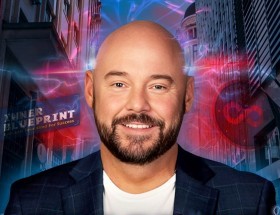 Shawn Feurer, creator of the Inner Blueprint, explains why experienced small business owners who know exactly what to do still don’t do it, and how changing the thinking and beliefs behind your decisions changes your results.
Every business owner has a list of things they know they should do. Raise prices. Let go of the wrong person. Hire the right one. Bring in a coach.
Today the information is at our fingertips: AI, Google, YouTube. So why don’t we implement it? According to Shawn, the answer isn’t a lack of knowledge. It’s a belief that was programmed in long before the business existed, and it is “really running the show.”
In this episode of The How of Business podcast, the podcast for small business, Henry Lopez is joined by Shawn Feurer to explore the knowing-doing gap, where it comes from, and the daily practice Shawn uses to help leaders close it.
Shawn was raised in his stepdad’s home improvement business in Salt Lake City and spent 20 years there as an adult. They had “the right business planning process” and “the right sales process,” and yet, he says, “me and my dad both got in our own way.”
About 10 years ago he lost nearly everything: the family business, both parents, and his marriage. He then became the top coach at a coaching firm working with 70 companies, and he saw the same pattern in all of them. His search for a tool to fill that gap led him to his mentor, Bob Proctor. After Proctor’s passing, Shawn created the Inner Blueprint, built on the principles of Think and Grow Rich.
Shawn explains that only about 5% of our mind is conscious. The other 95% is “programmed, patterned” with beliefs, habits, and experiences, and those set points limit our finances, our health and wellness, and our relationships. Shawn calls those three areas the power trifecta.
That’s why working harder rarely works. “If you suffer from not enough time, not enough money, not enough you, that’s a program on the inside. You can’t outwork that.”
Henry and Shawn get practical. To find your money number, rate yourself from 1 to 10 and define what a 10 is. Then take the most you’ve ever made, double it, divide it by 12, and make it a monthly affirmation. Shawn explains why a 10x goal triggers resistance, why you should “forget about the how” until you have the belief.
For the gratitude piece, Shawn recommends the five-minute YouTube video “A Good Day” with Brother David Steindl-Rast, which he says retrained his mind to focus on the positive during the hardest stretch of his life.
The hard part isn’t understanding it. It’s doing the work. Shawn asks his clients for 30 minutes a day: a big goal, affirmations, and gratitude. As his mentor told him, “You’re either interested or you’re committed.”
Closing the Knowing-Doing Gap – Key Takeaways:
- The knowing-doing gap is a belief problem, not an information problem.
If you know what to do and aren’t doing it, a limiting belief in your subconscious is creating the gap. - Awareness is the first step.
Pause and ask yourself: I know I should be doing this, so why am I not doing it? - You can’t outwork “not enough.”
Not enough time, money, or self-worth is a program on the inside. Working longer hours won’t fix it. - Set your number by doubling it.
Take the most you’ve ever made and 2x it. A 10x goal invites your subconscious to resist. - Forget about the how at first.
If you start with the how, you’ll go about it the way you always have, within the limits of your current thinking. - Interested is not committed.
The mind is programmed through consistent, daily repetition. That means 30 minutes a day, especially in between coaching calls. - E + R = O.
You don’t control events. You control your response, and your response shapes the outcome.
About Shawn Feurer:
Shawn Feurer has spent more than 20 years helping business owners, executives, and leadership teams break through the invisible barriers that limit growth. After 20 years in his family’s home improvement business in Salt Lake City, he became a business and sales coach, working with dozens of companies on strategy, sales, and leadership. He studied under Bob Proctor and ranked among the top 25 of Proctor’s 4,000 global consultants. Shawn is the creator of the Inner Blueprint, a practical framework that helps leaders identify and change the subconscious patterns driving their businesses, leadership, relationships, and results. He offers it as group coaching, with self-study options and coach certification in development. He also hosts the Inner Blueprint podcast and offers business owners a free DISC-based behavioral and motivators profile. He lives in Draper, Utah.
Episode Host: Henry Lopez is a serial entrepreneur, small business coach, and the host of The How of Business podcast show – dedicated to helping you start, run, grow and exit your small business.
Resources:
Related Podcast Episodes:
You can find other episodes of The How of Business podcast, the best podcast for small business, on our Archives page.
Transcript:
The following is a full transcript of this episode. This transcript was produced by an automated system and may contain some typos.
This transcript has been lightly edited for readability.
Welcome, Shawn Feurer
Henry Lopez [0:12]: Welcome to this episode of The How of Business. This is Henry Lopez, and my special guest today is Shawn Feurer. Shawn, welcome to the show.
Shawn Feurer [0:18]: Hey, Henry, thank you so much for having me. I’m excited to be here.
Henry Lopez [0:21]: Looking forward to this. This is a very interesting topic. Experienced small business owners know exactly what to do, but still don’t do it. You get held back for whatever reasons. Well, my guest today, Shawn Feurer, is the creator of the Inner Blueprint, and he joins me to explain how changing the thinking and beliefs behind your decisions changes your results.
You can find all of The How of Business resources, including the links that we’ll talk about today, and information about my one-on-one and group coaching programs at thehowofbusiness.com. I also invite you to consider joining our How of Business community on Patreon, and subscribe wherever you might be listening so you don’t miss any new episodes.
Let me tell you a little bit more about Shawn, and then we’ll get into the conversation. Shawn Feurer has spent more than 20 years helping business owners, executives, and leadership teams break through the invisible barrier that limits growth. As a former business and sales coach, Shawn worked with companies to improve strategy, sales, and leadership. But over time he discovered that the biggest obstacle to success wasn’t a lack of knowledge; it was the thinking and belief behind the decisions. So today, Shawn is the creator of the Inner Blueprint, a practical framework that helps leaders identify and change the subconscious patterns driving their businesses, leadership, relationships, and results. Shawn joins me from his home in Draper, Utah. So once again, Shawn Feurer, welcome to the show, sir.
Shawn Feurer [1:50]: Oh, thank you so much, Henry. I’m excited to be here. I was introduced to you by a client of mine who was also a client of yours. Nice work on your podcast and the work you do. It really is an honor to be here today.
Henry Lopez [1:58]: Yeah, thanks to Bob Coons for connecting us. He’s had nothing but praise about being in your program, which I guess he’s done for about a year or so.
Shawn Feurer [2:06]: Yes. Yeah, we’re coming up on a year.
From the Family Business to Inner Blueprint
Henry Lopez [2:09]: And he was gracious enough to connect me with you. So let’s start, if you would, with your experiences. You ran a family business, if I understand correctly, for about 20 years. What led you to focus in this area?
Shawn Feurer [2:23]: I met my stepdad when I was six years old. He was a home improvement contractor here in Salt Lake City, and I was literally raised in the business. I was working in it as a teenager. I went to college, got a degree, and didn’t plan on going into the family business, but that’s where I ended up. I spent 20 years as an adult in the home improvement business, and we had a ton of success. I built a pretty beautiful life. We were part of several coaching companies that gave us best practices, and I started noticing this in my own life. We had the right business planning process, we had the right sales process, and yet my dad and I both got in our own way and wouldn’t always make the decisions or implement the information. And then I noticed it throughout my teams.
Then, without going into the weeds, God blessed me with a bunch of challenges. Henry, about 10 years ago, I walked away from the family business. Both my parents were dying. I went through a very challenging divorce. Literally, God blew up my life, and I found myself. And this is what really led me to discovering what is now Inner Blueprint. I thought, how could this happen to somebody who did everything you were told to do? I went to college. I bought my first home when I was 20 years old. Every piece of good information that was given to me, I implemented to the best of my ability, and I built a pretty good life. And then all of a sudden, overnight, everything was gone. I’m very thankful for those challenges now, because in the moment I was literally questioning myself, questioning God, questioning everything.
In this process, I went to work for one of the coaching companies I had been a client of for 10 years, and I had no intention of becoming a coach. When they hired me, I was literally a broken man. I didn’t think I was successful. Even though I had years of success, when it all falls apart, you’re now unsuccessful. I’m not a good husband. I’m not a good father. I’m not even a good human being anymore. I went to work for this coaching company, and within a couple of years I was their top coach. I had 70 companies I was working with. They had a great process, and guess what? I was watching and seeing the same challenges that I had in my own life.
So I took a leap of faith and resigned from that company. The owner thought I was crazy because I was making a really good income, and I went searching for a tool. I thought, there has to be something to fill this gap. Especially today, we live in an information world. You can pull up AI, Google, YouTube. You have the information at your fingertips. Why don’t we implement it?
That journey took me to my mentor, Bob Proctor. He was 86 years old when I met him, and he’d been teaching mindset and behavior for almost 50 years. Almost everything we do in Inner Blueprint is based on the principles of Think and Grow Rich. Henry, I had read the book 20 years prior. I had tried to implement some of those principles, but again, we only do it to the level of our beliefs. Bob was the first person who taught me how my mind worked, how it was programmed and patterned, how it got programmed and patterned, and he gave me some tools to identify what was limiting me. And I put them to work. I became a product of his product. In the first six months, out of his 4,000 global consultants, I was in the top 25. I stayed there until his passing, and after he passed, I left his organization and created my own program based on a lot of the same principles. I brought in some of my other mentors, like Jack Canfield, and some home-improvement-specific material, and created this really cool program called Inner Blueprint.
The Power Trifecta
Shawn Feurer [5:36]: Basically, we help individuals raise their level of belief inside, and we’ll go a little bit into the weeds on some of this as we go on. The framework we use is what we call the power trifecta, Henry. It’s better finances, better health and wellness, both mental and physical, and better relationships. This is the process I used on myself. Think about money. I had set beliefs on what money was and what was a lot of money, and no matter how hard I worked, I couldn’t outperform my level of belief. On health and wellness, we all have 65 as the retirement age, and all these longevity things programmed into us. I’ve done a lot of work on changing from the inside out what I believe about money, what I believe about health and wellness, what I believe about relationships, and most importantly, what I believe about myself.
Stepping into this process myself, I pretty much lost everything about 10 years ago, and in about five years I rebuilt and have more in all three of those areas than I’ve ever had in my life, with really less work, just more belief in some of the information I already knew. So that’s the long, boring story short of how I got here and how I’ve transformed not only my life but now the companies we work with. Bob, the guy who referred me to you, is a CPA by trade, and I’ve seen some of the breakthroughs with him and with other clients using this material. So it’s really fun. As you know, it’s not something that’s talked about, especially at the level we go into in Inner Blueprint in business. But to me, one of the most important things missing from business is understanding human behavior, how programmed and patterned we are, and the coolest thing is that once we realize it, we can actually change it.
How We Get Programmed
Henry Lopez [7:07]: We can change it. Yeah, but it takes a lot of work, and we need help doing so. You were obviously a student of this. You’ve analyzed it in depth. I’ve always found it so interesting how people self-destruct; they self-sabotage. My thought, and I’m curious about this given your expertise, is that some of it comes from how we are indoctrinated, if you want to use that word, by our schooling, by our system, to become employees, right?
Shawn Feurer [7:34]: Yes.
Henry Lopez [7:35]: Now, you had a rare situation where you grew up in an entrepreneurial family, and still you had these challenges. But have you seen that that’s part of it? That part of how we are raised builds that in us?
Shawn Feurer [7:47]: 100%. If you’re okay with it, I’ll take this for a minute, because this is a huge part of the program and the first step. We won’t go totally into the weeds, but it starts with understanding that 5% of our mind is conscious. Right now, you and I are having a very conscious conversation. That’s 5% of the capacity. And the mind is separate from the brain. The 5% is conscious awareness. The other 95% is programmed and patterned with what we call paradigms: beliefs, habits, experiences.
So yes, think about the way I grew up. Henry, did you choose Henry as your name, or was it given to you? I didn’t pick Shawn. It was given to me. I didn’t pick English. It was given to me. How did I learn it? By hearing it over and over. Well, we talked about indoctrination. What else was given to each one of us? My real dad left before I was five years old, for the second time. I was indoctrinated with beliefs about love and relationships. I had a single mom with a baby sister, so there were two of us. Scarcity mindset. We get programmed in our subconscious either by hearing something over and over or by emotional events. So by the time I’m 18 years old, ready to take over the world, I have set points inside about all these different beliefs that were given to me from the outside world. They’re not mine. They’re not 100% true for me.
And what I find is that even the most successful people, most of us, had challenges in early life that gave us that drive and that program to prove ourselves. And then you get to a place where you prove it. That was my fall apart, man. I was chasing more because inside, at some level, I wasn’t enough, from early life experiences. And when I got to the point where I literally had the house, the business, the relationships, it all went away because I hadn’t done this internal work.
Henry Lopez [9:23]: It still didn’t fill the hole, right? There was still that gap.
Shawn Feurer [9:28]: And again, because it’s in your subconscious, we don’t have an awareness of it. We’re literally going through the day. Think about the way you get dressed in the morning, the way you drive. You don’t think about it; you just do it, because that’s what’s programmed into you. That’s the same way the subconscious affects our level of belief about time, money, and relationships. In business, how many business owners know they need to raise prices, or know they need to let go of a person or hire a new person, and are fully, consciously aware that it should be done? Then you ask, well, why do they get in their own way? It’s because somewhere in their subconscious, something was programmed, probably a long time ago, that is now a belief that’s really running the show. Think about it. We’re not in control. Only 5% of us is in control. The other 95% is running the program. And again, there are rare individuals who grow up in near-perfect conditions and have more belief and a more high-level mindset than the majority of the population.
Henry Lopez [10:25]: What I see is that the people who do have an advantage here are people who, for whatever reason, because of how they grew up or because they learned it or were taught it, are introspective, think about those things, and get help with that side of things. They’ve done the work to get there. Is that fair?
Shawn Feurer [10:41]: Yeah, that is fair. That is fair. And I’ve worked with quite a few very successful people who probably didn’t need my work, but as we dove into their childhoods, they were surrounded by belief.
Henry Lopez [10:52]: Because they know that even though they might be at another level, it’s a continuous thing. It’s incremental. You keep working at it.
Shawn Feurer [11:00]: Yes. Yes. And you talked about the education system. Most of the successful entrepreneurs I work with weren’t very good in school. They didn’t fit into that box.
Henry Lopez [11:08]: Fit into that box.
Shawn Feurer [11:10]: Yeah. School takes a wide-open imagination and channels it, and limits the ability to think outside the box. So that’s another part of it too.
A Word From Henry
Henry Lopez [11:22]: Henry Lopez, briefly pausing this episode to invite you to schedule a free coaching consultation with me. I welcome the opportunity to chat with you about your business plans and offer the guidance and accountability that we all need to achieve success. As an experienced small business owner myself, I understand the challenges you’re experiencing, and often it’s about helping you ask the right questions to make progress towards achieving your goals. Whether it’s getting started with your first business, or growing and maybe exiting your existing small business, I can help you get there. To find out more about my business coaching services and to schedule your free coaching consultation, please visit thehowofbusiness.com. Take that next step today towards finally realizing your business ownership dreams. I look forward to speaking with you soon.
You Can’t Outwork “Not Enough”
Just quickly going back to physical health. It’s such a challenge, and this relates to all of it, because we are what we see and what we’re taught. Or at least what I was taught is: just work harder, work more hours, put more in. You’re not sacrificing enough. And so we end up sacrificing ourselves in this pursuit of success.
Shawn Feurer [12:36]: Yes, yes. And it’s interesting, because as human beings, everything that’s alive on this planet is programmed to want more. Wallace D. Wattles, in the book The Science of Getting Rich, talks about the impression of increase as a universal principle. The trees outside my window want sun, water, and some food every day. My French bulldogs in the other room will eat whatever I put in that bowl every day, and they’ll let me rub their bellies. And as human beings, we just want more. That’s part of our programming. But if you’re chasing more on the outside and there’s not enough on the inside, that’s the problem, and most high performers have some level of this.
It’s interesting, because I get put in rooms and on stages, and nobody wants to hear this. “What, you’re saying I’m not enough, Shawn?” Think about growing up in school. Could you always have done better in sports? Could you always have done better? We hear it over and over and over again: no matter how much we do, we could have done more. And the subconscious mind translates that to not-enoughness. I always say, if you suffer from not enough time, not enough money, not enough you, that’s a program on the inside. You can’t outwork that. And I know, because I tried. I did my damnedest to outwork that.
Henry Lopez [13:46]: But it’s also what we’re fed. Success means being Bill Gates or Steve Jobs. I remember thinking this through in my business and saying, “Okay, I won’t be successful until I have 30 units,” or whatever. So we have these exterior measures that we think we have to use to measure our success.
Repetition, Gratitude, and the Gain
Shawn Feurer [14:07]: Yeah, and that’s the thing. I love working with young entrepreneurs, especially, and adding some Inner Blueprint, because as they grow their business, they have this inner knowing that it’s enough. You get to that level, and instead of immediately saying “what’s next,” you can actually spend some time enjoying it. There’s the book The Gap and the Gain, right? I help people spend more time in the gain, because the gain is where we build momentum. The gap is where we get frustrated and burn ourselves out.
You create it in the mind first, and you decide what you want, and for me, it’s all about repetition. Anybody who studies Inner Blueprint does 30 minutes of mindset work every day, and it’s intentionally creating what you want from the inside out. Once you program your mind with what you want, it starts pushing you to action, and there’s less stress and struggle and a little more peace and presence.
Health and wellness, man. I’m 53 years old. Ten years ago, I was out of shape. I looked like crap. I was being prescribed all kinds of things, and I’d been going to the gym and doing the work for 20 years. I started changing the way I thought about health and wellness. I started programming some different things in, and today I’m the leanest I’ve ever been. I’m prescription-free. I feel better than ever. It sometimes blows my mind thinking back. I used to start my days at 5:30 a.m., going to the gym and getting a workout in before I went to the office, trying to eat right. I was doing all the things, and yet I ended up being prescribed all these medications for indigestion, heartburn, stress. They wanted me on anxiety medication. I thought, no, there’s got to be a different way.
Again, to somebody hearing this, it sometimes sounds too good to be true. But if you take control of your mind and spend 30 minutes a day intentionally doing this work, it changes. Five minutes of it is a big goal that we come up with. Five minutes of it is positive affirmation. And Henry, one of the most important parts is five minutes of gratitude. When I started this process, Bob Proctor taught me a lot about daily gratitude, and I’ll share this with listeners. There’s a five-minute YouTube video called “A Grateful Day” by Brother David. He’s an Austrian monk who just celebrated 100 years on this planet in July, and he brings peace and presence to the fact that we have drinkable water, the fact that we have a roof. When I was going through my challenges, I was literally living in my parents’ basement. My mom was dying of Alzheimer’s, and I was not grateful. I was actually very upset. I would listen to this video, and it retrained my mind to focus on the positive. And once we do that, it gives us the ability to reach for more, but in a different way. I don’t know if that’s translating right.
Henry Lopez [16:33]: Oh yeah, I get it. What I’ve found is that as entrepreneurs, we’re always thinking about what’s next, what’s next, what’s next, and we don’t stop to say, but what have I accomplished?
Shawn Feurer [16:42]: Yeah, and one of the fears, for a lot of my clients and even for myself, was, “Well, I don’t want to lose that fire,” right? And the cool thing is, you don’t lose that fire. That’s part of who you are. You just bring more fuel to that fire. When you’re practicing daily gratitude, when you’re working from the inside out, it just comes easier. It’s more enjoyable. Right now, I could tell you my trifecta is better than it’s ever been. And guess what? Going back to the impression of increase, I want more. I give gratitude for what I have, and I work every single day. I’m on this podcast sharing with you because I want to impact more people, right? I will never stop that. And I’ve found that when you do this work, if you’ve got that fire, don’t worry about losing the fire. We’re going to put gasoline on that fire, explode you from the inside out, and give you the power to create more with less. It’s literally more of you coming to every interaction.
The Knowing-Doing Gap
Henry Lopez [17:36]: Okay, I think we’ve been touching on it here, but tell me what you mean by understanding the knowing-doing gap.
Shawn Feurer [17:42]: Okay. And again, Henry, not to be dramatic, but being a little bit dramatic: here I am, searching for this tool, right? I attended an industry event in home improvement and got so frustrated that I drove home thinking, “I saw the same thing again.” Everybody was talking about all this information that nobody was going to do anything with. The next night I woke up at 3 a.m. and ended up on a Bob Proctor webinar. He was global, it was prerecorded, and I think it was being promoted in Australia. To this day, I don’t know how I found it. I have screenshots on my phone. I hopped on this webinar, and Bob started talking about the knowing-doing gap.
He talked about what you know you shouldn’t be doing but do every day anyway, or what you know you should do, and then what creates the gap. The gap is caused by your set point, by whatever’s programmed into your mind. Take somebody who’s trying to get in better shape right now. Everybody on this planet who has a phone knows what to do, right? Eat better, exercise, get enough sleep. So if you’re not doing it, there’s something inside of you, a different program or pattern or belief that’s running, that you have to change. I’ve literally had people say, “I hate exercise.” Well, before I try to get you to go to the gym, you’ve got to change that. You’ve got to say it every day: I am active. I am healthy. I’ve had people say “I walk for 15 minutes a day” for 30 days before they start walking. You have to change that. In business, if you know you need to raise prices, if you know you need to hire a coach, if you know you need to do something and you’re not doing it, that gap is caused by some limiting belief in your subconscious. And if you’re not aware of it, you’re just getting all this information and not doing anything with it.
Henry Lopez [19:16]: And becoming aware of it is obviously the first step.
Awareness and Your Money Set Points
Shawn Feurer [19:20]: Yes. Yes. And that’s where Inner Blueprint comes in. There’s a term I’ve heard thrown around a lot that’s becoming a buzzword: metacognition, right? Metacognition is thinking about thinking, and that’s literally what we’re teaching people to do. Rather than going through your day on autopilot, letting your mind run the thoughts for you, you pause and do a little introspection: I have this thing that I know I should be doing, and I’m not doing it. Why am I not doing it? Then you start going into the patterns, and the first step in mindset is awareness.
Think about money. There are two set points I work on with people. The first one is: what is money? I can’t tell you how many of us have a program deep inside that says it may be the root of all evil, that it’s hard to come by, that it doesn’t grow on trees. So here you are, with 5% of you working your butt off to create more money, and at some level you have this contradicting belief inside of you. I work with a really successful business owner whose dad was a preacher, and through Inner Blueprint, he told me, he shifted his belief to “it’s okay to want more.” He’s got a huge goal to give away a million dollars. He’s going to do good with his money, so it’s overriding the old belief.
The second is: where’s your set point on what’s a lot? If we had a room of 20 people and asked, “What’s a lot of money?” every single person would say a different amount. Bob used to teach that the most you’ve ever made is a set point. And going back to school, most of us have zero as a comparison point. If you think about money without really thinking about it, you’re comparing it to something. So I changed it. I started with a million-dollar money affirmation, and as I programmed my mind every day with these bigger numbers, big numbers relatively became small in the mind. And when they become small in the mind, you can go out in the physical world and bring them into your experience faster. It’s crazy how it works.
Finding Your Number: Just Double It
Henry Lopez [21:15]: How do you help people determine, at least at this point in time, what is my number?
Shawn Feurer [21:20]: I do an exercise, and listeners, you could do this exercise right now. I have people rate themselves on the power trifecta. Let’s say we’re talking about money and your finances right now. Rate yourself on a scale of one to 10. Now, in order to do that, what’s a 10 for you? This is where the answer comes out. And it’s really fun, because I’ve had people start at a seven out of 10 on their money with me, and within six months, their 10 has changed. They say, “That wasn’t a big enough number. I’m already an eight or a nine. I need to think bigger.” And we do the same thing on health and wellness, and the same thing on relationships.
Henry Lopez [21:50]: But how do I determine, Shawn, if that’s the right number for me, as opposed to what I think it should be, or what others have told me, or what I’ve seen my peers accomplish? What should I look to to determine what’s right for me?
Shawn Feurer [22:03]: Okay. I’ve done a lot of work on this with people. There’s a lot of talk about 10x, right? And I’ve found in mindset that if I take the most I’ve ever made and try to 10x it, your subconscious is going to resist it, and it’s really hard to power over that. So the number I recommend is: take the most you’ve ever made and multiply it by two. Just do a 2x.
Henry Lopez [22:22]: Okay.
Shawn Feurer [22:23]: Just rough numbers.
Henry Lopez [22:24]: And part of it, though, is whether that number allows me to live the lifestyle I want to live, and provide the way I want to provide for my family, for my charities, for whatever the heck it is that I want to.
Shawn Feurer [22:38]: Yeah, yeah. And this is a short answer. In my program, module one is “What do you want?” and it’s mind expansion. I’ll share this part of it. We have people brainstorm a personal and professional want list, where time and money don’t exist. After that exercise, you have a better idea of how much money you’re going to need to do this. But the short answer is always: how many of you would be upset if you doubled your income next year? You probably wouldn’t be, right?
So take the most you’ve ever made, double it, divide it by 12, and make it a monthly affirmation. When I started this process, I wanted to be a million-dollar mindset speaker and coach. So every single morning, Henry, I would say, “I’m so happy and grateful. I’m a million-dollar mindset speaker and coach. I make $83,333.33 every single month.” I’d never made that much money in a month, right? But I started saying it. Affirmation work is uncomfortable. You don’t believe it, so your mind will tell you, “This is stupid. Don’t do it.” Keep doing it. Keep saying it. At some point, you feel a shift where, as you’re saying it, you start to get some emotion: “I think this is possible. I think I could believe in this.” And then all of a sudden you start seeing the income rise. So many people have reported back to me, “Shawn, this works like magic. I can’t believe the difference I’m seeing in my money.”
Henry Lopez [23:52]: But I’ve got to think it has to be a number that’s realistic, Shawn. Is that why you use the formula of doubling the most you’ve made, because that at least brings it within my abilities, skills, and opportunity?
Shawn Feurer [24:07]: Yes, yes, yes.
A, B, C, and D Goals
Shawn Feurer [24:08]: And there’s one of the other notes we had, if you’re okay with it, that we can jump into. Part of “What do you want?” in goal setting, and I learned this from Bob Proctor, is that there are three types of goals we work with. There are A goals, which are something we’ve already done. There’s not a lot of growth there. You’ve already done that. There are B goals: something you haven’t done, but you can see the steps. And then there’s a C goal, and that’s something I have no idea how I’m going to do, but I really want it.
Henry Lopez [24:32]: That’s the stretch.
Shawn Feurer [24:33]: That’s the stretch. And this doubling is kind of in between, around a B, because most people can see a path to doubling their income, right? That’s where I try to keep it. It’s funny, one of my clients coined the term “D goal.” You don’t want to set a D goal. A D goal is a demoralizing goal. It’s one that actually frustrates you to say it. So there’s some fine-tuning there. But I’ve found that for most people, a good starting point is to just double it. Just double it, and then say it for six months, say it every day, and write it.
This is where people fall off. They like the idea of mindset, but the mind gets programmed by consistency, by spaced repetition. My biggest challenge as a mindset coach is getting people to do the work in between the coaching calls: committing to 30 minutes a day of intentionally programming what you want into your mind. And that part isn’t easy. It sounds really simple.
Henry Lopez [25:23]: And in part, it’s changing the story that you and others have told you for however many years you’ve been on this planet.
Shawn Feurer [25:32]: Yes. Yes. And when you start challenging the mind, it fights back.
Henry Lopez [25:37]: Of course it does, because there’s an identity there, right?
Shawn Feurer [25:40]: Yes. And like you just said, it goes to evidence from the past: “Shawn, what are you doing? You’re saying this ridiculous number.”
Henry Lopez [25:46]: “This has never worked for me. I’ve never been able to do that. There’s no way I can do that. I’m not smart enough. I’m not talented.” Whatever the hell it might be.
Rewriting the Voices With “I Am” Statements
Shawn Feurer [25:52]: Yes. And Henry, going a little deeper: when people start the process, they ask, what do I want? I pick a number. I double it. I start saying it. Listen to those voices, because module two is what holds you back, and part of what holds you back are those voices. If you make a list of those voices, you can create some affirmations to override them. That’s part of it. I would spend five minutes with my $83,000 goal, and then I would spend five minutes on “I am” statements.
And this is where I say I’m not trying to become something. I’m trying to remember who I was before I got programmed. That’s kind of the spiritual side of Inner Blueprint. Bob used to talk about how we’re all God’s greatest creation. As a newborn child, I didn’t know what my name was. I didn’t know what my language was. I didn’t have a limiting mind. So I’m trying to remember that version of me, my original self. So when a voice comes up saying “You’re too old,” I say, “I’m forever young.” “I didn’t come from the right background” becomes “I am worthy. I am deserving.” You pick some “I am” statements that will counteract the self-limiting talk that comes up when you’re saying a goal bigger than you believe.
Forget About the How
Henry Lopez [26:52]: One of the things I sometimes hear from clients when we talk about these things and setting bigger goals, and this is self-sabotaging in a way, is: “Oh gosh, but that’s going to come with so much more work, and I’m going to have to work so many more hours.” There’s this dread: “No, I want the number, but I don’t want those additional hours. I’m already exhausted.” So what do you say to that?
Shawn Feurer [27:14]: Well, that’s a limiting belief, right? That’s assuming it’ll take the same work it took you to get here. Anybody who’s scaled knows there’s still work, but you get more people on your team. I’ve even worked with people who want a bigger house, and they start saying, “Well, I don’t want to maintain it. I don’t want to clean it.” Well, what if you had a house cleaner and a maintenance company? “Oh, I didn’t think about that,” right?
So this is the part that gets really interesting. In module one, “What do you want?”, we tell people to forget about the how, and that is the hardest thing for any entrepreneur. Think about it. Henry, you’re a business process guy. You almost have to know the how. “How am I going to keep up? I don’t want more work.” That’s getting into the weeds. I was a business coach, a very logical, analytical type, before I started this process with Bob. I jokingly say I had to tie both hands behind my back as I was doing my goal and say, “I don’t care how I do it. I don’t know how. I don’t even know if it’s possible right now.” Because if you go to the how before you have the belief, the how is going to be challenging and uncomfortable, and that’s why most people stay stuck.
Henry Lopez [28:19]: And that’s because if I start with the how, I’m going to go about it the way I’ve always gone about it.
Shawn Feurer [28:24]: Within the limits of my mind that I can’t even see. Yes, yes.
Henry Lopez [28:28]: And the only thing we’ve been taught there is, “Well, you’re just going to have to put in more hours. You’re just going to have to work harder.”
Don’t Be the Fly
Shawn Feurer [28:33]: Yeah, and to me, that is the biggest fallacy we’re programmed with: try harder. Honestly, Henry, from the time I was 15 years old until I was 42 and lost everything, I couldn’t have tried harder. I couldn’t have. I was literally a workaholic.
Henry Lopez [28:46]: Again, that goes back to, at least for our generation, Shawn, being taught that that’s work ethic.
Shawn Feurer [28:50]: Yeah. Have you ever heard of the book You² by Price Pritchett?
Henry Lopez [28:54]: I have heard of it. I have not read it.
Shawn Feurer [28:56]: I’m going to share it here, because You² describes a process of creating quantum leaps in the mind. It basically describes Inner Blueprint, the steps I take. And it’s not even really a book, listeners. It’s like a booklet, right? It’s a 45-minute audio if you listen to it. But my favorite part is how the author, Price Pritchett, starts the book. He’s sitting in a hotel watching a life-or-death battle of a fly. The fly is trying to get out of the window, trying harder and harder, and this fly is going to die. And across the room, 15 seconds of effortless flight away, a door is open.
Think about me in my previous life with my limiting mindset. I was the freaking fly. You gave me a path, you told me what to do, and I was going to make it work. And I had the program of “if it’s not working, it’s my fault. I just need to try harder.” I use this as a reframe with a lot of clients: you’re being the fly.
Henry Lopez [29:55]: You’re thinking you’ll just hit the glass harder, and somehow you’ll break through.
Shawn Feurer [29:59]: Yeah. And with business owners, I don’t like to totally redirect businesses, but I’ve had a couple of really successful business owners completely change their product line, using the same processes with a different product line, and go from a $3 million a year company to a $3 million a month company. They’re not trying harder; they were just trying the wrong thing for them. That’s the introspective part of Inner Blueprint: figuring out what I want, forgetting about how I’m going to get it, and then being open to the possibility that there might be two or three different hows that I can’t even think of right now.
Interested vs. Committed
Henry Lopez [30:30]: Shawn, for the people who do well with your program, what are a couple of characteristics, personalities, or traits you think are common that lead to that success?
Shawn Feurer [30:40]: The first thing is they have to be open, and they have to be honest. They have to realize that what they’re doing, even if it’s working really well, isn’t maximizing their potential, and they have to be open to trying something different. And then from there, they have to be willing to commit.
When I started this process, Bob Proctor stood on a stage in front of 300 of us and said, “I’m healthy, I’m wealthy, and I’ve got friends all over the world. And if you want to live like I live, do what I tell you to do.” I was in a place in my life where I needed what he was saying to be true. Then he said, “You’re either interested or you’re committed. If you’re interested, you’ll do what’s convenient. If you’re committed, you’re going to do whatever it takes.”
For me, I have to find someone who’s willing to commit. I don’t sell people into Inner Blueprint. I’m a very, very good salesman, and I could, but that doesn’t work. I need somebody who comes to me open, knowing they need the help, and then willing to commit that they’ll do 30 minutes a day. And if somebody is open and will commit to that, this is the coolest thing in the world, Henry, and I say this with 100% belief and truth: Inner Blueprint works 100% of the time. The only time it doesn’t is if the person doesn’t do the work. If you get on a call with me and say you’re doing it, and you’re not, you might see some benefit from just listening to the modules.
Henry Lopez [31:50]: You’re just going to go through the motions, or you’re going to pick the parts you think apply to you. Then it’s not the same.
Shawn Feurer [31:56]: Yeah. You are literally reprogramming and repatterning your identity, who you think you are at some level, and that’s not fun. That’s not comfortable. Just one other statistic: I’ve worked a lot with a mindset coach at the University of Texas. He works with the athletic program, with elite athletes, and now works in the NBA. He told me 95% of the population of this planet won’t do a daily ritual of 30 minutes or less to change their life. I’ve wrestled with that, because that’s the challenge of my work.
Henry Lopez [32:23]: That’s got to be beyond, I think, what we’re programmed with. Is there something innate in us that avoids that? What’s your opinion on that?
Shawn Feurer [32:33]: My opinion is it’s because 95% of people are programmed and patterned, and we’re asking them to do something different. They’re programmed to try harder, and to do it in the physical world more than the mental world. It’s a challenge to accept that you can literally just do something with your mind for 30 minutes a day and create better results than you’ve ever seen in your life. That’s counterintuitive to everything I was ever taught, especially the “try harder” we’ve been talking about. It seems too easy, and we all have the program that if it sounds too good to be true, it probably is.
Going back to my journey with this, I remember leaving that conference thinking, this sounds way… I didn’t even want to sign up for the program, because I had those limiting beliefs coming up: there’s no way watching Bob on a video over and over is going to change my life. Luckily for me, I was at a place where I didn’t have anything better. I thought, look…
Henry Lopez [33:24]: You were willing to try it.
Shawn Feurer [33:26]: Yeah. Well, it can’t get any worse.
Henry Lopez [33:28]: But you make such a great point. Not that there aren’t lots of benefits from those different types of programs and conferences, but therein lies the challenge. You can get a lot of tools, a lot of information, and then often what happens is it gathers dust on your desk, right? Because you haven’t worked on the essential mindset components that will allow you to implement.
Shawn Feurer [33:46]: And most events are two or three days of information. You get the information, but if you don’t go back and implement it, and implementing it sometimes means affirmation work, over and over… I will say, and I’ve created some of these, if you go to an event that creates an emotional breakthrough, that’s the other way paradigms get shifted. If you go to an event and have an emotional breakthrough, that will have some lasting effect. But if you just go to an event and get information, it’s more knowing. And if the gap is there, it’s going to limit the doing that comes from that new information.
The Behavioral Assessment and Working With Shawn
Henry Lopez [34:19]: All right. Tell me what we haven’t talked about. Give us a high-level overview of the services you offer, including the Inner Blueprint program, and where can I go to find out more?
Shawn Feurer [34:31]: One thing we do as part of the mindset work is a behavioral assessment. I’ve been working with it for over 20 years. I use a version of the DISC profile that includes motivators as well, so it tells me two things about an individual: how they behave if I put them in a room, and what motivates them. That’s often the starting point. In fact, for any listeners who are business owners, I offer a free profile. You can reach out to me through my website. It’s shawnfeurer.com, S-H-A-W-N F-E-U-R-E-R dot com. Just hit Contact, and if you put in there that you heard me on this podcast and you want a free survey, that can be the starting point for a conversation.
And it’s interesting, Henry, because I took the DISC in 2003, and my mentor at the time said, “Shawn, you’re stuck with this profile. This is who you are.” Well, the profile I had wasn’t ideal for what I wanted to do, and I’ve since learned I can change it. I used to be a lower D. Now I’m way more assertive and direct. How did I become way more assertive and direct? Every single day: “I’m assertive. I’m direct.” I literally changed the way I think about myself. And the motivators are the fun part. I have a lot of business owners who are struggling, and when I get their motivators, they’re really low on utilitarian, which is return on time and money. So that’s a good starting point.
Then our Inner Blueprint program we offer as group coaching. We’ve been doing this for six years in the home improvement industry, but we’re adding some self-study options, and we’re also looking to certify other coaches and take it outside the industry. If you’re interested in hearing more about the program, you’ll still get me. You’re not going to get passed to a receptionist or an online AI bot. You’ll make it to me. So if you want to hear more about Inner Blueprint for yourself or your organization, just go to the website, fill out the form, and I’d love to hop on a strategy call. I geek out on mindset, behavior, and, most importantly for business, making money. That’s why we do what we do.
Henry Lopez [36:23]: Even if it’s for charitable purposes, you’ve got to make money. And I also found the Inner Blueprint podcast on the website as well.
Shawn Feurer [36:32]: Yes, yes. On our podcast, we share a lot of our clients’ success stories. It’s just how thinking differently can bring benefit to your life.
Henry Lopez [36:40]: Shawn, you mentioned the book You². Is there another book you would recommend?
Shawn Feurer [36:45]: Probably my favorite book of all time is Think and Grow Rich. And I will say, this is not a book to be read. It’s a book to be studied. It’s one of those repetition things. Napoleon Hill was way ahead of his time. There’s a lot of neuroscience now behind the power of desire, faith, and autosuggestion. So to me, that book is a good starting point.
One Takeaway: E + R = O
Henry Lopez [37:02]: All right, let’s wrap it up. What’s one thing you want us to take away from this conversation? If I remember one thing, what would you say?
Shawn Feurer [37:11]: Okay, Henry. I’ll add a new thought to take away that kind of ties it all together. It’s a short hack people can use to practice better mindset if they’re just starting their journey.
Henry Lopez [37:20]: Absolutely.
Shawn Feurer [37:21]: It’s a mathematical equation I use to stay in control in any situation: E + R = O. The E stands for the events in life. I spent most of my life trying to control events. We don’t control the events. We don’t control the weather. We don’t control the economy. We don’t control other people. And trying to usually leads to a lot of frustration. So what do you add to the event, the E? You add an R, and for a lot of us, it’s a programmed reaction. When you have a programmed reaction, you usually create a negative outcome. So E + R = O is learning to practice a response instead of a reaction to get a better outcome.
And this is a practice. As good as I’ve gotten with mindset, I still don’t have it mastered. The events of life are going to happen. It’s kind of the idea that if it’s not good, it’s not bad. It just is, and I get to decide what I make of it. I learned it from Jack Canfield. I know Ohio State University used it in their football program to win a national championship with a third-string quarterback. So E + R = O. Just think about that.
Henry Lopez [38:20]: Okay, I followed the E, the events in life. The R is the reaction, or programmed reaction. So, for example: “The economy sucks. Therefore, there’s no way I can start a business right now in this horrible economy.” But the O, I didn’t quite get. Equals what?
Shawn Feurer [38:35]: The O is the outcome.
Henry Lopez [38:36]: The outcome. Got it.
Shawn Feurer [38:38]: And the only thing we control in this equation is the R.
Henry Lopez [38:41]: Okay. How I react to the events that happen that I cannot control.
Shawn Feurer [38:46]: And most of the reaction is what we’ve been talking about this whole episode. It’s subconscious reaction, right? So it’s learning in the moment. Your flight gets delayed. How many upset people have you seen at the airport? You’re not going to control anything, and you now have an extra 30 minutes.
Henry Lopez [39:00]: So instead you say, let’s read, or let’s research, or let’s start making phone calls. The event could also be something in my past. My dad never telling me he’s proud of me, that’s an event as well, and I have a programmed response to it that means I’m no good. And I can change that.
Shawn Feurer [39:17]: Yes. My biological father left when I was five years old. I found him when I was 25, and God bless him if he listens to this, we have a great relationship now. But for a lot of years, that was a reaction that held me back, and I turned it around. One thing is, if you’ve been through any kind of abandonment, it’s because you needed to learn self-reliance. And my dad didn’t do anything because of me. He did it because of what he needed and what was going on in his life.
It’s a huge part of it, and we didn’t talk about this, but forgiveness: when you understand the mind, we all do the best we can with the program we have at the time. If we went back in time, none of us could have done any better. So letting go is part of E + R = O. It’s taking an event that was challenging and reframing it in our mind to create a better response, so we can create better outcomes. And at the end of the day, it’s not selfish to ask how you’re feeling and how it’s affecting you, because if it’s having a negative effect on you, it’s having a negative effect on everyone around you. And I can control that.
Wrap-Up
Henry Lopez [40:12]: Well said. Tell us again where you want us to go online to learn more.
Shawn Feurer [40:15]: Just go to my website, shawnfeurer.com. That’s S-H-A-W-N F-E-U-R-E-R dot com.
Henry Lopez [40:22]: Shawn, wonderful conversation. We could obviously talk for hours, and hopefully I’ll get you back on the show sometime in the future. Thanks so much for taking the time and for sharing with me.
Shawn Feurer [40:30]: Yeah, it was an honor to be on here. Thanks for letting me share my message. Hopefully I impacted somebody with some information they can put to use right away.
Henry Lopez [40:36]: This is Henry Lopez, and thanks for joining us on this episode of The How of Business. My guest today, again, was Shawn Feurer. I release new episodes every Monday morning. You can find the show anywhere you listen to podcasts, including The How of Business YouTube channel and my website, thehowofbusiness.com. Thanks for listening.