



5 Steps to Naming.
A practical framework for creating a business or product name using a proven five-step process that removes guesswork and drives better branding decisions, with Brad Flowers.
Naming your business (or product or service) doesn’t have to be a frustrating or purely creative guessing game. It can be a structured, repeatable process that leads to better outcomes.
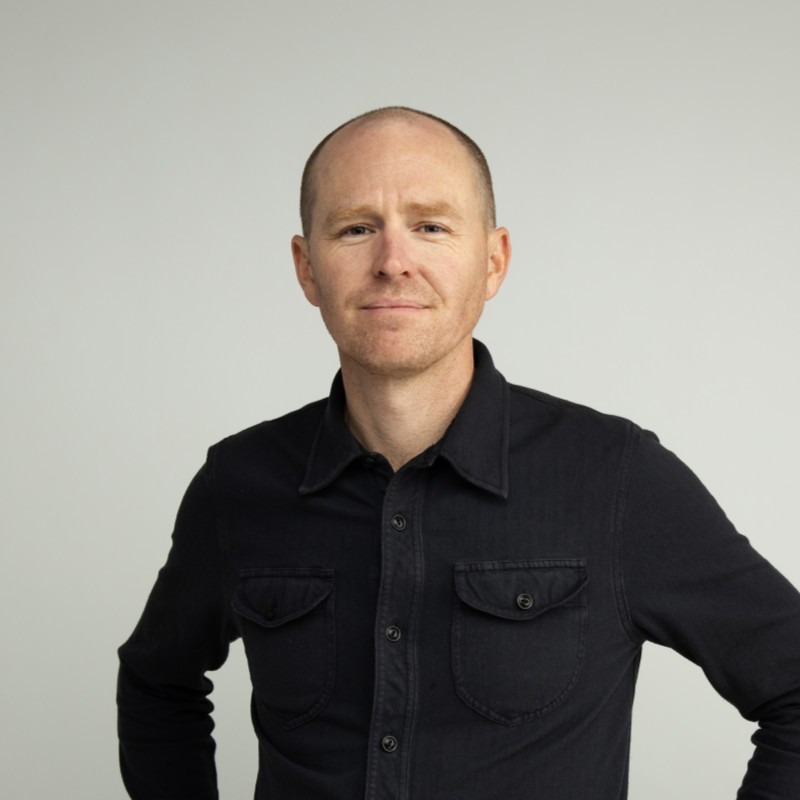
In this episode, Henry Lopez chats with Brad Flowers, co-founder of Bullhorn and author of The Naming Book, about how small business owners can move from a blank page to a strong, effective business or product name.
Brad shares the five-step framework he developed after realizing that most naming advice either tells stories or opinions but doesn’t actually help you generate names. Henry and Brad explore how to establish clear criteria, generate a large volume of ideas, and evaluate those ideas without getting stuck.
A key takeaway is that creativity isn’t about waiting for inspiration, it’s about having a process.
As Brad explains, “the only way to continuously produce high results in a creative field is to have a rigorous process.”
They also discuss common mistakes, including overthinking too early, relying too much on outside opinions, and limiting ideas before fully exploring them. If you’re launching a business, product, or service – or even considering a rebrand – this episode will give you a practical path forward.
The 5 steps to creating brand and product names that sell:
- Establishing Criteria
- Brainstorming
- Compiling Names
- Expanding Your Knowledge
- Deciding on the Final Name
Naming FAQ:
Question: How do I come up with a name for my business?
Answer: Use a structured process: define naming criteria, brainstorm extensively, compile and refine ideas, expand your vocabulary, and then evaluate options based on clear criteria.
Question: What makes a good business name?
Answer: A strong business name is memorable, easy to pronounce, aligned with your brand tone, and distinct from competitors.
Question: Should I check domain names early in the naming process?
Answer: No. Generate a large pool of ideas first, then check availability later to avoid limiting creativity too early.
Question: Why is brainstorming important for naming?
Answer: The best names come from volume. Generating many ideas increases the likelihood of finding a high-quality, unique name.
Episode Host: Henry Lopez is a serial entrepreneur, small business coach, and the host of this episode of The How of Business podcast show – dedicated to helping you start, run, grow and exit your small business.
Resources:
Books mentioned in this episode:
[We receive commissions for purchases made through these links (more info)].

Other Podcast Episodes:
You can find other episodes of The How of Business podcast, the best small business podcast, on our Archives page.
Transcript:
The following is a full transcript of this episode. This transcript was produced by an automated system and may contain some typos.
Welcome to the how of business with your host, Henry Lopez, the podcast that helps you start, run and grow your small business. And now here is your host. Welcome to this episode of the how of business. My guest today is Brad flowers. Brad, welcome to the show. Hey, thanks for having me. I’m really excited to talk so Brad flowers is the co founder of bullhorn. And bullhorn is an agency that builds, as they describe it, confident brands with language and design. Brad leads specifically naming and language generation at bullhorn. He has a degree in English literature, which, as he says, he finds was more useful than he expected. Brad’s also an avid bicyclist. Brad lives in Lexington, Kentucky with his wife and his two kids. So once again, Brad flowers, welcome to the show. Thank you. All right, so literature, and what did you think you were going to do with that degree at the time? Right? Well, I I always assumed I would teach, because I didn’t, I’d love to read, and I just didn’t know that there were any other jobs that that was useful for. So the the kind of the the journey started off, I graduated, and as I was applying, I wanted to take a little bit of time off. My wife was going to was going back to school, and so as I was applying to graduate schools, I had this kind of terrible realization that I didn’t really like to teach. And for someone who just assumed they would teach us kind of tough, yeah. And so that was a time when I got a job at a local bike shop, and we moved here to Lexington. And while I was there, I had some interesting insights. One was that I, surprisingly enough, I was really interested in business, and that had never really crossed my mind that I would ever be an entrepreneur or be interested in business at all. And I ended up managing the shop for four years. And I was interested in the business side in general, but in specifically, I became interested in marketing, and how do you attract customers, and how do you get attention? What sorts of things work? And while I was there, the owner allowed me to serve on some some committees during during the work time that would promote bicycling events in Lexington. So I got a lot of outside experience. So that’s really what led me to I was at to the point where I just as working at a local business, I didn’t feel like there was anywhere else I could really grow in the business, right? So it was the fall of 2008 so pretty lousy timing. And, you know, sometimes I make the joke that I couldn’t get any other job, so I had to start a company, which is half true, probably right. Thank goodness for that, in retrospect, though. Yeah, thank goodness. And so I had a friend who had similar interests, and we started that fall, and started getting some clients towards the end of that year, in 2009 and have kind of gone from there, and if I understood it correctly in the research, which, which makes the little because the thing that’s so interesting is, how the heck do you go from literature, Major, bike shop experience to now helping others with branding and marketing, but I started helping people put together events correct, or promoting events. That was the initial idea. Is that right? Yeah, that’s right, yeah, it’s the the line, as you’re noticing, isn’t, isn’t exactly a straight line. It’s not one of those that you plan in high school or college, but it’s, it’s worked, yeah, we started off thinking that we would mainly want to promote events because he was promoting large scale music events, and I was doing bicycling events. So that’s where most of our experience was. And we like the marketing side the best, but it just turned out the geography, the timing, no one wanted to pay us to market events. And so I think our our arc looking back from turn to 2008 to now, the arc has been kind of trying to find the intersection of these couple of circles, which is, one, what are we good at? Two, what can we make money doing? And three, what benefits the community? And so it’s like, if, if it doesn’t work in all three of those things, then we we do it, and then move on, try to find something else. So when you first, when you made that first pivot from trying to promote events, what did you go to immediately after that, what services were you offering? Then? Well, I think, like a lot of people, early on, companies like ours, you grow because you say yes to almost everything you know early on, like every, every business book ever always tells you to focus, focus, focus, and that’s really important. But focusing is a luxury of having having money, and we didn’t have any money, so we kind of had to do whatever we could do. So really, it’s there wasn’t really a hard pivot for us. It was more of kind of a whittling away over time and so, so opportunities came to you, and that’s kind of what helped you shift and find your path to where you are now. That’s right, yeah, yeah. We started off friends and family, working, working for friends and family, and tried to do a good job, you know, went from there the referrals, kind of, that’s kind of how it grew organically. Usually, when I, when I interview people who are in marketing, some kind of an agency, they offer some type of marketing services, they’ve got some kind of background, they’ve worked for somebody for a while. They, you know, they worked up the ladder for you. It’s not there. What gave you the confidence to say, you know, what I can do?
05:00
This and I can do this at the level that others will pay me for this. Well, again, in retrospect, I think the confidence is unreasonable, probably
05:08
because, yeah, we started off with no no clients, and no experience, really, to speak of. But I think the kind of personal characteristics that we tried to live in at that time was, it’s kind of sounds stupid, but it’s really basic, you know, like, be nice, which sets you apart from a lot of people in the agency world. Try really hard and then fess up when you make mistakes. Sure, but why did you think you knew enough about marketing that you could offer that as a service? What? Why were you confident in your skills in that area at that point? I think I was mostly confident that I could learn to do it whatever people needed, like, like I said, looking back, it’s I didn’t. The good thing is, I didn’t, I didn’t know what I didn’t know. So I wasn’t, kind of, like, paralyzed by that, if I would, like, if I had the perspective I have now, I never would have done right? It’s like somebody had asked you that question, then you was, I guess I shouldn’t be doing this. I should go get a job for somebody else, right? I should have been in this. Now, in retrospect, what is your magic power, your superpower that allows you to be good at this? Hmm, you know, I do. I do actually think that
06:18
the literature part has a lot to do with it, because it builds, it builds empathy and the ability to communicate with honesty, which I think people find refreshing, you know, and as you’re reading fiction, specifically, you have to put yourself in the position of the reader. So the act itself builds empathy, because you have to literally imagine something from a different perspective. And so I think that’s, that’s a part of it. And then I think the other part is just I, I really genuinely love to learn new things, and I kind of thrive on change, so I it just became like an interesting challenge to learn, you know, I actually the the marketing and the creative part came quite fluently. What was hard for me was actually running a business that I had no business doing, sure, you know, I never even balanced a checkbook at that point. So it’s like that was a rude awakening and, and so that’s the part that I’ve I’ve found the most challenging and difficult and and also, in some ways, the most interesting, and the part that I really find rewarding and and fun. Now. So did you initially? Did you get help? Did you partner for that? How did you get past that or start to develop those business skills? Yeah, we did. I we had some help early on, especially like accounting and some of the things that we were like were grossly under prepared for. There are some small business resources here in Lexington. There were and actually they were free. There were some retired accountants who came in and talked to us and gave us a lot of advice. So it’s definitely seeking out advice was something I think that’s important. And another, another characteristic, I think, is just knowing when to like, Okay, I’m definitely can’t do this. And so seeking out help on okay, I need help with HR, or I need help with accounting, or I don’t know how to do payroll, I need to find someone who can do it. Let’s start to dive into it that the book, again, is called the naming book. And so question I always have is, why did you write it, and who is it for? Well, I wrote the book partly. It started off not as exactly as a book. It started off as a resource for us internally, because we started getting more projects. My idea started to get a little stale, and I just needed help. And so I was hiring freelancers and hiring additional writers to be on staff at born, and I needed some tool to give to them to just help how? So I was like, how do you actually come up with a name? And and I didn’t have anything. We had lucked, kind of lucked our way into it, because I think we had good intuition on what made a name, but I didn’t really again, because I didn’t really have any practical training. I needed to get some of that expertise. So I started reading the popular literature, and then I also looked a little bit into academic literature on naming, and I started realizing that there’s really nothing out there at that time. There wasn’t really anything out there that would help someone go from I have an idea for a business to a name. Most naming books fell into two camps. They were either kind of story or anecdote based around what’s the history of a particular name, which is interesting to know, like, why is Patagonia called Patagonia? It’s an interesting story. And then the second one comes from the perspective of someone who’s really good at naming, and they tell you what they like and why, and that’s also interesting. And it kind of helps you understand naming a little, but it doesn’t actually help you generate a name. And so I really wanted to write something that would help someone go from a blank page to a kind of a finished good idea that worked. And so I realized that if I couldn’t, if I couldn’t figure out how to create something for my team kind of easily, then there was probably a gap in the market. And more to the point like I started thinking about if I, if I can’t do it, how could an entrepreneur who has no interest in linguistics, or, you know, any of that sort of stuff, how can they do it other than just kind of looking into something? Yeah, it’s like, you it’s not.
10:00
Not surprising that you took something that obviously is a creative process, but applied a system to it, a business approach to it, almost, yeah, and it’s not that It confines it, but it’s a framework for how to do this, right, right? I think people, people think of creativity as something that’s like, you’re kind of waiting for magic to happen, exactly that you shouldn’t put any rules to it, and it just happens when it happens, right? But after having done this for over a decade now, I can tell you without a doubt that the only way to continuously produce high results in a creative field is to have a rigorous process and and that’s that’s what I set out to do, is to give the framework and the tools for people to work through and and make something interesting. Yeah, I agree. In my experience, what I see is what happens otherwise, is it paralyzes people because, because it is, you know, supposedly such a creative thing, and then we get frustrated. Maybe I’m just not creative enough, and I just and so you get paralyzed, and you get and you stop. What I find is when you have some kind of a process or a system. It helps you take those steps one at a time to get there. Yeah, yeah. That’s, I think that’s definitely true. And I think it also, additionally, it has a little bit to do with how we’re taught from, really, from the beginning, where we’re kind of looking for the right answer, this kind of converging on one thing, where, really, in order to come up with a good name, I think it’s the opposite approach. You have to, it’s a really divergent exercise. You have to create lots of potential names, and so then you kind of get the idea that there, I’ve kind of say sometimes, that there are two hard thing the hard things about naming. One is establishing a criteria by which to judge names, and then the other is generating lots of ideas to judge. Okay, so you’ve touched on a couple of the points already, but in the book, you lay out the five steps to creating brand and product names, and I just want to walk through at a very high level and kind of pick a couple of things out of those you mentioned the first one. So the first step is establishing criteria. Tell me about that, because that’s, as you said, I think that’s one of the key components. And I agree. What kind of criteria are we talking about that someone should set as they’re starting to name a business or a product. Yeah, that’s, that’s right. And it’s, it’s such an important step, because most people jump over it all together and don’t consider that they even need a criteria, because, as we were talking about, they’re looking for kind of this like name to just like, hit them and write their skies will part in. Here’s the perfect name, right? Yeah, right. And so thinking about criteria, there’s a lot of a lot that goes into it, because it says the criteria should be as unique as you and your business. So there are a couple of things that generally, most people are interested in, and it has to do with memorability as one, for example. And there are some linguistic tricks that make some words more memorable than other. And I talk about some of that. So it’s like, for example, sometimes a hard initial consonant is sometimes more memorable rhyme, those sorts of things. There’s a lot of there’s kind of interesting research around that, and I talk a little bit about it in the book, without going too far into the into the academic side. And then things like spelling and pronunciation. Most businesses, you generally want your name to be pretty easy to pronounce for the most part. You know, you can kind of think of like the item on the menu at a restaurant, and if you can’t pronounce it, you’re probably not going to order it, because most people don’t want to look stupid. So is pronounceability important? But then the flip side, I talk a little bit about too there are some industries where sometimes being difficult to pronounce can be a good thing, because it creates distance between the purchaser and the product. So like especially high end products, like high fashion, tend to have legacy, foreign sounding names, because they still work, because it’s they there’s an air of inaccessibility about them. I see fascinating.
13:39
This is Henry Lopez, briefly interrupting this episode to invite you to schedule a free business coaching consultation with me. I welcome the opportunity to chat with you about your business goals and offer the guidance and accountability that we all need to achieve success. As an experienced small business owner myself, I understand the challenges you are experiencing, and often it’s about helping you ask the right questions to help you make progress towards achieving your goals, whether it’s getting started with your first business, or growing your existing small business, I can help you get there to find out more about my business coaching services and to schedule your free coaching session. Just visit the how a business comm.
14:26
What are some other you mentioned jumping over the step altogether. But what are some other common mistakes you see people make in this step of the criteria for the name? You know, I think some people jump over if they do it, I think they they’re thinking a little bit too much about their customer at this step, and they’re not thinking enough about, you know, what they want it to be? Because I think a name is is important in that. Getting back to the confidence thing we were talking about earlier, you know, you want it to be something that that you can say confidently, that gives you confidence to walk into a room and bring your process.
15:00
After service to bear, yeah. And so I think thinking about yourself. And so there’s a section about tones. For example, in developing the tones you want, which I think often are, they’re not the tones you want people to perceive, but they’re literally like, who do you know? This is your thing. Of all the things in the world that you’re doing, you’re doing this particular thing. Why are you doing it? And how do you want others what? What kind of tone you want to convey to other people. I think that’s so important also, because sometimes we can get so overwhelmed by other people’s opinions and what they think it should sound like, and then at the end of the day, like you said, your point is, I need to feel confident in saying this name and sharing this name. It needs to be something I believe in, and that’s important not allowing somebody to have dictated what it should be because it fits a certain mold. Yeah, that’s exactly right. And I think it’s I taught. I give the example in the book that it’s, it should give you confidence, but you don’t necessarily have to. It’s not exactly what you like that matters. It’s there’s some pragmatic side to it. And so I get, I give the example of, I was looking for some frozen something to send with my kids lunch. And I was walking down the supermarket in town. And you walk down the supermarket, there are probably, I don’t know, 200 freezer doors. I mean, it’s like crazy, how much choice there it is. And so it’s like, how could anything possibly stand off? And so I’m looking through like frozen things, and I see like these organic burritos. So I’m like, okay, my kids would probably eat that. And I’m looking at the there are still, like 10 choices of those, and there’s this one that’s that stood out because the name was so strange. And it’s the name is evolve, e, v, O, L, and the way it’s rendered typographically, the E is backwards, so it makes you kind of want to read the word backwards. So when you read it backwards, it looks like love, like love. And so it’s like, is this is? But then when I thought about it more, I’m like, Okay, love burritos. And I’m like, No, but if you read it forwards, it sort of sounds like evil. So is it love? And then I thought, no, maybe it’s evolve. It’s probably evolved because they’re thinking like evolving or something. Anyway, long story short, it’s like, that’s, that’s the sort of name that I don’t really like, but I because I think it’s kind of too precious, and trying to be too clever. But it caused me to stop and I bought the burritos. I was gonna say it ended up in your shopping cart. I suspect it worked. Totally did. So it’s like, you know what the expert likes, or even what you like, you know may not matter. When it comes down to it, sometimes there’s a there’s a pragmatic should be involved, because this is a business, you know, you’re not, you’re not naming, you know, your cat or something. That’s right. Okay. So that’s the first step, establishing criteria. Second is brainstorming, which you also mentioned. Tell me how brainstorming works here, as you define it. I mean, that’s the step that I usually take. Well, I’ll just write down everything that comes to mind, or if we’re in a group, we’ll throw it up on the white erase board. Is that what you mean by brainstorming? Yeah, in brainstorming, what I, what we want here is to just get out as many words as possible, right? No filters. There’s no wrong answers. Just get it all out. Is that fair? Right? Yeah, that’s fair. And what I, what I’ve found working with groups of people, is that often folks have a hard time with this step, because it’s, it’s hard to know where the first step is, and so once the first words up there, it gets a little easier. So most of what this step in the book is, at least, is it helps people create interesting starting points to generate lists of words that you might not otherwise come up with. So do I include in the brainstorming session? This is probably, I mean, it kind of depends who you know, if you’re a solo entrepreneur, this is still probably just you, or maybe if there’s someone, sometimes it can be valuable. For example, there was a woman who tried, who tested out an early version of the book, and she was starting a company providing resources to preschool educators. And so she thought in a really particular way, and her husband is an architect who thinks in a totally different sort of way. And so it was helpful for her to have him brainstorm too, because his lists of words were so different from hers that it helped her have more raw material to create names. Yeah, that makes sense. That’s and so there are a couple of different tools that we use to create sentences. So it’s like, what are the first thing is making it concrete. So writing specifically what you’re going to do. Most businesses do a couple of different things. So like, if it was bullhorn, for example, it might be we design logos. And so then I’m going to take design as a starting point and try to come up with 10 words. Then I’m going to take logos and come up with 10 words. So you’re starting with different types of words. And then the next step is to get abstract, and that’s when you kind of come up with more interesting things. So it’s like, What would someone what was is a metaphor someone would use for your business. So for example, bullhorn. Sometimes people say, after one of our meetings, they say, Wow, that really felt like a therapy session. And so, so therapist ends up being a starting point, and that comes up, you come up with totally different words than you would normally ever think of in the context of your business, but can be metaphorically relevant. And that’s when sometimes you can come up with the most interesting names, something like Apple or something which works metaphorically for the business, but not literally, so like for your business, I noticed sometimes you refer to yourself as a coach. You know you’re not literally out there.
20:00
Coaching a team of entrepreneurs, but what you do is likened to being a coach. So if you were naming your business starting there, you might, or you might go through and have that as a starting point and think of what are famous coaches, or clipboard or whistle or, you know, those sorts of words that you associate with coaching that you wouldn’t normally think of. I see, I see, yeah, that’s great. That’s that’s really insightful. All right, so then, then compiling names is the third step. Introduce that step for me and compiling names. So compiling names at this point, you’re going to have a couple 100 words down, and we’re going to go through and look back and see if any of those words can actually turn into names. And the way we’re doing it is we’re going to separate out about seven different categories of types of names. And so this gets kind of into the mechanics of naming. We start off with real words, so we’ll look, what are words that stand out? So like, you know, you’re thinking of naming a business, a business, coaching business, and clipboard is one of the ones on the list. You’re like, clipboard. That’s kind of an interesting word that might be a good name for a business. So that might migrate over to a real word. We look at foreign language words. So there might be some words that are really good, but are just too common to be used for a business name, and so you might translate it into Spanish, Italian, French, some of the ones that tend to be a little bit more pronounceable, or sometimes like, say you have a, you know, a Greek grandparent or something, you might want to find something in that vein, because it’s personal to you. So we’ll look at foreign language words, compound words like Facebook. So I give a couple of ways of actually going through and kind of smashing words together, and what are rules that can help you do it in a way that makes the name sound esthetically pleasing. Like Facebook is nice to say, it’s just easy to say, right? You kind of have like two, two different words that aren’t really related, but together, they kind of imply a third thing.
21:49
We look at phrase names, there are a couple of different times, and kind of slipping what’s a compound is what I was trying to think of compound, which would be or, like Pinterest, where you take two words and kind of smush it together. So it’s like, pin and interest. And so it’s, you’re literally pinning your interest up. So it’s, you know, things like those that can work, that can work really well. Yeah, great, great ideas, great tactics. Sarah, my, one of my business names, which is under which I do coaching, is Levante business group. And that’s, as you said, Levante is a play on a Spanish word to lift. Yeah, I think is related to coaching and helping people lift up their businesses. So that’s how I came up with that one. That’s great. All right, so establishing criteria is one, brainstorming is the second, compiling names you just explained, expanding your knowledge. Some of this is the obvious, like sources, like a thesaurus, I think, and other things that. But what are you seeing works? Well, here to expand our knowledge, as you say, yeah, here a lot of times people, I think a lot of times people think that they need to be familiar with the word that that they’re going to use to name their company. But that’s not always the case. Sometimes there are a lot of really great, obscure words out there, and it can make your life a little easier. Sometimes, down the road, when you’re looking for URLs, which is another criteria. Do you need a short URL? If you need a short URL, you better start looking for obscure words, because all of the more common ones are taken, yeah. They’re all, yeah. So like, for example, one, one tool we use is going back to the metaphor list from that, from the second step, and looking at what were the metaphors you picked. It basically any sort of industry, or basically anything, there are lists of kind of words that are insider terms to that industry. And so we might start with coaching, and look at what are coaching terms, and are there interesting words in there that pop off the page? Or, you know, like a lot of businesses, if it’s a professional service business, you’re kind of helping to helping other people navigate something so like navigation is a common metaphor used, or kind of growth. So you see lots of financial planners with names that are associated with trees, because it’s like a really nice, easy metaphor of growth, of shade, of comfort, you know, relaxation, those sorts of things. And so using those to say, so, okay, so it’s like, if I’m a financial planner, I love that metaphor, but I can’t call it oak tree because there are 35 other oak tree financial planners just in my city. So you have to say, Okay, well, what are maybe trees native to the southwest, or trees native to Texas, or whatever? You have to get more and more specific. And then maybe you’re looking at, How do trees grow? What are lists of biological terms related? And so really, you’re just looking for obscure words that can really create a hook for the story of your business is, I think that’s, that’s what I I find the most interesting when you can find something that, like you were mentioning with Levante, get it’s, it’s the starting point someone will look at and say, That’s a weird word. What does that mean? And then you can say, well, I work with other businesses, and it’s a play on a Spanish word, and because I would really want to, you know, help people put their best foot forward. Yeah, hook for the story of your business. I love that, and we’ll come back to that. All right. Good stuff there. All right. And then step five is deciding on the final name, which is probably the hardest thing to do. And I find what’s so challenging here for myself and my clients is, by this point in the process, your head is.
25:00
Spinning. Everybody has an opinion, and it seems like you just get paralyzed. So what are some thoughts and some tips there to help make that final decision? Sure. So hopefully, by the time you get to the final step, you have quite a few names for a project here, we like to have in the 150 or so names going into the final step. And not all, not all of them are good, because we’re, you know, they’re, we haven’t really been editing too closely. And so we go into the final step, the first thing you’re going to do is look back at the criteria. So they’re always going to be similar ideas, and some are going to fit the criteria better than others. So again, if it’s like URL scarcity, and there are two similar ideas. Say one is a megaphone and one is bullhorn. Well, maybe, okay, bullhorn is a little more specific, and I’m more likely to find a better URL there, or if it’s pronounce ability, something’s a little easier to say than something else, or spelling, that’s another one. And so usually, applying your criteria, you can get down to 20 or 30, usually fairly easily. And then from there, I like to get a little bit of outside perspective, because by at this point in the process, I’m usually pretty close to the names, and it’s I’m kind of having a hard time telling which is good. And sometimes at this point you feel like none of them are good, because you just start to you’re so close, it’s like, Ah, this is not all this. These are all terrible. And so you really need a little bit outside perspective. But when you seek an outside perspective, that’s really when things can go terribly wrong, yes, because asking other people out of context can be very frustrating. You know, they they don’t have the same vision for where you’re going. It’s to them. It’s just a word on a piece of paper, and it will never be a word on a piece of paper again. Moving forward, the name will be a symbol for you, for your product, for your service, and so people associate those things with the name, and so the name makes sense. And so what? What I do a trick that I don’t know if it’s a trick, but it helps me make asking other people useful is I take each name and I put it over a different photograph. And so I’ll usually pick two different photographs, because people are really influenced by imagery and by typography. And so I’ll pick two different typefaces and two different images, and then I’ll go through each name and have the person just go one to 10, worst name, best name, and then an immediate reaction, and the immediate reaction, I find, usually is the most valuable part, because people just have different cultural experiences. They have different vocabularies. Some people, you just have different size vocabularies, which is just a reality. And so some people might have a really strongly negative reaction to a specific word that you should listen and take seriously. And so I find that pretty valuable. And usually from there we can get to, you know, we can whittle it down to fewer than 10 and and then we’re going to start looking at what’s competition, what’s the competition in the marketplace? And so competition, or what I call in the book, unusualness, is generally, is generally something also that most people want it to be fairly unique. And so a couple of things that you’re going to want to do is look at the Secretary of State website, and you can generally do business searches there to see, are there a lot of other businesses in your state where you’re going to register that have the same name, and if so, you probably want to reconsider that particular name. Same thing with the trademark search. Yeah, we do that as well. Yeah. You that? Uspto.gov, I also go there. And you know, if you sometimes you’ll have a name you like, and you pull it up and they’re like 973
28:26
results, right? Then you have to kind of backpedal on that one. But you don’t, you don’t go, you don’t do that as well as the domain search until you’ve got that list of 150 and those only make it on the 150 because that’s where I struggle. Sometimes I think I’m using, I’m doing that search, maybe too early, and it’s narrowing me, yes or limiting me, yeah, I want to do it at the very end. The very end, okay, because you, you’ll end up, well, it’s kind of like editing as you write, like, if you hear writers they talk about, you have to kill the editor. Because if you, if you’re editing as you write, you kind of kill your, the flow of your of your thinking. So it’s a similar idea, like, if you’re, if you’re trying to do too much research as you go, you just have to kind of put that aside, bracket it in your mind, and think, I’m going to get to it. I’m not going to forget this step. But for now, I’m just going to try to generate a lot of ideas, right? That makes sense well? And I was going to say part, part of the book, kind of like, rests on that idea. And it’s, it’s an idea about creativity that I think is what transcends naming for sure. And I give, give an example about, there’s this book that the founders of the design agency IDEO wrote about creativity. And in the book, they talk about this pottery class, and the class was split in half. One half of the class was graded on the final piece. So it was like the quality of one piece of pottery, the other half of the class was graded on quantity. So it was like, literally, how much did all of the stuff you make way at the end of the period, and that determined your grade. And the interesting thing is, at the end, the people who created the most pottery also created.
30:00
Created the best pottery and and so it kind of, I think it really relies on that idea, that really to have good ideas, you have to have a lot of ideas. No, I love that. I love that example, because the person who was trying to produce that one perfect thing was editing themselves as they were creating, right? That’s right. Okay. Love that. All right. We could keep talking about this for hours. I want to go back to the point about the picture to create context. I’m not sure if I quite got that. What was the picture of you when you said when we were when we were getting out outside input, input from others. Oh, yeah, include an image, but I didn’t follow what the image is of Sure, sure. Sorry, so I don’t like to put it on just a blank piece of paper, because it it feels too it feels too sterile, and again, like you want it to feel like it really could potentially be a name, okay? And so if someone the image is irrelevant, it’s just, it’s just an image, or is the image create context for the business, for the story of the business. In the best case scenario, it creates, it creates context in for the business. So a quick example a recent project we had, we’re naming an urban infill development project, and so we wanted to, we wanted to show two contrasting images that would feel like part of it, but would feel like very different parts of what they were doing. One was, it was an image of an old brick building that had been refurbished, and, you know, looked really nice. The other one was a group of people coming together. It looked like it could be a cocktail party or a birthday party or something. And so there was like, there’s like, the infrastructure part, and then there’s the human part. And so those are two different aspects of what they’re trying to do. And so those were the two we used for that particular one, because they feel like different aspects of what the business will ultimately be. And so you put one name over one image, and had multiple images with all the different names, or is it all of the names on the image? Yeah, I like to do them one at a time. So at a time I’ll do say it, say name number one over image number one over image number one, okay. And then name number one over image number two, okay. And I’ll hold it up on the screen for about 30 seconds I see, and then I’ll switch. Then it’s name number two over image number one, because, again, you’re looking for, typically, that first reaction is what you’re looking for, right? That’s right. And then, you know, sometimes I’ll even go back, and then I’ll go back through the names and tell the story of the name, and then get engage whether it made the name more or less favorable. And that’s also kind of interesting to do sometimes, okay, because a lot of times at this point, you’re, you’re presenting words that are either new words or really obscure words that people might be uncomfortable with. And so if they, if you start to tell the story, and it’s this really cool story, it’s like, you know, hero of such and such or whatever, then people can be like, Oh, okay, I get it. I just didn’t know what it was. But now that I hear it, that totally makes sense. I love it, right, right? I mean, when people first heard of Nike, they didn’t know what the heck that was, right? Now it doesn’t matter, but, but there was a meaning behind it initially. It’s, that’s right. And that’s a good example, because even that’s like, where name challenges can be overcome, because on the surface, you look at it, and you’re, you’re going to say Nike, that’s right, rhymes with Mike. And so it’s like, there, there are inherent challenges there. Even though look, looking back on the success of the business and all the context, we think it’s kind of the best name because it’s so, like metaphorically powerful, even though it has, we kind of gloss over the challenges because it’s such a successful company, but just to talk about that for a moment, but is that? But that’s now, in retrospect, that’s great, but that’s a lot of friction for a small business to overcome, isn’t it? Yeah, it is. I mean, imagine starting a computer company and calling it apple. I mean, that’s pretty weird, but at least I could pronounce Apple, right? Yeah, that’s true. Okay, Patagonia, you mentioned as a good example. Are there any other examples that come to mind that you think are good names that we would know of, and maybe briefly, why? Or maybe it’s Patagonia. Do you think Patagonia is a good name? And I know that’s such a subjective question. Is it a good name, right? But you know what I’m getting after? Yeah, it’s always good to continue as you have in this conversation, to relate it to something that we have, that we’re familiar with, so we get it. Yeah, most of what, most of what I, I talk about in the book, is, is sticking to your criteria. And I don’t talk much about what I like, because I try to talk more about what works. And so I think some names, some names just really work really well. And whether I like it or not, it’s kind of right. That’s why does it work? Why does Patagonia work? Yeah. I mean, I think it works because it inspires this idea of travel, of this exotic destination, of maybe, like you can kind of picture the mountain peaks. It’s for most of us, realistically, who buy Patagonia products. It’s something that we wish we were but we’re not, actually, because most of us like wear it while we’re lounging on the couch reading a book, not climbing a mountain or something. So I think it works, because it kind of speaks to.
35:00
Exploration and independence and all of these things that I think appeal to the people that buy the products. Yeah, what’s one thing you want to stick away from this conversation we’ve had about naming, naming businesses, products or services? What’s one thing you want us to take away? You know, I think the main thing I want to take away is that, especially now, like things can feel really uncertain and confusing. And if you are starting a company or a new product or service, there’s a lot of doubt, and I just want to convey that with a process. Sometimes just taking that first step can not only be useful and practical, but can also feel really good and productive and like you’re working towards something. And so regardless if, whether you have any experience naming or not with the process, I’m convinced that that anyone can do it. Yeah, that’s such a great point. I think that’s that’s an approach that I think works for anything that’s overwhelming, if you just kind of don’t look at the big obstacle, but break it down into its steps, it usually makes it a lot easier to to get somewhere with it. That’s, yeah, that’s Yeah, that’s absolutely right. Tell us again where you want us to go online to find out more. Yeah, you can find more about bullhorn at bullhorn creative.com
36:09
or the book’s website. Is the naming book.com wonderful. And we’ll have links to both of those on the show notes page for this episode at the how a business Comm, Brad, this has been a fascinating conversation. I could talk about this for another hour. Thanks for indulging all my questions, sharing all of the details, all the practical examples. That’s exactly what what makes a great show for us. So thanks for doing that with us today. Absolutely, it was a lot of fun. Thanks for having me, folks. This is Henry Lopez, and thanks for listening to this episode of the Howard business. My guest today, again was Brad flowers. We release new episodes every Monday morning. You can find us on Apple podcasts, Spotify and at our website, the how of business . COM And thanks again for listening.