




Just Begin!
Entrepreneur Norman Crowley shares his remarkable journey and explains why ideas matter far less than the courage to start and the discipline to execute. As Norman explains, “Just begin. The customer will fix your idea very quickly.”
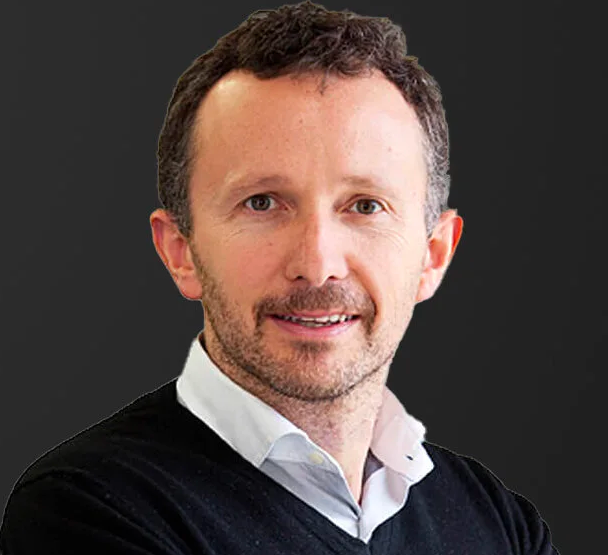
What does it really take to come up with a good business idea, and does the idea even matter?
In this compelling conversation, international entrepreneur Norman Crowley unpacks the truth behind entrepreneurial success, from his early welding business at age 12 to the billion-dollar gaming venture he nearly sold just hours before the 2008 financial crisis.
Norman shares the mindset, discipline, and resilience required to build meaningful companies, including why execution – not the idea – is what actually determines whether you’ll succeed.
He also discusses the role of luck, navigating stress and health challenges, building world-class teams, and why big missions attract big allies.
One of the most powerful moments of the episode comes when Norman explains his “hot coals” framework for overcoming fear: “Filling your mind with happy thoughts, being clear on the destination, and just keeping walking.”
Whether you’re dreaming of your first business or wrestling with your next one, this episode offers rare honesty, inspiring insights, and practical wisdom from decades of entrepreneurial wins, losses, pivots, and reinventions.
Norman Crowley is an Irish serial entrepreneur and climate-tech leader, best known as the Founder and Chairman of CoolPlanet, a global decarbonization and energy-efficiency group helping major corporations reduce emissions and achieve net-zero goals. Before turning to climate innovation, he built and sold several successful technology companies including Trinity Commerce, Inspired Gaming Group, and The Cloud. He also founded AVA, which converts classic cars into high-performance electric vehicles. Today, Norman is recognized for combining deep entrepreneurial experience with a mission-driven approach to solving climate change through technology, data, and industrial systems.
Just Begin! – FAQ:
Question: How do you know whether a business idea is good?
Answer: Norman explains that the idea itself is rarely what matters. The real key is to start, test quickly, and let customers “fix” the idea through feedback.
Question: Is execution more important than the idea in entrepreneurship?
Answer: Yes. Small business success comes from focus, resilience, team quality, and consistent execution, not from having a perfect idea from the beginning.
Question: What fuels long-term entrepreneurial motivation?
Answer: Motivation often comes from personal history, ambition, and a desire for freedom, but sustaining success requires healthy habits, mental discipline, and a meaningful mission.
Question: How should new entrepreneurs overcome fear?
Answer: Fill your mind with positive inputs, be clear about the destination, communicate your goals publicly, and keep walking despite challenges.
Episode Host: Henry Lopez is a serial entrepreneur, small business coach, and the host of The How of Business podcast show – dedicated to helping you start, run, grow and exit your small business.
Resources:
Free Download: Business Ideation Guide
Books mentioned in this episode:
[We receive commissions for purchases made through these links (more info)].

-
Delivering Happiness by Tony Hsieh
-
The Hard Thing About Hard Things by Ben Horowitz
-
Blowout by Rachel Maddow
Other Podcast Episodes:
You can find other episodes of The How of Business podcast, the best small business podcast, on our Archives page.
Sponsor:
This episode of The How of Business podcast is sponsored by The Franchise Guide.
Giuseppe Grammatico is the The Franchise Guide. He provides expert consultation services to help you find the right franchise small business.
If you are considering a franchise business, I recommend consulting with The Franchise Guide.
Giuseppe is a franchise veteran who simplifies the process of franchising and excels at guiding his clients to the franchise model that best suits them.
He helps people like you find flexibility and freedom in their lives through franchise business ownership. As your guide, he will help answer any of your questions about a franchise business. Once he gets to know you and what you’re looking for, he creates your own personalized model and shows you which franchise opportunities best match your needs and preferences.
The best part? It’s all free. No catch. Like real estate or business brokers, Giuseppe’s fees are paid by the franchise company.
If you are interested in a franchise business, take the first step and schedule a free no-obligation call with Giuseppe.
We have received compensation from this sponsor partner. We only accept sponsorships from companies who we believe provide products and services that are valuable for small business owners.
Transcript:
The following is a full transcript of this episode. This transcript was produced by an automated system and may contain some typos.
Henry Lopez (00:15):
This is Henry Lopez, and welcome to this episode of The How of Business. My guest today is Norman Crowley. Norman, welcome to the show.
Norman Crowley (00:23):
Good to be here.
Henry Lopez (00:24):
Looking forward to this conversation. How do we come up with great business ideas? And as I’ve always been challenged with, is the idea the easy part or is execution the harder part? And how do you determine if you have a good idea for a small business? I’m fortunate to have and be joined today by an inspirational entrepreneur. Norman started his first business at eight 16 and went on to establish and sell various highly successful international businesses. He’s still in business today. And on this episode I’m going to explore the highlights because we’d spent hours and hours exploring every detail of his incredible journey, but his highlights of his fascinating entrepreneurial career. And then I’m going to ask him to share his thoughts and experiences on business ideas to receive more information about how a business including the show notes page for this episode. And to schedule a free coaching consultation with me, please text biz BIZ to 7 7 2 8 3 7 5700 or visit the howa business.com.
Henry Lopez (01:28):
So Norman Crowley is an entrepreneur and the founder of Founder of Crowley Carbon. Crowley Carbon is an engineering services company that specializes in helping manufacturing companies and commercial buildings achieve net zero carbon. He’s also the founder and CEO of Cool Planet Group. Cool Planet Group uncovers the business opportunities in tackling climate change. Norman is an inspirational international entrepreneur who founded multiple successful businesses including the cloud, Europe’s largest wifi operator inspired gaming group, the world’s largest company in the server-based gaming domain. Trinity Commerce, one of the first e-commerce services company in the world, and most recently, as I mentioned, Crowley Carbon and Cool Planet Group. Norman is among one of Ireland’s top entrepreneurs and was nominated in 2011, 2011. Ernst and Young Entrepreneur of the Year, more impressively I think he’s recognized by his clients and colleagues as a consummate professional with a high degree of personal integrity. And he’s known for a contagious passion for excellent, a talent for resourceful business solutions and a capacity for motivational leadership. And so we’re fortunate to have him here today. Norman lives in Dublin, Ireland. Norman Crowley, welcome to the show.
Norman Crowley (02:51):
Good to be here. And when you listen to that description, you start to think it’s somebody else. Actually,
Henry Lopez (02:57):
You’ve done so much. I usually don’t have that long of a bio, but I tried to consolidate it best I could and still get in everything that you’ve done and that’s what I’d like to dive into. So thank you for indulging me on this. I know you’ve told this story a million times, but if I got it right early on, your first business venture and exposure to business, because you grew up in a farm community on a farm, was your dad taught you how to weld, correct?
Norman Crowley (03:23):
Yeah, so I grew up in West Cork in Ireland in the 1970s and it was just a very poor place. There was always food on the table, but very little else. And then we used to watch TV from the US and we would watch soap operas like Dallas where they lived in these big mansions and drove fancy cars and it was like our life was just the entire opposite that this. So I guess at a young age I kind of developed a burning desire to make money and to succeed. And then when my dad taught me to weld at 12, that was kind of like alchemy because I seemed to have a talent for it. And then there was a lot of local farmers needed stuff repaired and it kind of grew from there. And by the time I was 16, I had 12 people working for me and by the time I was 20 I’d sold my first company. Wow. Yeah.
Henry Lopez (04:30):
What do you think at that early of an age drove this desire to want to make money? Besides what you saw, except for JR getting shot, you didn’t want that, but what did you feel when
Norman Crowley (04:43):
In the shower exactly
Henry Lopez (04:47):
What was it going to do for you? I mean you weren’t living in abject poverty because
Norman Crowley (04:53):
No freedom really. I guess there were a couple of things happening at the same time. One was Ireland’s a very religious country back then. Now it’s probably one of the most liberal countries in the world, which is brilliant. But back then it was very religious. The church ruled everything. It was very restricted and life was very restricted. We lived out the country, very rarely went to town. And so money equaled freedom to do whatever you wanted to do. And there’s another part of it that very few people talk about the entrepreneurial journey too. I find that there are two types of entrepreneurs. There are the type of entrepreneur who builds a business, sells it and never works again. And then there’s the majority who build a business, sell it, and then go straight back in. And people who do that obviously fantastic, but I think there’s something in their psyche that’s not entirely healthy and I would put myself in that bracket, which is that you’re trying to prove somebody at a young age told you that you’d never amount to anything and you’ve got a chip on your shoulder and you’ve got to keep at it to prove whoever that was rot consistently.
Norman Crowley (06:08):
And it doesn’t matter if that person is dead and gone, you’ve still got that burning desire. And I don’t think that’s an entirely healthy process.
Henry Lopez (06:18):
So a couple of questions there for you. Was that just collectively everything that you described, the state of the country at that point, the church, all of that, was it a collective kind of thing that kept you from being able to do what you wanted to do in life and told you that you weren’t going to amount to anything or? For me it was a tough relationship with my dad. So I don’t know if there’s similarities there
Norman Crowley (06:43):
Similarities. I mean parents always, I think parents struggle, certainly back then parents struggled to encourage and then the community as well. We were even talking here in work this morning about when you’re trying to achieve something extraordinary, the amount of people who smirk at you and just say, that’s not going to happen. It’s like 80 90% of everybody does that. We had a potential investor in here today and they were just saying, Hey, that’s way too ambitious what you’re trying to do. And we’re there going, our offices in a castle we’re in 23 countries. I think the ambition, I think you might’ve noticed that when you walked into the door that we’re ambitious and it was said with a kind of smirk. In other words, I know better you’re not going to do that. And the phrase that we love is Gandhi said about change. He said, first they mock you, then they laugh at you, then they fight you, then you win. And that’s very true of the entrepreneurial journey. First they mock you and then it goes from there. And so it’s the thing that makes it pretty tough.
Henry Lopez (08:00):
I have found it at least I think sometimes people will do that because in part they’re talking to themselves, they’re kind of, they’re afraid that you might do what they don’t have the courage to do.
Norman Crowley (08:12):
Yeah, I think that’s a bit of it because the thing we debate a lot, the same thing is true of generally hating the rich and I can understand a lot of the motivations behind that. But if somebody is self-made and they’ve fought the battles and they’ve won and then you’re looking at that person, then there are two conclusions you can draw from that. Either they outworked you or outfoxed you or they stole it. And so the easier thing to do is to cast dispersions on that person and say they stole it, they inherited it from their dad. If it’s a woman, she wore a short skirt, she her way up. This kind of horrible stuff that people say rather than just because if you had to admit, wow, they just outworked me or whatever it might be, then you have to admit that they did that and the implication of that is you didn’t and therefore you’ve ended up or you’ve ended up and easier thing to do is to gang up with your mates and point and laugh. It’s a human
Henry Lopez (09:21):
Thing. Makes sense. That well said there. I want to go back to that feel that drove you to that chip on your shoulder. I think you mentioned you have children yourself now who are grown, so they probably didn’t grow up with that same kind of attitude put on them or limiting beliefs put on them. And so I always wondered, so where do they get their fuel? Because that’s the fuel we use to go do things. How do you think an entrepreneur finds that fuel if they don’t have that background, if they don’t have that baggage?
Norman Crowley (09:57):
I think fuel comes from all over the place. I have two girls, they’re 20 and 22 and they work their ass off, but different to me, I think they know how to party and they know how to have a good time. Not saying I don’t, but not as much as they do. And then I think the work ethic that they have they got from their parents and it’s, there’s an interesting parenting lesson. We never said to them, you can’t have that toy. That thing I see with people who are middle class or upper class who have the means is they kind go, well, I’m going to teach ’em the value of money young. I just think that’s horses shit. We never did that. We never told ’em they couldn’t have anything. All we ever asked was that they respected people when they were younger and then everything else they could have. And they’ve learned the value of money themselves and they worked their ass off. So I don’t think that’s something, but I wouldn’t want them to have the same chip on their shoulder as I do because again, I don’t think it’s kind of positive.
Henry Lopez (11:09):
Well, it’s never satisfied. It’s a void that we can never quite fill. Yeah,
Norman Crowley (11:13):
Absolutely. And I know a guy, very close friend actually who sold his business about 15 years ago. He sold his business for 2 billion bucks and he went off straight away and built another, I dunno what it’s worth today, seven or 8 billion bucks. And he cannot scratch that itch. And similarly with me. And it’s not like you’re unhappy. I’m very happy and find joy in pretty much everything but that itch, it’s very hard on the family because my wife, she would like to sail off into the sunset now and yet she’s married to this guy who wants to conquer the world.
Henry Lopez (11:56):
Absolutely. Okay. So you did not go to university. What was your advice to your daughters as they were getting to that age?
Norman Crowley (12:03):
Go to university, have a great time, try to pass the exams if you can. Yep.
Henry Lopez (12:10):
The value you felt they would get was what?
Norman Crowley (12:14):
Networking, a continuation of the party at that point, what you don’t want at that point, 16, 17 when they’re finished high school and they’re going in to college is say 17 is I just didn’t want them to work. I wanted them to go meet new people, have fun, yes, learn a bit, but really get a network of people that get experience of life, that kind of thing. And I’m quite close to colleges and we work with universities on r and d and stuff and look, people don’t really learn that much in college and that shouldn’t be the, and a lot of what they learn isn’t that useful. It’s really good for engineering and stuff like that because you can do a calculation about the specific heat capacity of water but not so good. A lot of it is just stuff you can read on the internet in 30 seconds, but the bit of it that’s fantastic is just that life experience of college and freedom. My daughter is in Northeastern at the moment and she’s just living, when she grew up in Ireland, she watched those TV shows about kids and college and all that and now she’s going to frat parties and doing all that and I love that she can experience that.
Henry Lopez (13:33):
Yeah, that’s the same thing I wanted for my daughter. She graduated last year, so she’s a little bit older than yours. She’s 20, 23. If she listens to this, she’s not going to be happy with me. Then I had to pause on age. But yeah, similarly, I think also, and I think you touched on it, I think they do still hopefully learn how to learn a little bit. So there’s a little bit of discipline there that comes with it. But yeah, I agree as well. But going back to the networking thing, it seems to me like that’s one of the hardest things that for me has been to impart and communicate to younger people how important that is. How do you share that, the importance of networking and did you get that early on? Did you understand how important it was, who you knew and how that could translate into opportunities?
Norman Crowley (14:21):
I did. I don’t think it was called networking, and I kind of don’t like the word networking either, because when people aren’t used to it, what they do is they go to a networking event and they think networking is talking to as many people as they possibly can in an hour. And that just makes you an insincere asshole. What we tend to do is if I’m at something like that, I would rather a deep conversation with one person for an hour and somebody who shares our values or whatever. And I think that’s it. I think the thing I learned later in life is that it’s very important to have a mission and the bigger that mission the better. And that helps a lot with networking because people align with that mission and want to contact you. For instance, Richard Branson is a friend of mine and I wouldn’t call Richard for a tennis game, two reasons I’m not that good at tennis. But also it’s, it would be trivial, but I can easily call Richard about something about climate change. If I want him to attend an event or say something, then he will do that, absolutely no problem. And I have no problem asking him because it’s far the wider mission. And I think it’s very easy to build a network if you have a clear mission and you communicate that to the world. Yeah,
Henry Lopez (15:49):
That makes sense. Great advice there. Alright, let’s start moving forward. You sold the welding business at age 20 and that’s when you segued into technology you always had a passion for that had kind of applied some technology to the welding and that’s what brought you to Trinity Commerce, right?
Norman Crowley (16:07):
Yeah, I guess again, a lot of it is inspiration from the wider world of television, but when I was a young kid, all the cool kids seemed to be computer guys because at the time, software was a new thing and computers were cool and you had all these great movies about it. And so I used to program when I was like 12 again. And so I always wanted to do that. And so when I sold the welding business, I just set up a technology company, didn’t know anything about anything. And first of all, we started selling computers to small businesses and then we started selling computers and software to small businesses. And then in 1995 we saw the internet for the first time. And it was just one of those moments where we’ve had a similar one recently with electric vehicles a couple of years ago where when you just experience it, you just know that you have to be involved in that.
Norman Crowley (17:03):
And so at the time, that was the internet and then we were one of the first e-commerce companies. And so by 1999 we had 170 people. We were operating in the US and in Europe and we were doing work for everybody from Time Warner, a OL true to William Hill in the uk. And we were doing proper transactions on the internet when nobody else was doing transactions. And then in 19 99, 2 telecoms companies were floating. They both needed an e-commerce play and the bidding war kind of erupted between the two of them for our business. And so in 99 we sold out for all cash and the out deal, which is incredible if you can get away with it. And
Henry Lopez (17:48):
That was the deal. That was almost a much bigger deal, was it not?
Norman Crowley (17:52):
No, that happened about 10 years later. Oh,
Henry Lopez (17:56):
That was the
Norman Crowley (17:56):
Gaming vision. This one was kind of just, but I retired on the back of this one. I retired.
Henry Lopez (18:02):
This is when you retired and then it lasted a couple weeks. I think it
Norman Crowley (18:05):
Was
Henry Lopez (18:06):
Three months it lasted, right?
Norman Crowley (18:08):
Yeah, that’s right. In fact, I think the trouble started after three weeks, but it did officially last three months. And then because I guess after about three weeks I started looking for the next thing, and then William Hill was a client of ours in the internet company. And I was meeting somebody from William Hill in London that I knew, and I was in one of the shops and I just saw this opportunity around gaming machines. I couldn’t understand. These gaming machines were just real based unconnected pieces of furniture really. But
Henry Lopez (18:41):
The things that we found in traditional or cage, you’re talking about a techman machine?
Norman Crowley (18:46):
No, even worse than that. So what they had in the UK was these things called real based slots. It’s like what Vegas used to have
Norman Crowley (18:53):
Before video machines, and this was 2001. And so we started talking to the guy in William Hill and I just said, why don’t you have a broadband connected machine that you can download games to? And he said, oh, people don’t play those. And I was like, but people play ’em all the time in Vegas, so it doesn’t make any sense to me. And he was like, yeah, but here’s different. And we were just like, here isn’t different, it’s just nobody’s built a proper machine. And so the average income at the time from a machine was about 200 bucks a week. And our first machine, which was a connected digital machine, took about 50 bucks a week. And then over 18 months we just kept iterating. And the third version took 700 bucks a week, and that would’ve been late 2001.
Henry Lopez (19:43):
Okay, so gaming, we’re talking about gambling, I
Norman Crowley (19:46):
Understand first gambling,
Henry Lopez (19:47):
And so not like you had a passion for gambling. You saw an opportunity here to marry what was an old fashioned way to do it with technology, and that’s what sparked this idea. Yeah.
Norman Crowley (19:58):
And every business we have disrupts another business, disrupts a traditional business, ideally permanently. And that was true, particularly true of inspired gaming. It completely disrupted the entire global gaming industry. And it became a monster business from 2001 to 2006, went from zero revenue to 300 million in revenue. It would be termed a unicorn today. And then we floated it on the stock exchange in 2006. And then in 2007, late 2007, an Icelandic hedge fund offered to buy the business for a billion bucks off the market. So we agreed that and the kind of famous thing that happened there, we were two hours away from signing on the dotted line when the whole global financial crisis really bit and the deal just collapsed. And we were literally two hours away from a billion bucks.
Henry Lopez (21:03):
You were already a wealthy person at that point though, and then you did end up selling it for half a billion dollars later,
Norman Crowley (21:10):
Right? Yeah, we did. Okay. Yeah.
Henry Lopez (21:13):
So obviously this story, you tell it, and everywhere I saw you did interview, it gets featured because it catches people’s attention. But other than all the, I think that probably what hurt the most, I suspect is all the work and effort that went into it for it to then fall apart more than the billion dollars. Or am I missing something there?
Norman Crowley (21:34):
Yeah, I think, no, I think that you’ve hit the nail on the head. The other one is ego. So business people who are successful, whatever that means. We have egos, we have very fragile egos and we suffer from imposter syndrome. And so when you fail to do a deal that’s very public, then it’s a big slap in the face of you’re not good enough. You weren’t good enough to do that deal. And
Henry Lopez (22:02):
It took you way back to childhood. And it was like absolutely. All of that got resurfaced.
Norman Crowley (22:06):
Yeah, yeah, yeah. And everything, every smart remark anybody ever said to you comes flooding back.
Henry Lopez (22:13):
And your health wasn’t the best at the time either.
Norman Crowley (22:16):
Well, I wasn’t exactly Mr. Healthy, right? So I was very, very heavy, like 270, 80 pounds. And my lifestyle at the time was get up on a Monday morning in Dublin, leave my kids and my wife, fly to London, work in London all week, and then every third week fly to Hong Kong, jump on a private jet, do eight countries around Hong Kong, fly home, and then every 12th week fly to Sydney and do the same. And I was just eating everything that was put in front of me, wasn’t exercising, wasn’t meditating, wasn’t doing anything. And then we got through the kind of not selling the business, but then around May the year after 2008, I just woke up one day, couldn’t feel my hand, and by lunchtime I couldn’t feel my arm. And people went to specialists. They thought it was either very serious or semi-serious.
Norman Crowley (23:15):
Some people thought it was a LS, other people thought it was motor neuron disease. And it turned out just to be the worst dose of stress that anybody had ever seen. And so I started to rebuild, then kind of lost an awful lot of weight, exercised, learn the ropes basically. And today we would have, certainly among our executives, we would’ve this kind of reasonably strict rule base, which is diet, exercise, not so much policing people’s diet, but healthy living exercise, meditation or some kind of spiritual practice. And that kind of stuff is encouraged because if you’re going to, the stuff we do in business is kind of like training for the Olympics. And if you’re going to train for the Olympics, no point in nipping into McDonald’s every day. It’s got to be, you got to stick to the rules. And that transformed my life really.
Norman Crowley (24:20):
And now today, a lot of the guidelines that we would give are if somebody is in crisis, some kind of mental health crisis, then we would basically go through the checklist with them. Are you exercising for more than 30 minutes every day where your heart rate goes over a hundred? Right? You do. You have some kind of spiritual practice that meditation or some prayer if you’re religious that is longer than 20 minutes every day. And then are you eating a lot of greens and avoiding crap in general? And we find that when somebody is having a mental health crisis, they very rarely get two out of three of those, nevermind three out of three.
Henry Lopez (25:06):
I see. So now this has become cultural within your organizations, if I’m
Norman Crowley (25:11):
Understanding? Very much so.
Henry Lopez (25:13):
Very much so. Okay. Did getting healthy, was it in part what created this focus on climate and environment or was that there prior? How did you come now to this focus?
Norman Crowley (25:27):
Yeah. Well, when we were along the way, of course it’s never good enough to set up one business. We always had to set up two. So while we were building, well, we were going from zero to 300 million in revenue between oh one and oh six, we didn’t feel like we had enough on. So I bumped into a guy called George Polk who’s quite legendary now, and George and I concocted this idea to set up Europe’s largest wifi operator called the Cloud. And we became very good friends and he was obsessed with climate change and still is. And now he’s become quite famous in the world of climate. And he was always on about climate change. He’d invite us over to his house and we’d do dinners about climate. And so that was where the bug got me when we sold the business for half a billion bucks in 2008. And then because I have this disease where I have to start another company, we just said, there’s no point in setting up another business that buys something for a book and sells it for two. We need something that’s going to have an impact on the world. And so climate change was the obvious, and that was the beginnings of Cool Planet Group, which has now become quite successful.
Henry Lopez (26:49):
Fascinating. So I’ve been touching on it, but I want to start deeper diving here on how you come up with ideas and make decisions about pursuing an idea. And so far what I’ve heard is a lot of it is what inspires you and television, American television in particular had that early inspiration, but then we go back to the gaming business, you saw an opportunity there to apply technology. It had to be something, you seem to look for things that are disruptive. Now, of course, it’s this focus of having an impact on the world. It seems like, and I’ve had a similar but much smaller scale situation for myself where I consider myself an opportunistic entrepreneur. And would you say that it’s the same approach for you as far as business ideas?
Norman Crowley (27:36):
Yeah, I think as we get older, we’re less opportunistic and more tactical. But I’ll give you an example of something that, how it all comes together and ends up as a monster. So in 2019, as I was approaching 50, I always wanted to do something around cars. I’ve always loved cars, I had a car collection and I never drove the car collection because of climate change, and I just didn’t like the fact of driving a big Corvette thing right down the road and making a whole lot of noise. I got this idea of why don’t I convert this car to electric because it has all the beauty of a piece of art, but actually it’s just deeply unreliable and lousy for the planet. And so we built a business called Ava that started doing that and people kind of slagged us off about it because they were saying, well, this is never going to become a big business because it’s just one arc project after another. In fact, you know that thing we were talking about about first they laugh at you, then they mock you. We did some market research on that at the time, and 95% of people interviewed said they would never drive an electric classic. And now our electric classics business is sold out until 2023.
Henry Lopez (29:01):
Let me interrupt you there. So why, despite that feedback, did you decide to move forward with that idea?
Norman Crowley (29:09):
Because market research largely doesn’t work. The famous phrase is Henry Ford, he said, if I asked people what they wanted that have said a faster horse, and if you ask somebody, the famous one that happened in our business is when we had the gaming business, we owned 14,000 jukeboxes. So we came up with the idea that we would create a jukebox that had every song ever recorded, and we called it the music.
Norman Crowley (29:38):
And when we did the market research, every pub landlord said they would never put one of these in. And then we promptly sold six and a half thousand of them the first two years. And it was a huge product. And so likewise with the iPhone, you say, I was saying this to somebody recently about the iPhone, look, you can have this thing if you described it to somebody without giving them one and you said, look, you can have this thing, but it’s going to cost you 1300 bucks. People are like, I’m not paying 1300 bucks for that. But now we can’t live without.
Henry Lopez (30:16):
This is Enri Lopez pausing this episode for a moment to tell you about my trusted service partner for business franchises, Giuseppe Grammatical, the franchise guide. Giuseppe is a franchise consultant who helps his clients find financial and time freedom through small business franchise ownership. If you’re listening to this podcast, then you are obviously interested in starting your own business, but perhaps you’re not interested in starting a business from scratch. If you instead think you want to leverage a more proven business model, then I suggest you may want to consider a franchise business with the right franchise someone else has developed and perfected the business model. And you’re able to leverage that expertise and experience by investing in owning and operating a franchise location of your own. But to find the right franchise that’s a fit for you is not always an easy process. You need help and I recommend Giuseppe Grammatical the franchise guide to help you consider franchising and find the right one for you. And remember, as a franchise consultant, Giuseppe’s fees are paid by the franchise company you choose and not by you. I trust and personally recommend Giuseppe, and he is currently helping me as I search for a new franchise business to launch. Visit the how a business.com for more information and the link to schedule a free franchise consultation with Giuseppe. And when you connect with Giuseppe, just let him know you heard about him on how a business podcast.
Henry Lopez (31:45):
Alright, so that leads me to this question, a bunch of questions, but is it the idea or is it the execution or is it both?
Norman Crowley (31:52):
It’s the execution. The idea is, and this will give you the example of it’s not the idea. So then we had an electric art business converting beautiful cars and selling them to richer people, but it’s not a big business and it’s not really solving climate change. You could argue it’s inspiring people to solve climate change, but then we get a bit of a reputation for doing it. And then a mining company approaches us and they say, Hey, will you convert one of our light vehicles that drives around the mine to electric? And we were like, sure, but why do you want to do that? And they were saying, well, by 2025 we need to convert 13,000 of these to electric. So we do one. And then we discover that they need charging infrastructure and they need renewable energy and they need safety and they need all the other stuff we do. And another billion dollar opportunity was born. Now we didn’t come up with that idea. Somebody approached us and just asked us to do it. But then once, back to what you were saying about opportunistic, once somebody offers you that opportunity, then the opportunistic side comes in because you can link it to something else you’re doing or whatever and make it into something.
Henry Lopez (33:13):
And I said, that’s when you become more tactical then. Is that what you meant by that?
Norman Crowley (33:18):
Yeah. And execution then back to that, execution is all about team and team is the hardest thing
Norman Crowley (33:25):
Because you set up a business, it’s a bit of a lonely pursuit, so it’s always nice to do it with a partner. So then you’ve got a business partner, then the business partner turns out to be a bit of an asshole. Then you’ve spent years arguing with that person and then you’re building a team and you think the team’s going to be amazing, but then the team turns out to be not amazing. And really execution is about having a team of ninjas. And in our group, whether it’s our personal family office businesses or our Coplan group, the executives are spectacular. Every single one of ’em, not just the executives, but the managers that reported as executives, and that’s because they’ve been built up over 20 years and we’ve built that team and honed it, and that’s where the execution comes in. So I can think of an idea, I can hand it to somebody, and they were executed to excellence.
Henry Lopez (34:24):
Wonderful. I got to think then there’s been ideas that you did not follow through on. Is there anything that stands out as to a common denominator there as to why you don’t pursue an idea?
Norman Crowley (34:38):
Yeah, it’s a good question. It could be one of many reasons. Now, I was saying to you that we’ve gone from being opportunistic to being more tactical. So now if it doesn’t have recurring income, then we wouldn’t touch it. If it doesn’t impact a billion people in the world, we won’t touch it. So now we’re much more kind of tactical about what it is we would touch and what we wouldn’t before it was much more, oh, well, that sounds like a lot of fun. Let’s do that.
Henry Lopez (35:13):
For an aspiring entrepreneur that applies to you now obviously because of where you’re at in your progression for an aspiring entrepreneur looking to start that first venture, then what would you offer there as advice as to determining, is this a good idea or not a good idea?
Norman Crowley (35:32):
Well, even for somebody starting with a corner shop or a, if you’re going to get up in the morning, And it is. And if you look at me and my castle, like we were talking about earlier, I had the worst day in business yesterday that I’ve had in three or four years and deeply gut wrenchingly horrible. And so this never goes away. So people look at what I’ve done and they say, well, it’s easier for him. Nothing’s easy because we’re trying to do bigger stuff now and bigger stuff’s hard. And we’re trying to do it on multiple fronts, like 23 different businesses. And that’s difficult and it’s stressful and you worry about teams and you worry about their health and all of that kind of thing. But I would say to the person in the corner shop, exactly what I said, when you’re starting this, is this idea you’re doing, could it impact a billion people? How big are you aiming? And then if you’re not aiming big enough, why aren’t you aiming big enough? If you’re going to have to go through this, then why not aim big?
Henry Lopez (36:59):
Yeah, okay. I love that. How much does luck play into it, play into being successful in business and a particular
Norman Crowley (37:08):
Venture? Yeah, I think the cliche is very true of the harder you work, the luckier you get. And I think, look, I’m not religious, but I do think things like meditation where the science of meditation now that they’ve learned is that I think it’s your front lobe increases in size when you meditate. So you literally become more focused, you become smarter, you become slightly more connected with people, and therefore luck occurs much easier because you are able to, that movie limitless with Bradley Cooper, you become a slightly shit version of that where you can join the dots much easier and connect them much easier and implement them with more passion. So I think that’s where a lot of the luck comes from. But then you can get unlucky too, and then it’s how you react in that situation.
Henry Lopez (38:07):
Yeah, I mean some of it is timing, like what happened to you when you were trying to sell the business, right? So it’s a matter of how you respond to that. But yeah, I agree. And so what I’m hearing also that you have to be healthy physically and mentally work hard, and then as I like to say, you put it yourself in the way of luck.
Norman Crowley (38:24):
Absolutely. Yeah. And I have a thing, people ask for advice all the time, but advice is tricky because if it’s an early stage company, it’s one set of advice. If you’re selling the business, it’s another. If you’re floating, it’s another. So it’s very hard to have advice that one size fits all. But the story, and if people have heard it, I apologize, is when I was 21, I learned how to walk on hot coals. And the idea of walking on hot coals is to overcome fear. And when I became obsessed with W on hot coals and I learned to teach it, and the rules of success in life and in business are exactly the same as the rules of wie on hot coals. And so will I tell you that story?
Speaker 4 (39:15):
Yes, please do.
Norman Crowley (39:17):
So there are three very simple rules. The first one is, well, how walking on hot coal work is they take about 30 ton of timber, they light a match to it, and then when it’s burnt down, they rake it into about 30 or 40 feet of pretty hot stuff, I think, I dunno, they’ve measured it. It’s like, I can’t remember what is in Fahrenheit, but it’s about a thousand degrees Celsius. That’s pretty hot. And then the rule number one is before you walk, fill your mind with happy tots. And so how that works in real life is the company you keep, right? Are you around negative people all the time? Are you tuning into the news all the time as opposed to listening to podcasts about how to be successful? So filling your mind with happy thoughts. And we have a bubble in our house.
Norman Crowley (40:07):
In our house, there was no news stations. We get the news by osmosis, but we don’t listen to it or tune into it. We tend to avoid people who are negative. Everyone is negative every now and then, but we tend to avoid people who are consistently negative. And we hang around with people who are optimistic about life and where life is going. And that’s the first one. The next one then is you’ve got to be clear about the destination. There’s no point walking halfway across the beta hot calls, pausing for a minute, turning around because you’ll just burn. And in life, people always talk about goals, but the thing they don’t talk about as much is communicating those goals. So if you’re opening a corner shop and you say, I’m going to open a corner shop, but I’m going to find a way that this is going to positively impact a billion people, everybody, not everybody, but 90% of people are going to laugh at you.
Norman Crowley (41:04):
But if you communicate that publicly and you have the courage to communicate it publicly, then people, the other 10% become your allies and your partners and they encourage you. But if you don’t communicate it, if you just write down a goal and you don’t communicate, then nothing happens. Communication is the activation of it, but communication takes courage because people will mock you and laugh at you, and you have to get through that. So that’s number two. And then number three is keep walking. So when you’re walking on hot coal, you keep walking because that life is tough and business is tough and you just have to keep getting through it. And people look at me and they kind of go, well, you have it easier. No, we don’t have it easier because every day we work harder than we did the day before, but if you keep walking, you will win.
Henry Lopez (42:05):
Yeah. It could argue that for you, those calls are even hotter, or maybe it’s even longer, however you want to stretch the analogy.
Norman Crowley (42:11):
Well, there’s certainly more public.
Henry Lopez (42:12):
It’s still hard. Yeah, more public. Exactly. Yeah. Wonderful. Thank you for sharing that story. So many different takeaways there. And you’re right, it’s such an inspirational analogy for what we do in life and in business in particular, the courage part, Norman, because what I have found is that when we go into business, it’s an expression of ourselves. We’re creating something. And as you have expressed a couple of different times, when we put that out into the public, that’s a very exposed thing to do and it gets represented in whether our business has success or not, people show up or not, or they ridiculous or not. And we take that personally as entrepreneurs. So we have to have the courage to put ourselves out there anyway. Yeah.
Norman Crowley (42:53):
Yes, absolutely. And I would never say I’m a courageous person, but over the years I have become more courageous.
Henry Lopez (43:02):
But you are. Yeah. Yeah, you are. Alright. What have we not talked about related to Crowley Carbon or Cool Planet Group that you want my listeners to know about what you’re doing with those organizations?
Norman Crowley (43:14):
Look, what we’re trying to do with those organizations is the way you solve climate change is you fix energy, transport, and food. And those businesses all work in that area. Cro,
Henry Lopez (43:25):
Energy, transport and Food, you said
Norman Crowley (43:27):
Food and replace food with meat. And that doesn’t mean becoming a vegetarian, it means fixing the meat problem in one way or another. And so we do the three of those things. So Croley, carbon, big player, 23 countries in energy efficiency mainly for factories, big software platform to go along with that in this internet of Think space. Then Ava makes the sexiest cars on Earth. And with that, we work with some very famous designers, including Peter Brock, who designed the Corvette Stingray in 1957.
Speaker 4 (44:05):
Wow.
Norman Crowley (44:07):
And that’s a very cool company. And then we’re just starting something now in the food space that’s going to disrupt meat, and we haven’t announced that yet, but it’s in this area called cellular agriculture or precision fermentation, which is basically where you can grow meat in a vessel rather than growing it in a four-legged animal. And that’s what Cool Planet Group and people can find out about us at Cool Planet Group, ie. Or I am on Twitter at Norman Crowley one, the number one, and I kind of post a lot of stuff on Twitter about what we’re up to and the stuff of behind the scenes look at what we do.
Henry Lopez (44:50):
Wonderful. Thanks for sharing. Inspirational. Is there a book that comes to mind that you would recommend
Norman Crowley (44:57):
Depending on your flow? There’s a couple. Tony Hess is Delivering Happiness. Tony tragically died last year, but Tony Hesh wrote Delivering Happiness, the Story of Zappos, which is brilliant when it comes to the entrepreneurial journey. Another one is the Hard Thing about Hard Things by Ben Horowitz on a similar vein, and then if you’re into climate, most mind blowing what I read or listened to actually in the last year is called Blowout by Rachel Maddow. She won a Grammy for it actually, and it’s really just a mind blowing story about the oil industry and the green technology, and it reads like a thriller, but it’s actually a true story.
Henry Lopez (45:40):
I have not read that, so thank you for that recommendation. I’ve read Delivering Happiness and the Hard thing about hard things but not blow out.
Norman Crowley (45:46):
Yeah. I love business books that tell the truth as opposed to bullshit ones that make it sound really easy because it’s not easy.
Henry Lopez (45:54):
Yeah. I’m with you there. You had chatted about that in another interview that I listened to. Some of those early business books in the eighties were all about egos and about how everything was great, so I agree with you so much more that you can learn from the mistakes, which is part of the process. I’ll have links to all of these books in the show notes page at the how of business.com. Norman, we’ll wrap it up here, sir, what’s one thing you want us to take away from this conversation? We’ve talked about a lot of things, but specifically on this idea of business ideas and keeping it in a perspective of someone who maybe is looking to start their first business, what’s one thing you want us to take away about this idea of coming up with an idea?
Norman Crowley (46:34):
Yeah. I don’t think the idea is all that, to be honest. Think of anything because you know this word pivot that everyone uses now, you can pivot the business into whatever you want. Just begin, right? Or people say, well, I don’t have an idea. Just begin with the stupidest idea you can think of because the customer will fix your idea very quickly. Just put it in front of them, they’ll fix it. You may not enjoy the process of them fixing it, but they’ll fix it. It’s much more about execution than the idea.
Henry Lopez (47:07):
Brilliant. That’s been my experience as well. Thanks for sharing that and putting it so succinctly. Tell us again where you want us to go online to learn more.
Norman Crowley (47:16):
Yeah, so Cool. Planet Group, ie, ie because we’re an Irish company, and then Norman Crowley, one at Twitter is my handle.
Henry Lopez (47:29):
Wonderful. Norman, I could have this conversation for hours if you would’ve indulged me, but I want to respect your time and thank you so much for being so transparent, for sharing for the inspiration. Thanks for being with me today.
Norman Crowley (47:42):
Thanks, Henry.